Last updated 2026-07-25
TL;DR
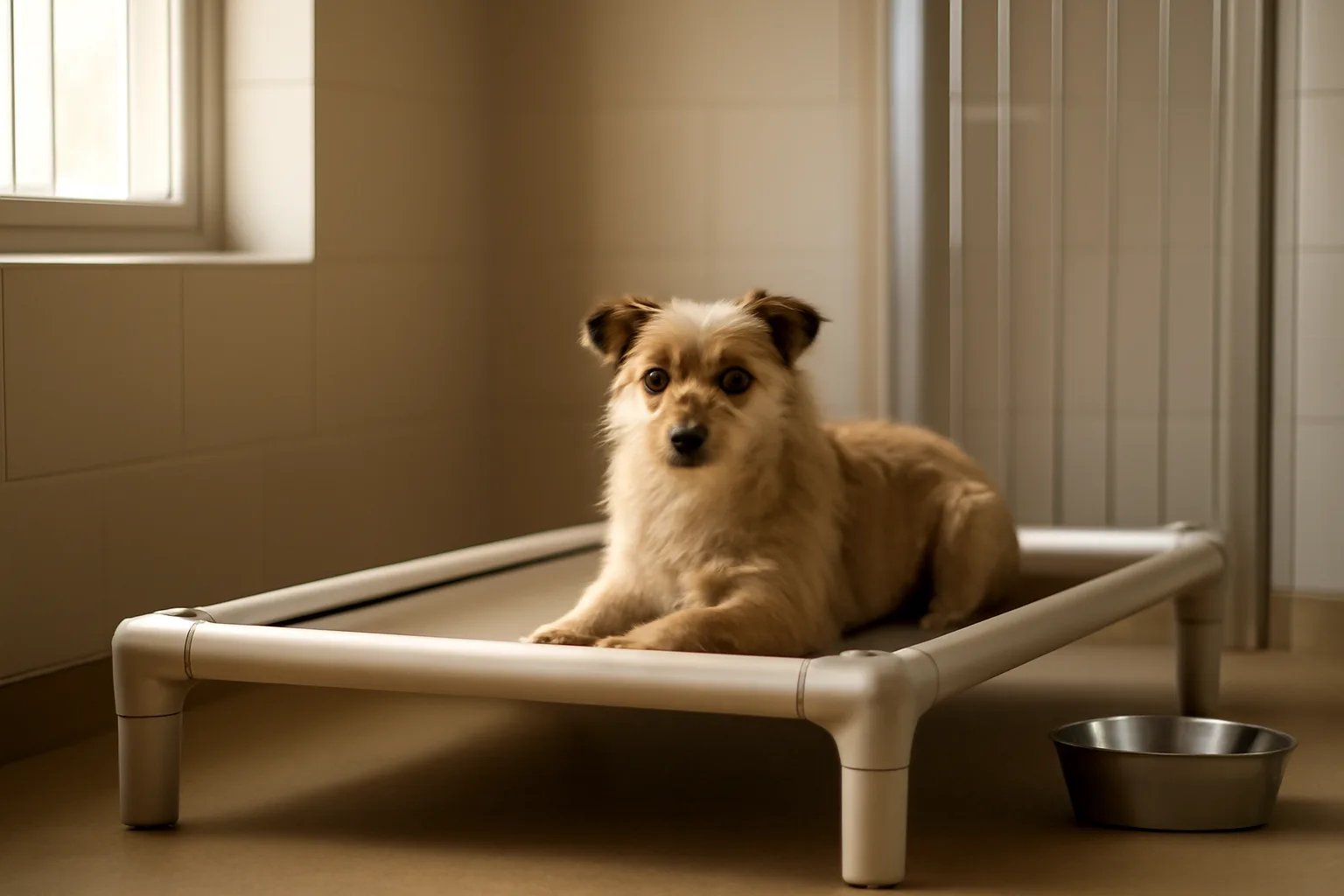
Boarding for small dogs typically costs $25 to $65 per night, sometimes less at a home-based sitter and more at a boutique boarding hotel with suites. Price depends on your region, whether the facility is licensed and USDA-registered (if it sells or breeds), and what's included (play time, meds, grooming). Always ask for the facility's state or county kennel license number before booking.
how much does dog boarding cost for a small dog
Expect to pay somewhere between $25 and $65 a night for a small dog at a licensed boarding kennel or dog daycare facility, with the low end typical of rural areas or basic home-boarding through a sitter network, and the high end typical of cities or boutique 'dog hotel' operations with private suites, webcams, and extra enrichment. Small dogs sometimes cost a little less than large-breed boarding because they need less kennel space and less staff strength to handle, but the gap is usually modest, maybe $5 to $10 a night, not a dramatic discount. A few things push the price up fast: holiday weekends (many kennels add a $5 to $15 per night surcharge around Thanksgiving, Christmas, and July 4th), medication administration (often $1 to $10 per dose), grooming add-ons, and 'all-day play' packages versus basic overnight care with limited yard time. Multi-dog discounts are common if you're boarding two small dogs together in one run. There's no federal price-setting body for boarding rates, so the honest answer is: call three facilities within 15 minutes of you, ask for their current small-dog nightly rate plus their add-on fee sheet, and compare apples to apples. A facility's dog boarding rate sheet is usually posted online or given by phone without much runaround, so if a place won't quote a price without an in-person tour and a hard sales pitch, that's worth noting. Budget site aggregators and pet-sitting apps often show national averages in the $30 to $50 a night range for small dogs, but these are self-reported numbers from listings, not a regulated survey, so treat them as a rough starting point rather than gospel.
what should i actually check before booking small dog boarding near me
Start with the license, not the lobby. Ask directly: 'What is your kennel license number and which agency issued it?' A legitimate boarding facility in most states holds either a state kennel/animal facility license, a county or city kennel permit, or both, depending on your state's structure. Some states regulate boarding kennels directly (commercial kennel licenses through the state department of agriculture), while others leave it almost entirely to county or municipal zoning and health departments. Second, ask about vaccine requirements. Reputable boarding kennels require proof of rabies, DHPP (distemper combo), and often bordetella (kennel cough) vaccination, sometimes canine influenza too, especially in facilities that also run daycare. If a facility doesn't ask you for proof of anything, that's a red flag, not a convenience. Third, ask what happens during a vet emergency: is there a written protocol, an on-call vet relationship, and who pays first? Fourth, ask about staff-to-dog ratios during play groups, especially if your small dog will be mixed with larger dogs. Small dogs are more vulnerable to injury in mixed-size play groups, so many daycare operators separate by size or temperament rather than by breed alone. Finally, tour the actual boarding area, more than the lobby and one clean kennel run. Look at ventilation, flooring (non-slip, easy to sanitize), and whether small-breed dogs get climate-controlled indoor space rather than an outdoor run in summer heat or winter cold. If you want a broader comparison of facility types before you commit, pet boarding and dog hotels near me cover the range from basic kennel to luxury suite.
how do you register a dog (and is that the same as licensing)
'Registering a dog' usually means one of three different things, and people mix them up constantly: (1) getting a local dog license (a legal requirement in most cities and counties, tied to rabies vaccination), (2) registering a dog's pedigree with a kennel club like the AKC (a paperwork/lineage process, not a legal requirement), or (3) microchip registration (linking a chip number to your contact info in a database). For the legal version, you register your dog with your city or county animal control or clerk's office, usually by showing proof of current rabies vaccination and paying a small annual or multi-year fee. Requirements and fees vary widely by jurisdiction: some counties charge under $10 a year for a spayed/neutered dog and more for an intact one, others run $25 to $50. There is no national dog registration requirement in the US; it's set entirely at the state, county, or city level, so check your specific county clerk or animal control page for the exact form and fee. Microchip registration is separate and simpler: after a vet or shelter implants a chip, you register the chip number online with the chip manufacturer's database (or a universal registry) so a scan links back to you. This isn't a government requirement in most places, just a strongly recommended safety step.
how do you get a dog license and what does it cost
Getting a dog license is a local process: you go to your city or county's animal control office, licensing portal, or sometimes the county treasurer/clerk, bring proof of current rabies vaccination (and often proof of spay/neuter for the lower fee tier), and pay the license fee. Many counties now let you do this online or by mail. Fees vary a lot. As an example of the range, some counties set unaltered-dog license fees noticeably higher than altered-dog fees specifically to encourage spay/neuter, sometimes a $20 to $40 difference. There's genuinely no national number here worth citing as 'the' dog license fee, because it's set county by county or city by city; your best move is to search '[your county] dog license fee' or check your county animal control or clerk's official page directly. Most licenses run one year and need annual renewal tied to your rabies vaccination schedule (or a 3-year license if your vet gave a 3-year rabies vaccine). Miss the renewal and some counties charge a late fee or, rarely, a citation if animal control catches an unlicensed dog. If you board or run daycare for other people's dogs, note that a personal dog license is not the same as a commercial kennel license, which is what the boarding facility itself needs to legally operate.
how do you get papers for a dog (AKC registration explained)
'Getting papers' means registering your dog with a breed registry, most commonly the American Kennel Club (AKC), which documents pedigree (parentage) rather than proving health or quality. If your dog's parents were both AKC-registered and the breeder registered the litter, you typically get an AKC Litter Registration form or a Dog Registration Application from the breeder, and you complete the individual registration yourself, either on paper or through the AKC's online registration system. If you got your dog from a shelter, rescue, or a breeder who never registered the litter, there generally is no way to retroactively get full AKC papers, because registration traces back to the recorded parents at the time of breeding. Some registries (like the AKC's PAL, Purebred Alternative Listing, previously ILP) let you register an unpapered purebred-looking dog for participation in AKC companion events (agility, obedience) without full pedigree papers, but PAL dogs can't be shown in conformation or bred with AKC litter registration eligibility. Mixed breed dogs can't get AKC breed papers at all, but the AKC does offer Canine Partners enrollment for mixed breeds who want to compete in AKC companion events. None of this paperwork is required to own, board, or license a dog; it only matters for showing, breeding with registry recognition, or certain competitions.
how can i get papers for my dog if the breeder never registered the litter
If your breeder never filed AKC litter registration, your practical options are limited and worth knowing upfront so you don't chase a dead end. First, ask the breeder directly if they still have the litter registration application; sometimes it's just sitting unfiled and they can complete it retroactively within the registry's allowed window. Second, if both parents are AKC-registered but the litter wasn't recorded, the breeder (not the buyer) is the one who has to file the litter registration; buyers generally can't do this without breeder cooperation. Third, if that's not possible, look at PAL/ILP-style alternative listing through the relevant registry, which lets an unpapered purebred participate in performance and companion events with proof the dog appears purebred (photos, sometimes a vet exam), but this does not grant full pedigree status or breeding eligibility under the main registry. Fourth, understand this doesn't affect your dog's legal status, vet care, boarding eligibility, or local licensing at all. A kennel or daycare will never ask for AKC papers before accepting your dog; they'll ask for vaccine records. Papers matter for showing and registry-recognized breeding, nothing else.
how to become a dog breeder legally
Becoming a legal dog breeder means clearing three separate layers: local zoning, state licensing, and potentially federal USDA licensing, and a lot of new breeders only find out about the third one after they've already sold a few litters. Locally, check your county or city zoning code for how many intact dogs you can keep and whether 'breeding kennel' is a permitted use in your zone; many residential zones cap the number of dogs per household (commonly 3 to 5) before you're legally considered a kennel requiring a special permit. Check your county zoning office's actual ordinance text, not a generic blog, because limits vary block by block in some cities. At the state level, many states require a commercial breeder license once you exceed a certain number of breeding females or litters per year, issued through the state department of agriculture; thresholds and fees differ by state; some states have no dedicated breeder license at all, while others (for example, states with dedicated 'commercial dog breeder' statutes) require inspections and bonding. At the federal level, the USDA's Animal Welfare Act requires a Class A (breeder) license from APHIS if you sell dogs sight unseen (online, through brokers, or to pet stores) and meet certain thresholds, most notably if you have more than 4 breeding females and sell puppies without the buyer physically seeing the animal or facility before purchase. The Animal Welfare Act regulations define who must be licensed as a dealer or breeder under 9 CFR Part 2, Subpart A [1]. If you sell only in-person, face to face, at your own home or facility, you may qualify for the retail pet store exemption regardless of volume, but the exemption is specific and worth reading directly in the regulation rather than assuming you qualify [2]. Before breeding your first litter, pull your state's breeder statute, your county zoning ordinance, and the federal regulation text, in that order, because state and county rules are usually the first thing that trips people up, not the federal threshold.
what usda threshold triggers a breeder license
The core federal trigger is this: if you have more than four breeding female dogs and you sell puppies to buyers who never see the puppy, the dam, or your facility in person before the sale (internet sales, brokered sales, wholesale to pet stores), you generally need a USDA Class A breeder license under the Animal Welfare Act. This threshold comes from the 2013 rule amending the definition of 'retail pet store' under the Animal Welfare Act regulations, which extended licensing to certain breeders who sell animals sight unseen, discussed in the Federal Register final rule published September 18, 2013 [3]. If you sell every puppy in person, at your home or your buyer's home, with the buyer physically present to see the animal, you typically fall under the retail pet store exemption defined at 9 CFR 1.1 and don't need a federal license regardless of how many females you have, though your state and county rules still apply independently [2]. This exemption is why a lot of small in-person breeders never touch APHIS paperwork while a larger online-selling operation with fewer dogs might. Once licensed, USDA-licensed breeders are subject to announced and unannounced inspections against the Animal Welfare Act's facility standards (housing, space, sanitation, veterinary care), covered under 9 CFR Part 3 [4]. Violations can result in official warnings, license suspension, or civil penalties under the enforcement provisions at 7 U.S.C. 2149 [5]. States layer their own thresholds on top, sometimes lower than four females, sometimes with a litter-count trigger instead of a female-count trigger, so check your state department of agriculture's breeder licensing page even if you're confident you're exempt federally.
does a boarding or daycare facility need a usda license too
Generally no, straight boarding and daycare-only facilities that don't buy, sell, or broker dogs typically fall outside USDA Animal Welfare Act licensing, which is aimed at breeders (Class A), dealers/brokers, exhibitors, and research facilities, not pure boarding operations. The Act's licensing framework, codified at 7 U.S.C. 2131 and following, is built around commercial trade in animals, not care-for-a-fee services like boarding [6]. Where it gets more complicated is if a boarding facility also breeds, brokers, or sells dogs on the side, or if it operates as a combined boarding-plus-breeding operation; in that case, the breeding/selling side may trigger USDA licensing even though the boarding side doesn't. It's the activity, not the building, that triggers federal jurisdiction. What boarding and daycare facilities almost always need instead is a state and/or county kennel license or commercial animal facility permit, plus zoning approval for a commercial kennel use, plus in many states a facility inspection covering things like ventilation, sanitation, fire safety, and enclosure sizing. These requirements are set at the state or county level and vary enormously; some states (through the department of agriculture) directly license boarding kennels, while others push it entirely to county health departments and city zoning boards. If you're the one opening a facility rather than just booking one, this is the part that eats the most time: pulling your state's kennel licensing statute, your county zoning code's definition of 'kennel' or 'animal boarding facility,' and your city's business license requirements, then lining them up before you sign a lease. A packet that organizes those documents into one checklist (state application, county zoning worksheet, facility standards checklist) is the kind of prep work that saves weeks of back-and-forth with a zoning office; that's the gap the dog kennels overview and the $149 Kennel License & Zoning Packet at /license-packet-builder are built to close, though neither replaces reading your own jurisdiction's actual ordinance.
small dog boarding vs large dog boarding: what actually differs
| Typical nightly rate | $25-$65 | $30-$75 | |
|---|---|---|---|
| Kennel/run size needed | Smaller footprint, lower cost | Larger run, sometimes double-wide | |
| Play group mixing | Often size-separated for safety | Often size-separated for safety | |
| Cold/heat sensitivity | Higher (many small breeds chill fast) | Lower generally, breed-dependent | |
| Escape risk | Higher (can slip collars, squeeze gaps) | Lower, but stronger, harder to physically restrain | Small dogs are more prone to hypothermia and more likely to squeeze through gaps in fencing that a large dog couldn't, so a facility with tight, well-maintained fencing and indoor climate control matters more for small breeds than raw square footage does. Large dogs need more physical strength to handle safely during play, which is part of why many daycares run separate small-dog and large-dog play yards regardless of price tier. If your dog is a toy breed (under 10 lbs) or has a brachycephalic (flat-faced) build like a Frenchie or Pug, ask specifically about temperature control in outdoor play areas during summer; brachycephalic breeds overheat faster and this is a common cause of boarding-related emergency vet visits in hot months. |
The care standard is the same across sizes, small and large dogs both need clean water, appropriate exercise, sanitary housing, and monitoring, but a few practical differences show up in pricing and facility design. | Factor | Small dogs (under ~25 lbs) | Large dogs (over ~50 lbs) |
Frequently asked questions
How much does dog boarding cost for a small dog per night?
Typically $25 to $65 per night depending on your region and the facility's tier (basic kennel versus boutique suite). Rural home-boarding runs cheaper; city boutique facilities with private suites and extra play time run higher. Add $5-$15 for holiday surcharges and $1-$10 per dose for medication administration. Always get a current written rate sheet before booking rather than relying on a quoted 'starting at' price.
How much is dog boarding for multiple small dogs together?
Most facilities offer a multi-dog discount if two small dogs from the same household share one kennel run or suite, often 10-30% off the second dog's rate. Ask specifically, since it's rarely advertised upfront. If your dogs don't get along well enough to share a space, you'll pay full rate for each, so mention temperament during booking.
How do I register a dog with my city or county?
Bring proof of current rabies vaccination to your city or county animal control office or clerk, fill out the license application, and pay the fee (often under $50, varies by jurisdiction and spay/neuter status). Many counties now allow online registration. This is separate from AKC 'registration,' which documents pedigree, not legal ownership.
How do I get a dog license, and does it expire?
Apply through your city or county animal control office or clerk with proof of rabies vaccination; fees and renewal periods vary locally, often annual or every three years matching your rabies vaccine schedule. Late renewal can trigger a fee or citation in some counties. Check your specific county's official page, since there's no national fee or process.
How do you get papers for a dog if you bought from a breeder?
The breeder gives you an AKC registration application (or completes online registration) if both parents were AKC-registered and the litter was recorded. You complete the individual dog's registration using that paperwork. If the breeder never registered the litter, there's generally no retroactive path to full papers without the breeder's cooperation.
How can I get papers for my dog if I don't know the breeder?
If you can't locate or contact the original breeder, full AKC pedigree papers generally aren't obtainable, since registration requires tracing to registered parents at breeding time. Look into PAL (Purebred Alternative Listing) if your dog appears purebred; it allows entry into companion events without full pedigree status, but not conformation showing or registry-recognized breeding.
How do you become a dog breeder legally?
Check your county zoning code for intact-dog limits and kennel-use permits, check your state department of agriculture for a commercial breeder license threshold, and check the Animal Welfare Act regulations for federal licensing if you sell sight-unseen with more than four breeding females. Clear all three layers before your first litter, not after.
What USDA threshold requires a dog breeder license?
Generally, more than four breeding female dogs combined with sight-unseen sales (online, brokered, wholesale to pet stores) triggers a USDA Class A breeder license under the Animal Welfare Act, per the 2013 Federal Register rule amending the retail pet store definition. Breeders who sell every puppy in person, with the buyer seeing the dog and facility first, typically qualify for the retail pet store exemption regardless of female count.
Does a boarding kennel need a USDA license?
Usually not. Pure boarding and daycare operations that don't breed, sell, or broker dogs generally fall outside USDA Animal Welfare Act licensing, which targets breeders, dealers, exhibitors, and research facilities under 7 U.S.C. 2131. Boarding facilities instead typically need a state and/or county kennel license and zoning approval, which vary by jurisdiction.
What vaccines does my small dog need before boarding?
Most boarding kennels require proof of current rabies, DHPP (distemper combo), and bordetella (kennel cough) vaccination; some also require canine influenza vaccination, especially facilities that mix daycare dogs. Bring your vet's records or a vaccine certificate; many facilities won't accept a dog without documentation on file at check-in.
Is AKC registration the same as a dog license?
No. AKC registration documents pedigree and lineage for showing or registry-recognized breeding; it's optional and has no legal weight. A dog license is a legal requirement in most cities and counties, tied to rabies vaccination, issued by your local animal control or clerk's office, and required regardless of breed or papers status.
Can I get papers for a mixed breed dog?
Not full AKC pedigree papers, since mixed breeds have no traceable single-breed lineage to register. The AKC does offer Canine Partners enrollment for mixed breeds, which allows participation in companion events like agility and obedience without pedigree registration. This isn't 'papers' in the breeding-eligibility sense, just event eligibility.
Sources
- eCFR, 9 CFR Part 2, Subpart A - Licensing under the Animal Welfare Act: Definition of dealers/breeders required to be licensed under the Animal Welfare Act
- eCFR, 9 CFR 1.1 - Definitions (retail pet store): Retail pet store exemption for in-person, buyer-present sales regardless of volume
- Federal Register, Amendments to the Animal Welfare Act Regulations (Sept. 18, 2013): Four breeding female threshold tied to sight-unseen sales triggering federal breeder licensing
- eCFR, 9 CFR Part 3 - Animal Welfare Act standards: Facility, housing, and care standards licensed breeders must meet under the Animal Welfare Act
- Cornell Law School, Legal Information Institute, 7 U.S.C. 2149 - Violations by licensees: Enforcement mechanisms (license suspension, civil penalties) for Animal Welfare Act violations
- Cornell Law School, Legal Information Institute, 7 U.S.C. 2131 - Congressional statement of policy (Animal Welfare Act): Animal Welfare Act licensing framework applies to commercial trade in animals, not care-for-a-fee boarding services