Last updated 2026-07-25
TL;DR
A "found" boarding and training center is a full-service dog facility combining overnight boarding with structured obedience work, common in cities like Chicago. Boarding typically runs $35 to $100+ per night depending on market and services. Opening one legally means separate city business licensing, Illinois or state animal welfare registration, zoning approval, and (for breeders) USDA thresholds if you sell more than a handful of dogs a year.
what is a "boarding & training" center, and how is it different from regular dog boarding?
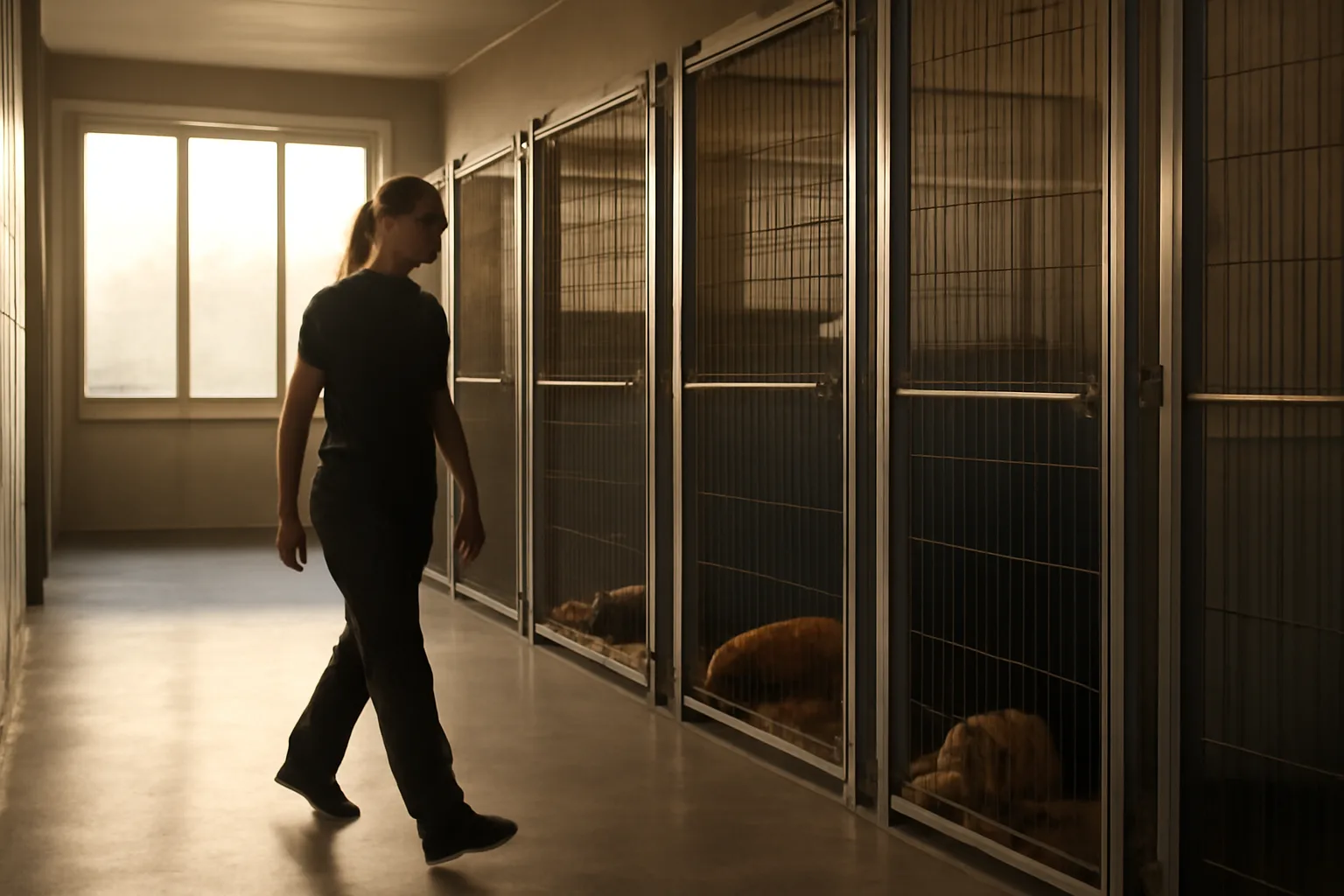
A boarding and training center is exactly what it sounds like: a facility that houses dogs overnight (or for extended stays) while also running them through structured obedience or behavior programs during the day. Regular boarding is basically supervised lodging, feed, walk, play, repeat. Boarding and training adds a curriculum: leash manners, recall, crate training, sometimes board-and-train packages that run 2 to 4 weeks. Chicago has a cluster of these operations, which is likely why searches for "found chicago boarding & training center" show up alongside general boarding queries. The model appeals to owners who want their dog's stay to produce a training outcome, more than a tired dog and a bill. From a licensing standpoint, this hybrid model usually triggers two separate regulatory buckets in most cities. There's the animal care/boarding license, covering housing, health, and safety, often under the local Department of Animal Care and Control or equivalent. And if the facility also does grooming, retail sales, or off-site training vans, you'll likely need additional business licenses layered on top. Illinois requires an Animal Welfare Act license from the Department of Agriculture for boarding kennels housing dogs for compensation, separate from any City of Chicago business license [1]. If you're comparing this model to a straight boarding operation, see dog boarding and pet boarding for the baseline requirements before you add training on top.
how much does dog boarding cost?
Nationally, dog boarding runs roughly $35 to $85 per night for standard kennel-style care, with upscale "dog hotel" suites and boutique facilities charging $75 to $150+ per night in major metro areas. Chicago-area boarding and training centers often price at the higher end because the nightly rate bundles in training time, more than kennel space; board-and-train packages (2 to 4 weeks of live-in training) commonly run $1,500 to $5,000 total depending on the trainer's credentials and program length. There's no federal price-setting body here, so these figures come from market observation rather than a government source. Treat any specific number as a planning range, not a guarantee. Add-ons that push the price up: private suites versus shared runs, one-on-one training sessions, daily report cards with photos or video, and specialty diets or medication administration. For operators, the real cost driver isn't the sticker price you charge. It's your square footage per dog and your staff-to-dog ratio, both of which some states regulate directly. Missouri, for example, requires primary enclosures for dogs to provide specific minimum floor space based on the dog's size under its Animal Care Facilities Act rules [2], and federal USDA regulations for licensed facilities require enough space for a dog to turn around freely, stand, sit, and lie down in a normal position [3]. Build your pricing model around the space and labor math, more than what competitors charge. Compare notes with related searches like dog hotels near me and dog kennels if you're benchmarking your local market.
how do you register a dog boarding or training business?
Registering the business itself (LLC formation, EIN, state tax registration) is separate from the animal-specific licensing, and both are required. Start with your state's Secretary of State office to form an LLC or corporation, then get an EIN from the IRS, then register for state sales tax if you'll be selling retail goods (food, leashes, treats) alongside services. After the business entity exists, the animal-care licensing kicks in. Illinois requires anyone operating a boarding kennel, as defined under the Animal Welfare Act, to hold a state license issued by the Department of Agriculture, with license classes tied to the number of animals housed and inspection requirements before approval [1]. Most other states run a parallel system: a state department of agriculture or state veterinarian's office issues the kennel/boarding license, and the city or county issues a separate local business license plus a zoning sign-off. Don't skip the zoning step thinking your business license covers it. Cities zone boarding and training facilities differently from standard retail, often requiring conditional use permits, minimum lot sizes, or distance requirements from residential property lines. Call your county or city zoning office before you sign a lease, not after.
how do you get a dog license (for the pets in your care)?
A dog license, in most jurisdictions, is a county or city requirement for individual pet owners, tying a dog's rabies vaccination record to a tag and registration number. This is different from your facility's kennel/business license, but as a boarding operator you'll likely need to verify or hold license and vaccination records for every dog in your care, and some counties require the facility itself to register as a group holder. To get a dog license as an owner: bring proof of current rabies vaccination to your county animal control office or an approved veterinary partner, pay the fee (commonly $5 to $25 per year for altered dogs, sometimes double or triple for unaltered dogs as an incentive to spay/neuter), and receive a tag. Cook County, Illinois, for example, requires dog and cat licenses countywide with fee schedules set by the county Department of Animal and Rabies Control. As a boarding facility, you should require proof of current rabies vaccination (and often bordetella/kennel cough vaccination) before accepting any dog, and many state kennel license rules make this a condition of your own license, more than good practice. Keep vaccination records on file for every boarding client. A state inspector will ask for them.
how do you get papers for a dog (registration papers, not licensing)?
"Papers" almost always means breed registry documentation, most commonly from the American Kennel Club (AKC), and this is a completely separate track from government licensing. AKC registration requires that at least one parent is already AKC-registered, or in some cases both parents are registered with a recognized foreign registry with reciprocal agreements. The breeder (not the buyer) typically initiates registration by submitting a litter registration application to the AKC after the puppies are born [4]. If you bought a dog and the seller said it "has papers" but didn't hand them over, you need the litter registration number and the breeder's cooperation; you cannot manufacture AKC papers after the fact if the parents were never registered. If a dog's parents were never registered with any recognized club, there's no retroactive way to get "real" papers, and anyone offering to sell you papers for an unregistered dog is running a scam. For mixed-breed dogs or dogs without traceable purebred lineage, there is no papers option. A DNA breed test (like Embark or Wisdom Panel) can identify likely ancestry but isn't a substitute for registry papers and won't make a dog eligible for AKC conformation events.
how do you get papers for my dog if I'm the breeder?
If you're breeding and want to offer papers to buyers, you need your own breeding dogs registered with the AKC (or the registry you're working with) before the litter is born. The process: register the litter with the AKC within specific timeframes after whelping, providing the sire and dam's registration numbers, then the AKC issues individual registration applications for each puppy that the new owner completes and submits [4]. This is where breeding crosses from hobby into regulated business territory, and it's worth pausing here. If you're selling more than a small number of puppies per year directly to the public, sight unseen (meaning the buyer doesn't see the animal in person before purchase), you may need a USDA license as a Class A (breeder) dealer under the Animal Welfare Act. The general rule under the Act: breeders who sell puppies at wholesale, or who sell any animal sight unseen (via the internet, phone, or mail) and maintain more than four breeding females, generally must obtain a USDA license. The exact thresholds and exemptions are laid out in the Animal Welfare Act regulations at 9 CFR Part 2 [5]. Separately, most states also require their own breeder license once you exceed a certain number of litters or breeding females per year, and this is a state department of agriculture matter, not a USDA one. Illinois, for example, licenses "breeders" separately from boarding kennels under its Animal Welfare Act, with distinct fee schedules and inspection standards depending on the number of dogs [1]. If you're weighing whether to add a small breeding operation onto a boarding and training business, the licensing stacks (state kennel license, possible USDA license, county zoning approval) rather than replacing each other.
how do you become a dog breeder, legally?
Becoming a legal dog breeder starts with the same zoning question every boarding operator faces: is breeding an allowed use on your property under current zoning, and does your county cap the number of intact dogs or litters per year on residential land? Many suburban and rural counties have specific ordinances distinguishing a "hobby breeder" (a handful of litters a year, often exempt from local licensing) from a commercial kennel operation, and the cutoff varies widely. Next, check the USDA threshold. Under the Animal Welfare Act regulations at 9 CFR Part 2, breeders who sell puppies sight unseen and keep more than four breeding females typically need a USDA Class A license, with an application, facility inspection, and annual renewal through APHIS [5]. Then layer in state requirements. Most states with dedicated animal welfare statutes (Illinois, Missouri, Ohio, and others) require a separate state breeder or kennel license once you exceed a set number of litters, adult dogs, or annual sales, with its own inspection cycle distinct from USDA inspections [1] [2]. Finally, register your business entity, get any required sales tax permits for selling puppies as taxable goods (this varies by state), and budget for the ongoing veterinary, vaccination, and health-certificate costs per litter, which often run into the hundreds of dollars before a single puppy sells.
what zoning approval does a boarding & training center need?
Zoning is usually the single biggest delay in opening a boarding and training center, bigger than the state license itself in most cases. Kennels, boarding facilities, and animal care businesses are rarely allowed "by right" in commercial or residential zones; most cities require a conditional use permit (CUP) or special use permit, which means a public hearing before a zoning board or plan commission. Expect the zoning office to ask about noise mitigation (sound-rated walls, limits on outdoor run hours), odor and waste management plans, parking counts based on staff and client drop-off volume, and setback distances from residential property lines. Getting a pre-application meeting with your city's planning department before you sign a lease can save months, and it's free in most jurisdictions. Bring your floor plan, projected dog capacity, and hours of operation to that pre-application meeting. Boards care about capacity and noise far more than they care about your business plan; come prepared to answer exactly how many dogs will be outside at once and for how long.
how much does it cost to license a boarding & training center overall?
| State kennel/boarding license | $25 to $500+ depending on capacity tier | State department of agriculture | |
|---|---|---|---|
| City/county business license | $50 to $500 | City clerk or county business licensing office | |
| Zoning application/CUP fee | $200 to $2,000+ (varies widely by city) | City/county zoning or planning department | |
| USDA Class A/B license (if breeding threshold met) | Tiered by gross annual sales | USDA APHIS | |
| County dog licensing compliance (per-dog, ongoing) | $5 to $25 per dog per year | County animal control | USDA licensing fees under the Animal Welfare Act are tiered by the applicant's total number of animals and business type, set out in the fee structure at 9 CFR 2.6 . Everything else genuinely varies by state and county, which is why calling your specific zoning office and state department of agriculture before budgeting is worth the phone call. If you want a structured way to pull together the state license application, the local zoning packet, and the inspection checklist in one pass instead of chasing three different agencies separately, that's the gap our $149 one-time license-packet-builder is built to close. It doesn't file anything for you and it's not a substitute for talking to your zoning office, but it organizes what you need before you walk in. |
Total licensing cost for a boarding and training center is really three or four line items stacked together, and no single fee covers everything. Here's a rough breakdown; exact figures depend entirely on your state and municipality, so treat these as planning ranges, not quotes. | Cost category | Typical range | Who collects it |
what inspection standards apply once you're licensed?
Once licensed, expect recurring inspections from at least one, often two, agencies. Your state department of agriculture (or equivalent) typically inspects boarding kennels on an annual basis, checking sanitation, ventilation, enclosure size, record-keeping, and staff-to-animal ratios against that state's Animal Welfare Act or Care Facilities Act rules [1] [2]. If you're USDA-licensed as a breeder or dealer, APHIS inspectors also conduct unannounced inspections, and the federal standards under 9 CFR Part 3 set specific minimums: primary enclosures must allow each dog to stand, sit, turn, and lie down without touching the enclosure walls, and there are specific temperature, ventilation, and lighting requirements for indoor facilities [3]. Local health departments sometimes add a layer too, particularly if you offer any food service or grooming with water reclamation systems. Keep a physical or digital inspection binder: vaccination records for every boarding dog, staff training logs, cleaning schedules, and any prior inspection reports with corrective actions closed out. Inspectors move faster, and write fewer violations, when the paperwork is already organized and dated.
Frequently asked questions
How much does dog boarding cost per night?
Standard dog boarding runs roughly $35 to $85 per night nationally, with upscale suites or boarding-and-training programs charging $75 to $150+ per night in major metro markets like Chicago. Multi-week board-and-train packages commonly total $1,500 to $5,000. These are market-observed ranges, not government-set prices, so confirm current local rates directly with facilities.
How do you register a dog with your city or county?
Bring proof of current rabies vaccination to your county animal control office (or an approved vet), pay the licensing fee (commonly $5 to $25 per year), and receive a tag. Requirements and fees are set locally; Cook County, Illinois, for example, runs its own dog and cat licensing program through its Department of Animal and Rabies Control.
How do you get a dog license?
A dog license is issued by your county or city, usually through animal control, and requires proof of current rabies vaccination plus a fee. It's renewed annually or per the vaccination cycle. This is separate from any breed registry "papers" and separate from a kennel business license if you're operating a boarding facility.
How do you get papers for a dog after the fact?
You generally can't. AKC registration papers require the litter to be registered by the breeder using both parents' registration numbers, done at or near the time of whelping. If the parents were never registered, there's no retroactive path to real papers; anyone selling papers for an unregistered dog after the fact is misrepresenting the dog.
How do you become a dog breeder legally?
Check your county zoning rules for allowed breeding activity and litter caps, apply for any required state breeder license through your state department of agriculture, and determine whether you cross the USDA threshold (more than four breeding females and any sight-unseen sales) requiring a Class A license under the Animal Welfare Act via APHIS.
What is the USDA threshold for needing a breeder license?
Under the Animal Welfare Act, breeders who sell dogs sight unseen (online, by phone, or by mail) and maintain more than four breeding females typically need a USDA Class A license through APHIS. Breeders who sell only in person, buyer-present, at the point of sale, are generally exempt from federal licensing, though state rules may still apply.
Does a boarding and training center need a separate license from a regular boarding kennel?
Not usually a separate license type, but training adds programmatic elements (structured curriculum, extended stays) that some zoning boards scrutinize more closely during the conditional use hearing. The underlying state kennel/boarding license and city business license requirements are typically the same as standard boarding.
How much does it cost to license a kennel business overall?
Expect to budget for a state kennel license ($25 to $500+ depending on capacity), a city business license ($50 to $500), and a zoning application fee ($200 to $2,000+). If you cross USDA breeding thresholds, add a tiered APHIS license fee. Total cost varies enormously by state and county, so confirm exact figures locally.
What zoning district allows a dog boarding facility?
This depends entirely on your city's zoning code; most municipalities require a conditional use permit or special use permit for kennels and animal boarding, even in commercial zones, rather than allowing it by right. Call your local planning department to confirm which districts allow it and what hearing process applies.
How do I know if my dog needs papers to be sold or shown?
Papers (breed registry documentation) are only required if you want to enter AKC conformation events, register future litters, or market the dog as a documented purebred. They're not legally required to own, board, or sell a dog otherwise; a bill of sale and vaccination records are what most buyers and boarding facilities actually need.
How often are licensed boarding kennels inspected?
State agriculture departments typically inspect licensed boarding kennels annually, checking sanitation, enclosure size, and recordkeeping. USDA-licensed breeders and dealers also face unannounced inspections from APHIS under 9 CFR Part 3 standards covering enclosure size, temperature, and ventilation.
Can I run a boarding and training business out of my house?
Depends entirely on local zoning. Many residential zones prohibit commercial kennels outright or cap the number of dogs allowed without a conditional use permit. Home-based boarding for a small number of dogs may fall under a hobby exemption in some counties, but check with your specific zoning office before accepting paying clients.
Sources
- Missouri Secretary of State, Animal Care Facilities Act rules (2 CSR 30-9): Missouri requires minimum primary enclosure floor space for dogs based on size under state Animal Care Facilities Act rules
- USDA APHIS, Animal Welfare Act regulations, 9 CFR Part 3: Federal enclosure standards require enough space for a dog to turn around freely, stand, sit, and lie in a normal position
- Cook County Department of Animal and Rabies Control: Cook County requires countywide dog and cat licensing with fees set by the county
- USDA APHIS, Animal Welfare Act regulations, 9 CFR Part 2: USDA requires a Class A license for breeders who sell animals sight unseen and maintain more than four breeding females, per Animal Welfare Act thresholds
- USDA APHIS, Animal Welfare Act regulations, license application fees, 9 CFR 2.6: APHIS licensing fees under the Animal Welfare Act are tiered based on the applicant's animal inventory and business classification