Last updated 2026-07-25
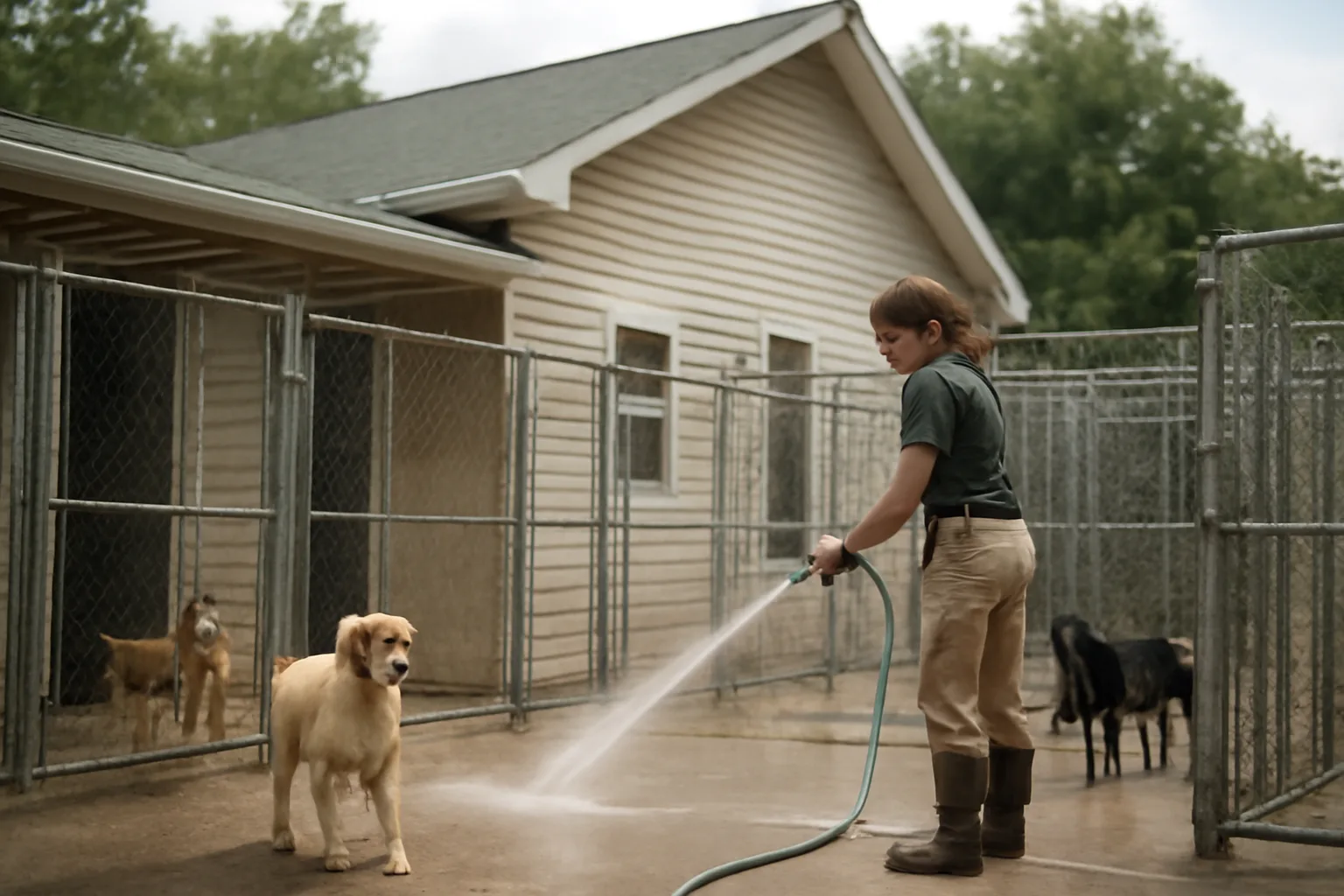
TL;DR
A dog boarding license usually means a state kennel or commercial pet care permit, a county business license, and a zoning approval, plus a fire/health inspection. Total cost typically runs $50 to $500 in fees alone, before build-out. If you sell puppies across state lines or board 4+ breeding females, USDA APHIS licensing may apply too.
What exactly is a dog boarding license?
A "dog boarding license" isn't one document. It's shorthand for a stack of approvals you need before you can legally keep other people's dogs overnight for money. Depending on where you live, that stack usually includes a state-level kennel or commercial animal facility permit, a county or city business license, a zoning approval or conditional use permit, and a fire/building/health inspection sign-off. Some states (Virginia, Pennsylvania, New Jersey among them) license "boarding kennels" or "commercial kennels" directly through the state Department of Agriculture. Others leave boarding facility licensing entirely to counties and cities, with the state only stepping in for breeders or pet dealers. Pennsylvania's Dog Law, for example, requires a kennel license for anyone who boards, breeds, or sells dogs, with categories and fees set by the number of dogs kept [1]. There's no federal "dog boarding license." USDA APHIS licensing kicks in for a different reason entirely, covered below, and it's not the same thing as a local boarding permit. If your business is purely boarding and daycare for other people's pets (no breeding, no wholesale sales), you're almost always dealing with state and local rules only, not federal ones.
How much does dog boarding cost to get licensed?
| State kennel/boarding license | $25-$500/year | Scales with dog capacity in most states [1] | |
|---|---|---|---|
| County/city business license | $50-$300/year | Separate from state license | |
| Zoning permit or conditional use | $100-$2,000+ | Public hearing required in many jurisdictions | |
| Fire/building inspection corrections | $500-$10,000+ | Highly variable, depends on existing structure | |
| USDA APHIS license (if applicable) | $40-$750 initial, plus annual fee | Only for certain breeders/dealers, not typical boarding [2] | These are planning ranges, not quotes. Every fee schedule in this article should be confirmed against your specific state agriculture department and county zoning office before you budget a project. |
Direct licensing fees for a boarding kennel typically run $50 to $500 a year, but that's the smallest part of your budget. Pennsylvania's kennel license fees scale by capacity, from under $100 for small operations up to several hundred dollars for large commercial kennels, with fees set annually by the Bureau of Dog Law Enforcement [1]. Virginia's local ordinances for commercial dog kennels are set by county, commonly in the $30 to $150 range for the license itself, per the Virginia Department of Agriculture and Consumer Services boarding facility guidance. The real cost driver isn't the license fee. It's everything around it: zoning application fees ($100 to $1,000+ depending on whether you need a simple permit or a full conditional use hearing), site plan review, required fencing or sound barriers, fire marshal inspection corrections, and, if you're building from scratch, HVAC and drainage work to meet facility standards. A lot of first-time operators budget $2,000 for licensing and get blindsided by a $15,000 zoning and build-out bill. Here's a rough range by category, based on typical state and county fee schedules: | Cost category | Typical range | Notes |
How do you get a dog kennel or boarding license, step by step?
The order matters. Do it out of sequence and you'll pay for inspections twice or lose a lease deposit on a property that can't be zoned for kennels. 1. Check zoning first, before you sign a lease. Call the county or city zoning or planning office and ask directly: "Is a commercial dog boarding or kennel use permitted at this address, and does it require a conditional use permit or variance?" Get the answer in writing if you can. 2. Confirm state licensing category. Contact your state Department of Agriculture (or equivalent animal welfare/health department) to find out if boarding kennels are licensed at the state level, and what capacity thresholds trigger different license tiers. 3. Apply for zoning approval. If a hearing is required, this is the slowest step, often 60 to 120 days from application to decision, since it usually requires public notice and a board meeting. 4. Build or renovate to meet facility standards. This includes run sizes, drainage, ventilation, fire suppression, and noise mitigation, all of which local codes and state kennel regulations specify with real numbers (square footage per dog, air exchanges per hour, etc.). 5. Schedule your pre-licensing inspection. Most states require an on-site inspection by an animal control officer or state inspector before issuing the kennel license. 6. Get your state license and county business license simultaneously if possible, since many counties won't issue the business license without proof of the state kennel license (or vice versa). 7. Renew annually. Nearly every state kennel license is a 12-month license, and most require a renewal inspection, more than a fee payment. If you want a structured way to gather everything you need for steps 1 through 3 in one pass instead of five separate phone calls, a kennel license and zoning packet can save real time, though nothing replaces calling your actual county office to confirm current requirements.
How to register a dog for boarding (vaccination and intake requirements)
This is a different question than licensing the business, and a lot of new operators mix the two up. "Registering a dog" at a boarding facility means your intake paperwork: proof of rabies vaccination, often DHPP (distemper combo) and bordetella (kennel cough) vaccination, and sometimes a negative fecal test or flea/tick prevention proof. Most states don't mandate specific boarding-facility vaccine requirements by statute; it's typically industry standard practice plus whatever your state kennel regulations require for disease control. Virginia's boarding kennel rules, for instance, require that kennels maintain records showing dogs are free of evidence of infectious disease at intake, without listing a specific vaccine panel. Bordetella requirements especially vary: some facilities require it, some require it only if the dog will be in group daycare, and there's no single answer here that state law dictates. Your intake registration process, separate from any government license, should collect: owner contact and emergency contact, vet contact info, vaccination records, feeding and medication instructions, and a signed liability waiver. This isn't a legal requirement in most states, but it's the paperwork that protects you if a dog gets sick or hurt in your care.
How do you register a dog with the county or state (owner-side dog licensing)?
If a client asks you "how do I register my dog," they're usually asking about county dog licensing, which is a completely separate system from your business license. Most counties require dog owners to license their own pets annually or every 3 years, tied to proof of rabies vaccination, typically costing $10 to $25 for a spayed/neutered dog and more for an intact dog. This owner-side registration is enforced at the county or city level, usually through animal control or the county clerk. It has nothing to do with your kennel license, but it's a common enough question from customers that boarding and daycare operators should know the basic answer: point them to their county animal control or clerk's office website. Ohio, for example, requires dog registration through the county auditor, with fees set by county ordinance [3]. Some states also tie dog licensing to broader pet identification requirements, like microchipping in certain municipalities, but there's no federal dog registration system. If a customer asks you how to register their dog nationally, the honest answer is: there isn't a national registry for pet ownership. AKC and other breed registries are a completely different thing, covered next.
How do you get papers for a dog (AKC registration vs government licensing)?
"Getting papers" for a dog almost never means a government document. It means registering the dog with a breed registry, most commonly the American Kennel Club (AKC), which tracks pedigree and lineage, not legal ownership or health. To register a litter with AKC, the breeder needs the sire and dam to already be AKC-registered, and files a litter registration application, currently listing individual puppy registration fees in the range published on the AKC's own registration fee page, plus the litter application fee. If a dog's parents were never registered, that dog cannot get "AKC papers" retroactively except through limited programs like AKC's PAL (Purebred Alternative Listing), which registers dogs without papers for competition purposes only, not breeding eligibility, per AKC's own PAL program description. So if someone asks "how can I get papers for my dog" after buying a dog with no registration paperwork, the honest answer is usually: you can't retroactively create a false pedigree, but you may be able to use PAL for sports and companion events if the dog is spayed/neutered and of apparent purebred type. There's no government agency that issues "dog papers"; that's entirely a private registry function, separate from any state or county license.
How to become a dog breeder (and when USDA licensing applies)?
Becoming a breeder legally starts with state and local rules, not federal ones, for almost everyone. Most states require a kennel or breeder license once you exceed a certain number of intact females or litters per year; thresholds vary widely, so check your specific state Department of Agriculture breeder licensing page. Federal USDA APHIS licensing is a separate, narrower trigger. Under the Animal Welfare Act regulations, a breeder needs a USDA license if they have more than four breeding females and sell puppies sight unseen (meaning the buyer never physically sees the animal or the facility before purchase, such as online or through a broker) [2]. APHIS's own guidance states that "retail pet stores" and breeders who sell directly, in person, to buyers are generally exempt, but anyone selling wholesale, to brokers, or sight-unseen across state lines above the four-female threshold typically needs a Class A (breeder) or Class B (dealer) license [2]. USDA license fees are tiered by gross annual sales from breeding animals, and APHIS publishes the fee schedule directly: as of the current fee structure, initial license fees and annual renewal fees scale from under $100 for the smallest operations to over $750 for the largest, per 9 CFR Part 2 fee provisions and APHIS's licensing fee page [2] [4]. Inspections are also mandatory and unannounced for federally licensed breeders. So the practical path: check your state's breeder license threshold first (often triggered well below four females), then separately check whether your sales method (sight-unseen, wholesale, interstate) crosses the federal APHIS threshold. Plenty of breeders need only a state license. Plenty of high-volume or online-sales breeders need both.
How to get a dog license (as a pet owner, at your facility, or as a breeder)?
This phrase covers three completely different processes, and it's worth being explicit about which one you're asking about. Pet owner dog license: apply through your county clerk, treasurer, or animal control office, usually annually, with proof of current rabies vaccination and a fee typically $10 to $25. Commercial kennel/boarding license: apply through your state Department of Agriculture (in states that license at the state level) or your county/city clerk's office, following the zoning-then-inspection sequence described above. Breeder license: apply through your state's breeder or kennel licensing program if you exceed your state's intact-female or litter threshold, and separately through USDA APHIS if you cross the federal sight-unseen sales threshold [2]. If you're opening a boarding or daycare facility, the license you actually need is the commercial kennel/boarding one, and it's worth reading up on the difference between general dog boarding licensing and pet boarding rules that some states apply separately to cats and other species, since a mixed-species facility sometimes needs a broader permit category than a dogs-only kennel.
What facility standards do inspectors actually check?
Inspectors aren't just looking at your paperwork. They're checking physical conditions against specific numeric standards written into state kennel regulations or, for USDA-licensed breeders, into 9 CFR Part 3. Under the federal Animal Welfare Act regulations that apply to USDA-licensed facilities, primary enclosures must give each dog space to stand, sit, lie down, and turn around normally, with specific square-footage formulas tied to the dog's length [5]. Temperature, ventilation, and sanitation all have numeric or descriptive standards in 9 CFR 3.2 through 3.11, covering things like ambient temperature limits and cleaning frequency [5]. At the state level, boarding kennel rules typically cover: minimum run or enclosure size per dog, separation between species or aggressive animals, drainage and waste removal, ventilation and temperature control, fire exits and extinguisher placement, and record-keeping for vaccination and incident logs. Virginia's regulations, for example, require kennels to maintain sanitary conditions and adequate space, with specifics enforced through the state veterinarian's office. Before your first inspection, walk your own facility with the actual regulation text in hand, not a checklist someone else made. Inspectors cite specific code sections, and if you can show up already knowing which section covers your ventilation system, the inspection goes faster and you look like someone who takes this seriously.
What zoning issues come up for dog boarding and daycare?
Zoning is where most first-time boarding operators get stuck, more than licensing fees or facility build-out. Dog boarding is frequently classified as a "kennel" use, which is often restricted to agricultural or industrial zones, not commercial retail zones, even in areas that otherwise seem business-friendly. The two most common zoning paths are a permitted use (you just apply and get approved if the address is zoned correctly) or a conditional use permit / special exception (you need a public hearing, and neighbors can object). Noise from barking dogs is the single most common objection raised at these hearings, followed by traffic and odor concerns. If your address requires a conditional use hearing, budget real time, more than money. Many counties require 30 to 60 days public notice before a hearing date, and the county may request a noise mitigation plan, a specific fence height, or a maximum dog capacity as conditions of approval. Getting a rejection at a zoning hearing after you've already signed a lease is the most expensive mistake in this business, and it's avoidable simply by calling the [county zoning office] before you sign anything. Some operators pursuing pure daycare-only businesses (no overnight boarding) find their local code treats daycare differently from overnight kennels, sometimes with a lighter zoning classification since there's no overnight noise concern. Worth asking your zoning office directly whether daycare-only changes your classification versus full boarding.
Boarding kennel vs. USDA-licensed breeding facility: what's the real difference?
| Who regulates it | State Dept. of Agriculture + county zoning | Federal APHIS, under Animal Welfare Act [2] | |
|---|---|---|---|
| Trigger | Operating a commercial facility housing others' dogs | More than 4 breeding females + sight-unseen sales [2] | |
| Inspection frequency | Annual, state-set | Unannounced, at least annually, often more [2] | |
| Typical fee range | $50-$500/year (state/county) [1] | $40 to $750+ tiered by sales volume [2] | |
| Federal involvement | None, typically | Direct APHIS licensing and inspection | A facility that boards dogs and also breeds a handful of litters a year for direct, in-person sale usually stays entirely in state/local territory. The federal switch flips specifically on the combination of breeding female count and sales method, not on boarding activity at all. If you're not breeding and selling dogs sight-unseen, APHIS licensing almost certainly doesn't apply to you regardless of how many dogs you board. |
These are two different regulatory worlds, and conflating them causes real confusion for operators who do both boarding and occasional breeding. | Factor | Boarding/daycare kennel | USDA APHIS-licensed breeder/dealer |
Frequently asked questions
How much does dog boarding cost to license as a business?
State and county licensing fees for a boarding kennel typically run $50 to $500 a year combined. The bigger cost is usually zoning approval and facility build-out, which can run from a few hundred dollars to well over $10,000 depending on whether your building already meets fire, drainage, and space code requirements.
How much is dog boarding for a pet owner (not the license)?
This varies entirely by region and facility type; there's no government-set price. Typical U.S. boarding rates commonly range from about $25 to $85 per night depending on the market and amenities, though this is market pricing, not a regulated fee, and varies widely by city and facility type.
How do I register a dog with my county?
Contact your county clerk, treasurer, or animal control office. Most require annual or multi-year dog registration with proof of current rabies vaccination, typically costing $10 to $25 for spayed/neutered dogs. This owner-side registration is separate from any commercial kennel or boarding business license.
How do you get papers for a dog?
"Papers" usually means breed registry documentation (most often AKC), not a government document. It requires the dog's parents to already be registered and a litter registration filed by the breeder. There's no way to retroactively create papers for a dog whose parents were never registered, though AKC's PAL program allows limited registration for competition purposes only.
How can I get papers for my dog if the breeder never registered the litter?
If the litter was never registered with AKC or another registry, and the parents weren't registered, standard pedigree papers generally can't be created after the fact. AKC's PAL (Purebred Alternative Listing) program lets an unregistered but apparently purebred, spayed/neutered dog compete in many events, but it doesn't grant full registration or breeding eligibility.
How do I get a dog license as a pet owner?
Apply through your county clerk, treasurer, or animal control office, usually annually or every few years, with proof of current rabies vaccination. Fees typically run $10 to $25 depending on the county and whether the dog is spayed or neutered. This is different from a commercial kennel or boarding license.
How do I become a dog breeder legally?
Check your state's breeder or kennel licensing threshold first (often triggered by a specific number of intact females or litters per year) through your state Department of Agriculture. Separately, check whether USDA APHIS licensing applies: it's required if you have more than 4 breeding females and sell puppies sight-unseen across state lines.
Do I need a USDA license to board dogs?
No. USDA APHIS licensing applies to certain breeders and dealers under the Animal Welfare Act, specifically those with more than 4 breeding females selling sight-unseen, not to boarding or daycare facilities. Boarding kennels are licensed at the state and county level, not federally, in almost all cases.
What's the difference between a kennel license and a boarding license?
In most states these terms overlap or the state uses one license category to cover both breeding kennels and boarding kennels, differentiated by declared activity and dog count. Some states, like Pennsylvania, use tiered kennel license categories that apply regardless of whether the dogs are boarded, bred, or both.
How long does it take to get a dog boarding license?
Plan for 60 to 120 days minimum if your property requires a zoning hearing or conditional use permit, since public notice periods alone often take 30 to 60 days. If zoning is already correct for your address, the state license and inspection process alone can sometimes move in 2 to 6 weeks.
Can I board dogs in my home without a license?
Depends entirely on your city and county. Many jurisdictions allow limited in-home pet sitting without a commercial license below a certain number of animals or clients, but operating as a business, advertising publicly, or exceeding your jurisdiction's home occupation dog limits usually requires the same zoning and licensing steps as a standalone facility.
What happens if I operate a boarding kennel without a license?
Enforcement varies by state and county, but consequences typically include fines, forced closure until compliance, and in some states, per-day penalties for continued unlicensed operation. Insurance is also a real risk: unlicensed operators often find their liability coverage is void if a dog is injured or escapes during an unpermitted operation.
Sources
- Pennsylvania Department of Agriculture, Bureau of Dog Law Enforcement, Kennel Licensing: Pennsylvania requires kennel licenses with fees tiered by dog capacity for boarding, breeding, or selling
- USDA APHIS, Animal Welfare Act Licensing and the 4-female/sight-unseen sales threshold: USDA APHIS licensing applies to breeders with more than 4 breeding females selling dogs sight-unseen
- Ohio Revised Code, County dog registration requirements: Ohio requires dog registration through the county auditor with locally set fees
- USDA APHIS, Animal Welfare Act license and registration fees: USDA APHIS license fees are tiered by gross annual sales from breeding animals
- Code of Federal Regulations, 9 CFR Part 3, Animal Welfare Standards for Dogs: Federal facility standards specify enclosure size, ventilation, and sanitation requirements for USDA-licensed dog facilities