Last updated 2026-07-26
TL;DR
Wisconsin requires a state breeder license from DATCP if you sell 25 or more dogs in a year from 3 or more litters. Licenses run on a per-facility fee schedule tied to dog count, plus a $10 per-dog fee. You'll also need a county zoning check and, if you ship interstate or sell to pet stores, a separate USDA APHIS license.
Do I need a dog breeder license in Wisconsin?
Yes, if you sell 25 or more dogs in a year and those dogs come from 3 or more litters born on your premises. That's the trigger under Wisconsin's dog dealer and breeder statute, administered by the Department of Agriculture, Trade and Consumer Protection (DATCP) [1]. Sell fewer dogs than that, or fewer litters, and you're likely under the state threshold, though you should still check your county zoning rules before you assume you're in the clear. The statute behind this is Wis. Stat. 173.41, which defines a "licensed dog breeder" as someone who has 3 or more intact female dogs and sells 25 or more dogs (or transfers them for value) in a year [2]. Notice the two-part test: it's more than volume, it's also about how many breeding females you're running. A hobby breeder with two litters a year from one female almost never trips this wire. A hobbyist with three females all whelping the same spring, planning to sell 30 pups, definitely does. Don't confuse "license" with "registration." A Wisconsin dog breeder license is a state facility permit tied to public health and animal welfare standards. Registering a litter with AKC or another registry is a totally separate, private process that has nothing to do with your legal right to operate.
What does a Wisconsin dog breeder license cost?
| Annual facility license fee | All licensed breeders | Tiered by dog count, confirm with DATCP | |
|---|---|---|---|
| Per-dog fee | All licensed breeders | Historically about $10/dog [2] | |
| Inspection fee (if applicable) | Breeders selected for inspection | Varies, sometimes bundled into license fee | |
| County zoning permit | Breeders in unincorporated areas or municipalities with kennel rules | Set by county, often $25 to $300 | |
| USDA APHIS license (if triggered) | Wholesale breeders selling to brokers/pet stores or shipping sight-unseen | $40 to $985/year based on gross sales, plus a one-time app fee [3] | Budget separately for county zoning and any USDA fee. Wisconsin's state license doesn't replace either of those, and skipping the county step is the single most common reason breeders get blindsided by a stop-work order after they've already invested in kennel construction. |
License fees are set by DATCP and scale with how many dogs you keep, not a flat rate. Wisconsin's dog breeder license statute sets an annual license fee structure with a per-dog component, and the per-dog fee has run around $10 per dog in recent years [2]. Because DATCP updates fee schedules periodically, treat any dollar figure here as a starting estimate and confirm the current number directly with DATCP's Division of Animal Health before you budget. Here's a rough shape of the cost structure so you can plan cash flow, not a guarantee of exact pricing: | Cost component | Who pays it | Rough range |
How do you get a dog breeder license in Wisconsin, step by step?
Start with the DATCP application, not your county. You'll need your kennel name, address, the number of intact females you keep, your prior year's sales count if you have one, and a facility description covering housing, sanitation, and exercise areas [2]. Here's the general sequence: 1. Confirm you meet the threshold (3+ intact females, 25+ dogs sold/transferred per year) under Wis. Stat. 173.41 [2]. 2. Apply through DATCP's licensing division, either by mail or through their online portal, and pay the facility fee plus per-dog fee. 3. Prepare for a facility inspection. DATCP or a certified local inspector checks housing, temperature control, sanitation, and recordkeeping against Wisconsin's animal welfare standards for licensed breeders [2]. 4. Get your local zoning sign-off. Wisconsin counties and municipalities regulate kennels separately from the state, and some townships cap the number of dogs you can keep regardless of your state license. 5. Renew annually. Wisconsin breeder licenses are not one-and-done; DATCP requires annual renewal with updated dog counts and fees. If your operation also ships puppies across state lines, sells wholesale to pet stores, or sells to buyers who never see the animal in person before purchase, you likely also need a USDA Class A or Class B license from APHIS, which is a completely separate federal process with its own inspection standard under the Animal Welfare Act regulations at 9 CFR Chapter I [3].
What are Wisconsin's facility standards for licensed breeders?
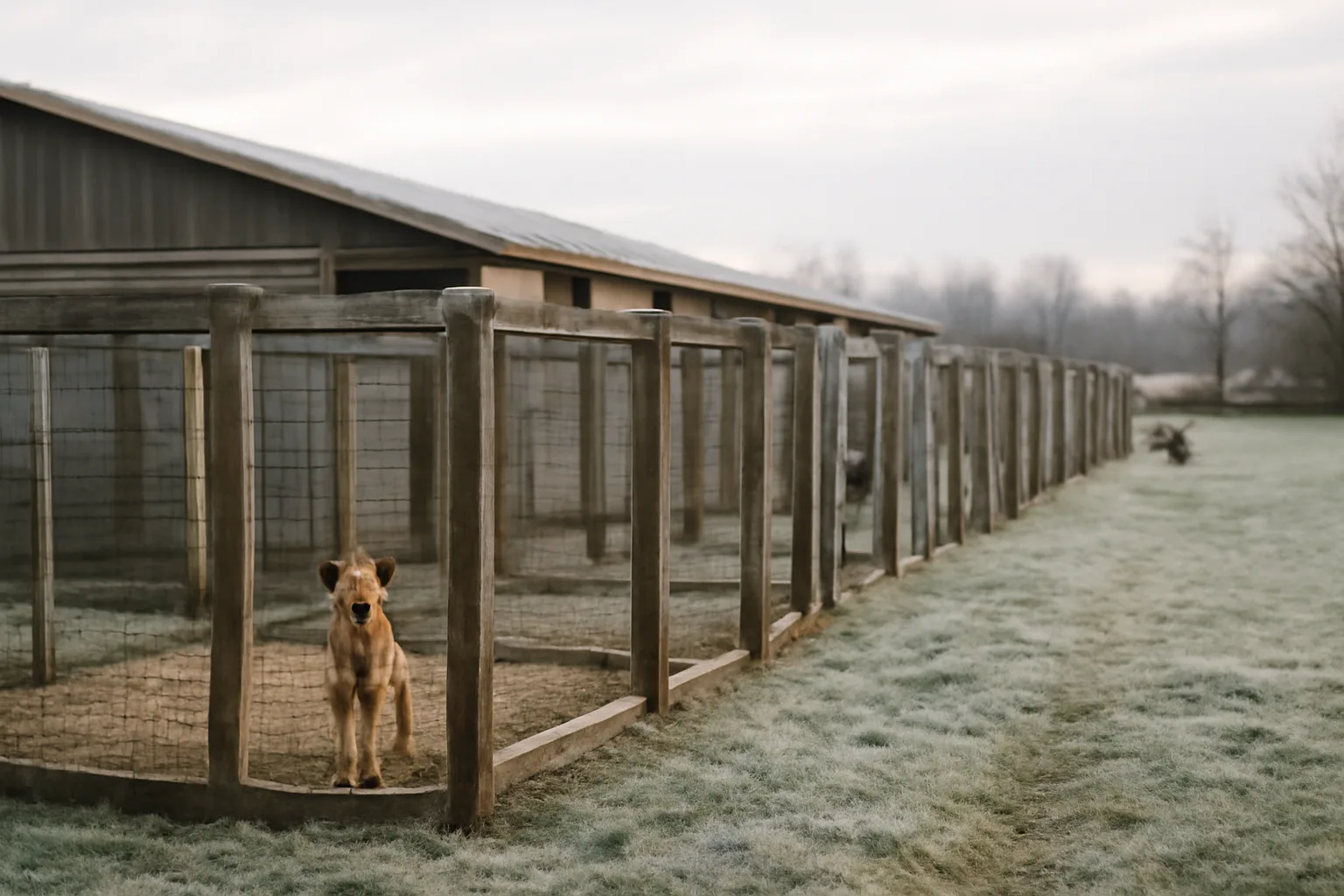
Wisconsin's licensed dog breeder statute and its implementing rules set specific requirements for housing, temperature, sanitation, and veterinary care that DATCP inspectors check against during licensing and renewal visits [2]. These aren't optional guidelines, they're the actual bar you're inspected against, and failing them can mean a conditional license or denial. Key areas inspectors look at: - Housing size and construction: enclosures must allow dogs to stand, turn around, and lie down normally, with solid resting surfaces off wire or slatted flooring where extended confinement occurs.
- Temperature control: indoor housing areas generally need to stay within a safe range, consistent with the federal Animal Welfare Act's temperature standard requiring ambient temperature not fall below 50 degrees Fahrenheit for dogs not acclimated to cold, under 9 CFR 3.2 [3].
- Sanitation and waste removal: daily removal of feces and soiled bedding, with a documented cleaning schedule.
- Veterinary care: a written health program, including vaccination records and a plan for sick or injured animals.
- Recordkeeping: acquisition and disposition records for every dog, held for a period DATCP specifies (commonly several years) so inspectors can trace where a dog came from and where it went. If you're also crossing the USDA threshold, expect a second, separate inspection against federal Animal Welfare Act standards, which overlap heavily with Wisconsin's rule but aren't identical. Facilities that pass the state inspection sometimes still get flagged on federal specifics like primary enclosure sizing formulas.
When does USDA licensing kick in for Wisconsin breeders?
USDA APHIS licensing applies once you sell dogs wholesale (to a broker, pet store, or research facility) or sell directly to buyers without the buyer seeing the dog in person before purchase, regardless of your Wisconsin state license status [3]. The federal Animal Welfare Act carves out a retail-only exemption for breeders who sell exclusively face-to-face, but that exemption disappears the moment you ship a puppy sight-unseen or sell through a third party. APHIS licensing has two main categories relevant to breeders: Class A (breeders who sell animals they've bred) and Class B (dealers who buy and resell, including brokers). Both require a facility inspection under the federal Animal Welfare Act regulations at 9 CFR Chapter I [3]. APHIS's licensing fee regulation at 9 CFR 2.6 sets tiered annual license fees based on the total number of animals sold or gross dollar amounts involved, with the fee schedule running from a low tier into the hundreds of dollars annually for the largest operations, plus a nonrefundable application fee [3]. A Wisconsin state license does not substitute for a USDA license, and vice versa. Plenty of breeders assume that once DATCP signs off, they're covered everywhere. They're not. If you're advertising nationally, shipping puppies by air cargo, or selling to a pet store chain, call your local APHIS Animal Care office before you scale, because retroactive compliance action is far more expensive than getting licensed up front.
How to become a dog breeder in Wisconsin (the practical path)
Becoming a legitimate, licensed breeder in Wisconsin means stacking four separate approvals: state DATCP license (if you hit the threshold), county or municipal zoning approval, USDA license (if you sell wholesale or sight-unseen), and your own veterinary health protocol. Skipping any one of these doesn't just risk a fine, it risks a stop-breeding order once someone complains to animal control. Realistically, here's the order that saves the most headache: 1. Check zoning first. Call your county zoning office before you buy property or convert a barn. Some Wisconsin counties limit intact females per parcel or require a conditional use permit for any kennel operation, and this can kill a business plan that DATCP would otherwise approve. 2. Build your facility to Wisconsin's licensed breeder standards from day one, even if you're currently under the state threshold. Growing into a larger operation later is far cheaper if the kennel was built right the first time. 3. Establish a relationship with a licensed veterinarian for health certificates, vaccination protocols, and the records DATCP and USDA both want to see. 4. Apply for your DATCP license once you're near or over the threshold. Don't wait until you're already selling 25 dogs; apply as you approach it, since the inspection and paperwork take time. 5. If you're planning wholesale or interstate sales, contact APHIS Animal Care early. Their inspection process and paperwork run on a different timeline than the state's. Breeding responsibly also means understanding basic genetics and whelping care, which isn't something a license teaches you. Wisconsin doesn't test for breeding competence, only facility and recordkeeping compliance. Groups like your state veterinary association or breed-specific clubs are a better resource for the actual husbandry side than any government office.
How do you register a dog, and how is that different from getting a license?
Registering a dog with AKC, UKC, or another registry is a private paperwork process that tracks pedigree, not a legal requirement to own or sell a dog. Licensing a dog, on the other hand, is a local government requirement, usually handled by your county or city clerk, tied to rabies vaccination and animal control. To register a litter with AKC, you generally need the sire and dam to both be AKC registered, submit a litter application with the whelping date and puppy count, and pay a per-litter and per-puppy fee. AKC's own fee schedule and process live on their site, not a government one, since AKC is a private nonprofit registry, not a regulator. To license an individual pet dog in Wisconsin, state law (Wis. Stat. 174.05) requires most dog owners to obtain an annual dog license through their county or municipal clerk once the dog reaches 5 months of age, and proof of current rabies vaccination is required to get one [4]. Fees are set locally, commonly in the $10 to $20 range for an altered dog and somewhat higher for an unaltered one, though exact numbers vary by county and you should confirm with your municipal clerk. This dog license has nothing to do with being a breeder; it applies to every pet owner in the state.
How do you get papers for a dog?
"Papers" almost always means registration papers from a breed registry like AKC, not a government document. If your dog's parents were both registered with the same organization, you can typically register your puppy by submitting the breeder's litter registration application along with proof of the transfer from breeder to buyer. If you bought a puppy and the breeder never registered the litter, you're mostly out of luck unless the breeder cooperates retroactively; registries generally require the breeder, not the buyer, to initiate litter registration. Some registries offer a "limited registration" or DNA-based parentage path for dogs without full paperwork, but this varies by organization and often comes with restrictions (like being ineligible for conformation showing). If you're a breeder trying to get papers set up for buyers, the process runs through whichever registry your breeding stock is enrolled in: submit the litter application promptly after whelping (most registries have windows, often 6 months or less, before late fees or ineligibility kick in), keep your own registration current, and give buyers the individual puppy registration form at the time of sale so they can transfer it into their name. None of this substitutes for your Wisconsin DATCP license if you're over threshold. Papers are about pedigree, not legal compliance.
How much does dog boarding cost, and does a breeder need a boarding license too?
Dog boarding in the US commonly runs $25 to $85 per night depending on region, facility type, and add-ons like daycare or grooming, though upscale urban facilities can run higher. Wisconsin doesn't have a single statewide boarding-specific license category the way it does for breeding; instead, boarding kennels typically fall under DATCP's broader animal-related business licensing structure, plus local zoning [1]. If you're a breeder who also wants to board other people's dogs, you generally need to check whether your existing license category covers boarding or whether DATCP requires a separate operation type registration. Cross-purpose facilities (breeding plus boarding, or breeding plus daycare) draw more inspection scrutiny because the state wants to see that different populations of dogs (breeding stock vs. boarders) aren't creating disease transmission risk or overcrowding. If boarding or daycare is your main business rather than a side activity to breeding, it's worth reading a dedicated guide to dog boarding licensing requirements and the general pet boarding regulatory landscape, since the rules diverge from breeder rules in ways that matter for facility design, especially around client-owned animal intake and health records.
What about county zoning for a Wisconsin breeding kennel?
County zoning is where most Wisconsin breeder plans actually fall apart, not the state license. Wisconsin counties and municipalities can independently limit the number of dogs per parcel, require a conditional use permit for a kennel, mandate setbacks from property lines or neighboring residences, or ban commercial kennels outright in certain residential zones. There's no statewide standard here; it genuinely varies county by county and even township by township within a county. A kennel that's perfectly legal in one rural township can be flatly prohibited a few miles away in an incorporated village. Before you apply for a DATCP license, before you build a single run, call your county zoning office and ask three specific questions: is a kennel permitted use, conditional use, or prohibited in your zoning district; is there a maximum number of dogs allowed per parcel; and is there a public hearing requirement for a conditional use permit. That last one matters more than most first-time breeders expect. A conditional use permit hearing means neighbors get notice and can object, and a noise or odor complaint history from even one neighbor can sink an application that would otherwise sail through. Building a paper trail (proposed setbacks, sound mitigation plans, waste management plans) before the hearing is far more effective than trying to answer objections on the spot.
What documents do inspectors and zoning boards actually want to see?
Come to your DATCP inspection and any county zoning hearing with organized paperwork, not a shoebox of receipts. Inspectors and board members both respond better to a clean packet than to verbal assurances. For a DATCP inspection, have ready: your facility floor plan with enclosure dimensions, your written sanitation schedule, vaccination and veterinary records for every dog on site, your acquisition and disposition log, and your current dog count broken down by intact females versus the rest of the population. For a county zoning hearing, have ready: a site plan showing setbacks from property lines, a noise or odor mitigation plan if neighbors are within a certain distance (Wisconsin doesn't set a statewide setback, so this depends entirely on your local ordinance), a waste management plan, and, if your township requires it, a petition or letters of support from neighbors. This is exactly the kind of packet we built the Kennel License & Zoning Packet to help you assemble: a $149 one-time tool that organizes the DATCP application materials and a zoning-hearing prep packet into one place, so you're not reconstructing this from scratch the week before your hearing. It doesn't file anything on your behalf and it isn't a substitute for talking to your zoning office directly, but it saves the scramble.
What happens if you breed or board dogs without the right license?
Operating over the DATCP threshold without a license can result in citations, fines, and potentially a court order to cease operations, since Wis. Stat. 173.41 gives DATCP enforcement authority over unlicensed breeders selling above the statutory threshold [2]. Local zoning violations carry their own separate enforcement track through county or municipal courts, and a zoning stop-work order can shut down construction on a kennel building regardless of whether your state license is in order. The two enforcement tracks (state licensing and local zoning) run independently. Fixing one doesn't fix the other. A breeder who gets a DATCP license but never got zoning approval can still be forced to shut down by the county, and a breeder with perfect zoning paperwork who never applied for the state license is still exposed to DATCP citations once their sales cross 25 dogs from 3+ litters in a year. If you're already over threshold and unlicensed, the fastest path back to compliance is usually calling DATCP directly, being upfront about your current numbers, and asking what the licensing timeline looks like, rather than waiting for a complaint-triggered inspection. Complaint-triggered inspections tend to be less forgiving on timeline than proactive applications.
Frequently asked questions
How much does dog boarding cost?
Nationally, dog boarding runs roughly $25 to $85 per night, depending on region, amenities, and whether daycare or grooming add-ons are included. Wisconsin doesn't set boarding prices; rates are set by individual facilities. Upscale suite-style boarding in metro areas can run higher, while basic kennel boarding in rural areas often lands at the lower end of that range.
How do you register a dog in Wisconsin?
If you mean a legal dog license (not breed registration), Wisconsin requires owners to license dogs over 5 months old through their county or municipal clerk, with proof of current rabies vaccination, under Wis. Stat. 174.05 [4]. If you mean breed registry papers (AKC, UKC), that's a separate private process handled through the registry, not the government.
How much is dog boarding, and does Wisconsin regulate the price?
Wisconsin doesn't regulate boarding prices; facilities set their own rates. Expect roughly $25 to $85 per night nationally as a rough benchmark, with Wisconsin rural kennels often on the lower end and urban daycare-boarding combos higher. Ask any facility for their current published rate sheet since prices change with inflation and demand.
How do you get a dog papers?
"Papers" usually means breed registry documents (AKC, UKC, etc.), not a government form. If both parents are registered with the same registry, the breeder submits a litter registration application after whelping, then the buyer transfers individual puppy papers into their name. Without breeder cooperation, buyers generally can't get full papers after the fact.
How do you register a dog with AKC or another registry?
The breeder submits a litter registration application to the registry (commonly AKC) shortly after whelping, listing the sire, dam, whelping date, and puppy count. Once processed, individual puppy registration slips go to the breeder, who transfers them to buyers at sale. Buyers can't originate this process themselves if the breeder never registered the litter.
How do you become a dog breeder in Wisconsin?
Check county zoning first, then build to Wisconsin's licensed breeder facility standards, establish a vet relationship, and apply for a DATCP breeder license once you have 3+ intact females and expect to sell 25+ dogs from 3+ litters a year [2]. If selling wholesale or sight-unseen, add a USDA APHIS license to the list [3].
How do you get a dog license in Wisconsin?
Contact your county or municipal clerk's office. You'll need proof of current rabies vaccination and, for dogs over 5 months old, this license is required annually under Wis. Stat. 174.05 [4]. This is different from a breeder license; every pet owner needs this, breeders need it on top of their DATCP license.
How do you get papers for my dog if the breeder never registered the litter?
Contact the breeder directly and ask them to submit a late litter registration; most registries allow this within a window, sometimes with a late fee. If the breeder is unreachable or unwilling, some registries offer DNA-based parentage verification as an alternative path, though this varies by organization and often comes with usage restrictions.
What's the dog breeding threshold that triggers a Wisconsin state license?
Three or more intact female dogs, plus selling or transferring 25 or more dogs in a year from 3 or more litters, triggers DATCP's licensed dog breeder definition under Wis. Stat. 173.41 [2]. Both conditions generally need to be present; check with DATCP directly if your numbers are close to the line.
Does a Wisconsin breeder also need a USDA license?
Only if you sell wholesale (to brokers or pet stores) or sell to buyers who never see the dog in person before purchase. Retail, face-to-face sales are generally exempt from USDA APHIS licensing under the federal Animal Welfare Act [3]. State and federal licenses are separate; having one doesn't exempt you from the other.
How much does a Wisconsin dog breeder license cost?
DATCP charges a tiered facility fee based on dog count plus a per-dog fee that has historically run around $10 per dog [2]. Exact current fees change periodically, so confirm the live number directly with DATCP before budgeting. County zoning permits and any USDA fee are separate costs on top.
Can a Wisconsin county ban dog breeding kennels even if the state license is approved?
Yes. State licensing and local zoning are separate legal tracks. A county or township can prohibit commercial kennels in certain zoning districts, cap dogs per parcel, or require a conditional use permit hearing, regardless of whether DATCP has already approved your state breeder license.
Sources
- Wisconsin State Legislature, Wis. Stat. Chapter 173 (Animals; Dogs): Wisconsin's dog dealer and breeder statutory framework administered by DATCP
- Wisconsin State Legislature, Wis. Stat. 173.41: Definition of a licensed dog breeder: 3+ intact females and 25+ dogs sold from 3+ litters per year, plus license fee structure
- USDA APHIS, Animal Welfare Act regulations, 9 CFR Chapter I (licensing and facility standards): USDA license requirement for wholesale or sight-unseen dog sales, fee tiers, and Animal Welfare Act facility/temperature standards
- Wisconsin State Legislature, Wis. Stat. 174.05: Wisconsin dog license requirement for dogs over 5 months old, tied to rabies vaccination
- eCFR, 9 CFR 3.2 (Animal Welfare Act housing facility standards for dogs): Federal temperature standard for indoor dog housing facilities under the Animal Welfare Act
- eCFR, 9 CFR 2.6 (Animal Welfare Act license fees): USDA APHIS tiered annual license fee schedule for Class A and Class B dealers/breeders