Last updated 2026-07-24
TL;DR
Dogtopia Fredericksburg, Virginia offers daycare, boarding, and grooming, with daycare typically priced around $30-$45/day and boarding around $40-$55/night (confirm exact rates with the location directly). If you're opening a similar facility, expect to navigate Virginia's commercial dog boarding license, county zoning approval, and possibly USDA licensing if you also sell or breed dogs commercially.
What is Dogtopia Fredericksburg, Virginia and what does it offer?
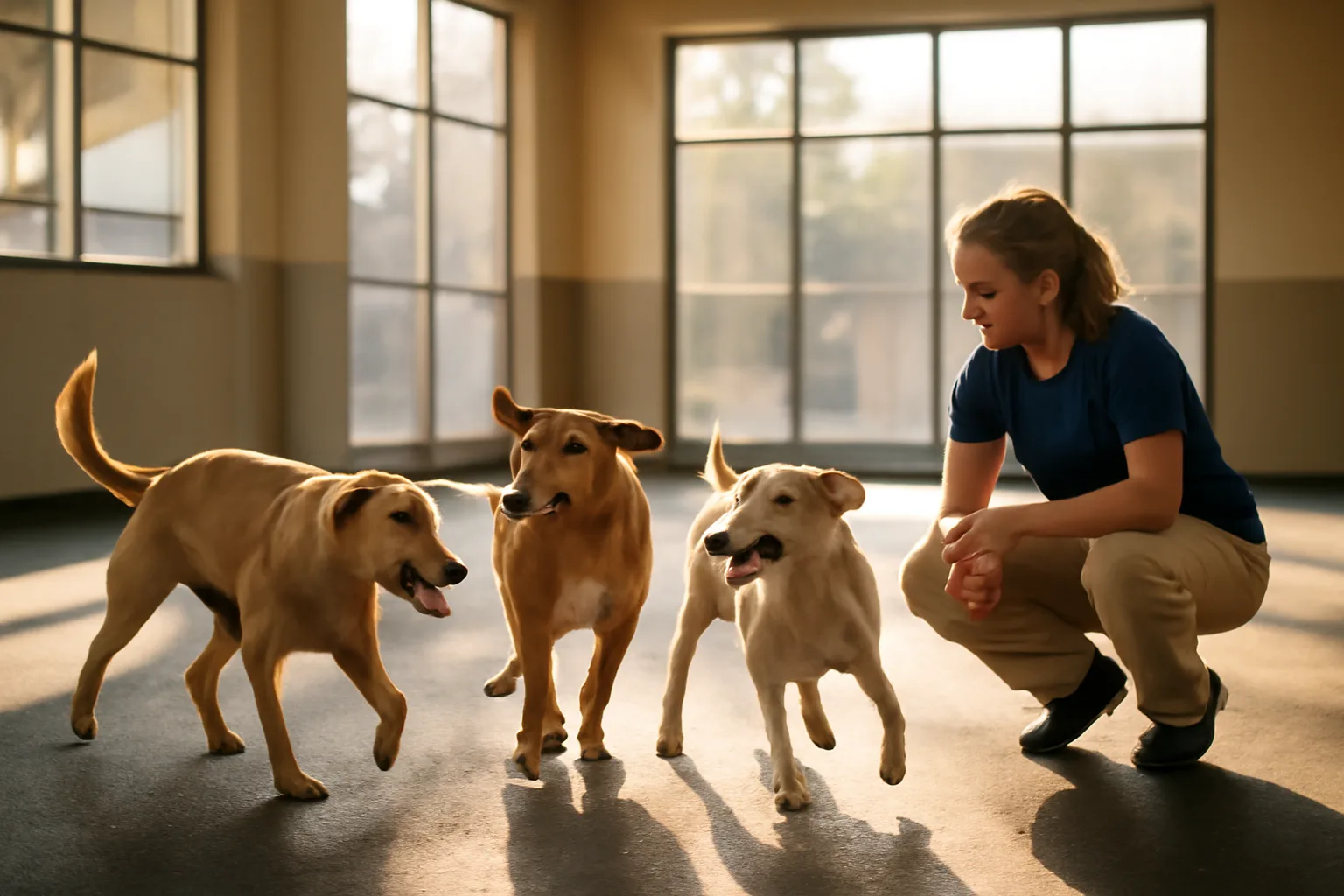
Dogtopia is a national franchise chain of dog daycare, boarding, and spa facilities, with locations across dozens of states. The Fredericksburg, Virginia location operates like most Dogtopia franchises: open-play daycare in supervised group rooms, overnight boarding for dogs already enrolled in daycare or evaluated for temperament, and add-on services like bath and nail trims. Most Dogtopia locations require a temperament test before a dog can join group play. This isn't unique to Fredericksburg. It's standard across the franchise because open-play daycare puts unfamiliar dogs together in a shared space, and the company's liability and safety model depends on screening out dogs that don't do well in groups. If you're comparing this location to other dog boarding options in the Fredericksburg area, know that pricing, playroom size, staff-to-dog ratios, and camera access (Dogtopia's "Tele-bone" webcams are a franchise-wide feature) can vary by location even within the same brand, since each Dogtopia is independently owned and operated under the franchise agreement.
How much does dog boarding cost at Dogtopia and similar facilities?
| Home boarder / pet sitter | $25-$45 | Overnight stay, minimal group interaction | |
|---|---|---|---|
| Traditional kennel | $30-$50 | Individual runs, scheduled outdoor time | |
| Daycare-boarding hybrid (Dogtopia-style) | $40-$65 | All-day group play, webcams, add-on grooming | |
| Luxury pet hotel/resort | $60-$120+ | Private suites, extended play, concierge services | If you're researching pet boarding rates for your own area, the biggest cost driver isn't the brand name. It's local labor costs, square footage per dog required by your state or county, and whether the facility carries pet care liability insurance that gets built into the rate. |
Boarding at Dogtopia locations generally runs $40 to $65 per night depending on the market, with Fredericksburg likely landing in the $40-$55 range based on comparable Virginia and mid-Atlantic locations. Daycare (a single day, no overnight stay) usually costs $30-$45 per day. These are industry-typical ranges, not confirmed Fredericksburg-specific rates, so call the location or check its site for current pricing before you book. Nationally, dog boarding costs vary a lot by facility type. A basic backyard or in-home boarder might charge $25-$40 a night. A full-service franchise like Dogtopia, with climate-controlled group play, webcams, and staff supervision all day, tends to sit at the higher end, often $45-$75 a night in higher cost-of-living metro areas. Here's a rough comparison of what different boarding models typically charge per night: | Facility type | Typical nightly rate | What's included |
How is Dogtopia (and any Virginia boarding facility) licensed to operate?
In Virginia, commercial dog boarding, daycare, and breeding facilities fall under the Virginia Department of Agriculture and Consumer Services (VDACS) rules for "commercial dog breeders" and pet dealers, and separately, local governments regulate kennels through zoning and animal control ordinances. A facility like Dogtopia Fredericksburg would need to satisfy both layers: state-level compliance (if it meets the threshold definitions) and Fredericksburg-area local zoning and business licensing. Virginia's animal care law, Code of Virginia § 3.2-6503, sets baseline care standards for anyone who keeps dogs, including adequate food, water, shelter, and veterinary care. Virginia's commercial dog breeder statute (§ 3.2-6597 and related sections) specifically targets breeders maintaining 30 or more adult female dogs for breeding purposes, requiring a state license through VDACS. A boarding and daycare facility that isn't breeding dogs generally isn't captured by that specific statute, but it still needs to comply with local kennel ordinances, which vary by city and county [1] [2]. Fredericksburg is an independent city in Virginia, and independent cities set their own zoning and kennel licensing rules separate from surrounding counties (Spotsylvania and Stafford County border the city). That means the exact permit path for a facility in Fredericksburg proper differs from one just across the city line in unincorporated Spotsylvania County. Always confirm with the specific locality's zoning office which jurisdiction's rules apply to your address.
How do you register a dog in Virginia?
Registering a dog in Virginia means getting a dog license from your local county or city treasurer's office (or sometimes the county's animal control department), and it's separate from breed registration paperwork like AKC papers. Virginia Code § 3.2-6524 requires every dog four months or older to be licensed annually by the locality where the owner resides [3]. Most Virginia localities require proof of a current rabies vaccination to issue the license, and license fees are typically modest, often in the $5-$15 per year range for a spayed/neutered dog and somewhat more for an intact dog, though exact fees are set locally and vary by city or county. Fredericksburg residents register through the city's treasurer or animal control office; if you live just outside city limits in Spotsylvania or Stafford County, you'd register with that county instead. Dog registration (the license) is different from getting a dog "papers." Licensing is a local government requirement tied to rabies control and animal identification. Papers, discussed below, are about proving pedigree for breeding or showing purposes and come from breed registries, not government agencies.
How do you get a dog license, and does every dog need one?
To get a dog license in Virginia, you bring proof of current rabies vaccination to your city or county treasurer's office (or, in some localities, the animal control or animal shelter office), pay the local fee, and receive a tag your dog should wear on its collar. Requirements and fees differ by locality, so check your specific city or county's page before you go. Yes, nearly every dog needs one. Virginia state law requires dogs four months and older to be licensed, and failure to license a dog can result in a citation from animal control in most localities [3]. Some cities offer multi-year licenses (2 or 3 years) at a discount versus renewing annually, and many now offer online renewal. If you're a boarding or daycare operator, it's worth building a quick check into your intake process: ask for a copy of the dog's current rabies certificate and, where practical, confirm local licensing status. It's not usually your legal obligation to verify a client's dog license, but rabies proof absolutely should be a hard requirement before any dog enters group play, both for liability reasons and because most state and local health codes require it for facilities housing multiple animals.
How do you get papers for a dog, and what does that even mean?
"Papers" for a dog almost always means registration with a breed registry like the American Kennel Club (AKC), which documents a dog's pedigree, not government identification. To get AKC papers, a puppy's litter has to be registered by the breeder, who registers the litter with the AKC after the sire and dam are both already AKC-registered. If you bought a purebred puppy from a breeder, the breeder should give you an AKC registration application (or it's already done digitally) at the time of purchase, and you complete it to put the dog in your name. If you already own a dog and don't have papers, you generally can't get them after the fact unless you can document the dog's parentage through DNA testing and get both parents' registration numbers, which the AKC allows in limited circumstances through its DNA profile program, but there's no way to manufacture pedigree papers for a dog whose parentage isn't documented. This surprises a lot of pet owners: there is no government office that issues "papers." Papers are a private registry product, not a legal document, and they have zero bearing on whether your dog needs a state dog license, which is the actual legal requirement discussed above.
How can I get papers for my dog if I don't have the breeder's info?
If you don't know the breeder or can't locate them, getting full AKC papers after the fact is very difficult and usually not possible in a straightforward way. The AKC's registration system is built around the breeder registering the litter first; without that starting point, there's no retroactive process to create full pedigree papers. A few realistic options exist. The AKC offers a Purebred Alternative Listing (PAL, formerly known as ILP) for dogs that appear to be purebred but lack registration papers, which lets the dog compete in most AKC companion events (obedience, agility, rally) without a full pedigree, though it does not confer full registration or breeding eligibility. DNA testing services can confirm breed composition but won't generate an official pedigree if the parent dogs were never registered. For most pet owners, the honest answer is short: if your dog doesn't have papers already, it likely won't ever have full AKC registration. That's fine. Papers matter for showing, breeding, or certain competitions. They don't affect your dog's health, temperament, insurability, or legal status in any way.
How to become a dog breeder legally in Virginia
Becoming a legal dog breeder in Virginia starts with understanding which regulatory tier you fall into: small-scale hobby breeders face fewer requirements than commercial operations, and both state and federal rules can apply depending on your scale. At the state level, Virginia requires a commercial dog breeder license through VDACS once you maintain 30 or more adult female dogs capable of breeding, under Code of Virginia § 3.2-6597 [2]. Below that threshold, you're generally not captured by the state commercial breeder law, though local county or city ordinances may still require a kennel permit if you keep more than a certain number of dogs (often 4-6, varying by locality) on one property. At the federal level, if you sell puppies sight unseen (online, by phone, or through a broker rather than in person) and you maintain more than 4 breeding females, you likely need a USDA license under the Animal Welfare Act, administered by USDA APHIS [4]. USDA defines a "dealer" that requires licensing as anyone breeding for wholesale or selling animals they haven't personally raised, with specific exemptions for retail pet stores and hobby breeders who sell only in face-to-face transactions. The exact threshold analysis is fact-specific, so check APHIS's own guidance or call your regional APHIS office before assuming you're exempt. Both breeders and boarding/daycare operators should also budget for facility standards. USDA's Animal Welfare Act regulations (9 CFR Part 3) set minimum space, sanitation, and veterinary care requirements for licensed facilities, and many state commercial breeder laws mirror those standards closely [5].
What USDA thresholds matter for breeders and boarding operators?
The USDA Animal Welfare Act licensing threshold most breeders care about is the 4 breeding female rule: if you have more than 4 female dogs used for breeding and you sell puppies without the buyer physically present to see the puppy and its living conditions before purchase, you generally need a USDA Class A (breeder) license [4]. There's a common myth that boarding and daycare facilities need a USDA license just because they house multiple dogs. That's not accurate. USDA licensing under the Animal Welfare Act targets breeders, dealers, exhibitors, and certain transporters, not boarding kennels or daycare facilities that only house pets temporarily for their owners. Pure boarding and daycare operations are regulated at the state and local level, not by USDA APHIS, unless the business also breeds or wholesales animals. Where it gets complicated: some facilities do both, offering boarding and daycare while also running a breeding program on the same property. If that's your business model, you need to separately satisfy USDA breeder licensing (if you cross the threshold), your state's commercial breeder law, and your local zoning and kennel permit requirements. That's three different regulatory bodies with three different applications, and they rarely talk to each other.
What should I check before opening a facility like Dogtopia in my area?
Before signing a lease or buying property for a boarding, daycare, or breeding facility, run through the zoning question first: does your local zoning code allow a commercial kennel or animal care facility use at that specific parcel? Zoning is the number one reason franchise and independent facility openings get delayed, sometimes by 6-12 months, while owners go through a conditional use permit or special exception hearing. Second, check your state's specific licensing category. Virginia distinguishes between commercial dog breeders (VDACS-regulated under § 3.2-6597) and general kennels, which are mostly a local ordinance matter [2]. Other states regulate boarding kennels directly at the state level (California, for instance, has different rules than Virginia), so don't assume Virginia's framework applies if you're opening a location elsewhere. Third, plan for facility standards even if no state agency inspects you regularly. Most local kennel ordinances require minimum square footage per dog, sanitation and ventilation standards, fire code compliance, and sometimes a fenced outdoor exercise area. USDA's 9 CFR Part 3 space and sanitation standards are a reasonable baseline to build to even if you're not USDA-licensed, since many state and local codes were written using similar language [5]. If you want a structured way to pull together your specific state application, local zoning checklist, and facility standards documentation in one pass rather than hunting across a dozen government websites, that's exactly the kind of prep work a $149 one-time Kennel License & Zoning Packet is built to organize, though you'll still need to file everything with your actual state agency and county office yourself. No packet or paid service can guarantee a zoning board approval; that decision is always the local board's call.
How does Dogtopia's franchise model handle licensing compared to an independent facility?
Dogtopia, like most national daycare and boarding franchises, requires each franchisee to secure their own state and local licensing; the franchise brand itself doesn't hold a blanket license that covers every location. That means the Fredericksburg location went through the same Virginia state and city-level zoning and licensing process that an independent, non-franchise boarding facility would. The advantage a franchise has is standardized facility design and operating procedures that were built with regulatory compliance in mind from the start, things like specific square footage per dog in play areas, drainage and sanitation systems, and staff training programs. That can smooth out some of the facility standards review during permitting, since the design has already been vetted across dozens of other locations and jurisdictions. The disadvantage: franchise fees, ongoing royalties, and less flexibility on services or pricing. If you're deciding between opening an independent dog kennels operation, a doggy day care business, or buying into a franchise like Dogtopia, the licensing burden is roughly the same either way. What differs is your upfront capital requirement and how much of the operational playbook you're building from scratch versus inheriting.
Frequently asked questions
How much does dog boarding cost on average?
Dog boarding in the U.S. typically costs $25 to $75 per night depending on facility type and region. Home-based pet sitters and small kennels run $25-$45 a night, while full-service daycare-boarding hybrids like Dogtopia often charge $40-$65 a night. Luxury pet resorts can run $60-$120+ per night. Always confirm current rates directly with the facility, since pricing changes by market and season.
How much is dog boarding at Dogtopia specifically?
Dogtopia boarding rates vary by location but generally fall between $40 and $65 per night, with Fredericksburg, Virginia likely in the $40-$55 range based on comparable regional locations. Rates depend on whether the dog is already daycare-evaluated, add-on services like grooming, and membership or package discounts. Contact the specific location for current, confirmed pricing.
How do I register a dog with my city or county?
Bring proof of current rabies vaccination to your local city or county treasurer's office or animal control department, pay the licensing fee (often $5-$15 annually depending on locality), and you'll receive a license tag. Virginia law (Code § 3.2-6524) requires dogs four months and older to be licensed annually where the owner resides.
How do you get a dog license if you just moved to a new city?
Register with your new city or county's treasurer or animal control office within the timeframe their ordinance requires (often 30 days after establishing residency), bringing your dog's current rabies certificate. Your old jurisdiction's license generally doesn't transfer, so you'll need a new one even if the old tag hasn't expired yet.
How do you get papers for a dog you already own?
If your dog wasn't registered as a litter by its breeder, you generally cannot get full AKC papers after the fact. The AKC's Purebred Alternative Listing (PAL) program lets purebred-appearing dogs without papers compete in most companion events, but it doesn't grant full pedigree registration or breeding eligibility.
How can I get papers for my dog if the breeder is unreachable?
Without the breeder's registration information, obtaining full AKC papers is very difficult since the AKC requires the breeder to register the litter first. Your realistic options are the AKC's Purebred Alternative Listing (PAL) program for event eligibility, or accepting that full pedigree registration may not be achievable for that specific dog.
How do I become a licensed dog breeder in Virginia?
Virginia requires a VDACS commercial dog breeder license once you keep 30 or more adult female dogs for breeding, under Code of Virginia § 3.2-6597. Below that threshold, check your county or city for local kennel permit requirements. If you sell puppies sight-unseen with more than 4 breeding females, you likely also need a USDA APHIS license.
Does dog boarding require a USDA license?
No. Pure boarding and daycare facilities are not regulated by USDA APHIS under the Animal Welfare Act; that licensing applies to breeders, dealers, and exhibitors. Boarding kennels are regulated at the state and local level instead, through agencies like the Virginia Department of Agriculture and Consumer Services and local zoning and animal control offices.
What is the USDA breeding female threshold that requires a license?
USDA generally requires an Animal Welfare Act license (Class A/breeder license) if you maintain more than 4 female dogs used for breeding and sell puppies without buyers physically present to see the puppy and its living conditions first. Selling only in face-to-face transactions can exempt some breeders even above that number; check with your regional APHIS office.
Is a dog license the same thing as AKC registration papers?
No, they're completely different. A dog license is a local government requirement tied to rabies control and animal identification, issued by your city or county. AKC registration papers document pedigree for breeding, showing, or competition purposes and come from a private breed registry, not any government agency.
How much does it cost to open a dog daycare or boarding facility?
Costs vary enormously based on square footage, buildout, and whether you're buying a franchise. Independent facilities often start around $150,000-$400,000+ in buildout and licensing costs; franchise models add upfront franchise fees on top of that. Zoning approval delays and facility standards compliance (ventilation, drainage, fencing) are usually the biggest unplanned cost drivers.
Does Fredericksburg, Virginia have its own zoning rules separate from the surrounding counties?
Yes. Fredericksburg is an independent city in Virginia with its own zoning ordinance, separate from Spotsylvania County and Stafford County, which border it. A facility just outside city limits falls under a different jurisdiction's zoning and kennel permit rules than one located inside the city, so confirm the correct office before applying.
Sources
- Code of Virginia § 3.2-6503 (Comprehensive Animal Care): Virginia's baseline animal care standards for food, water, shelter, and veterinary care
- Code of Virginia § 3.2-6597 (Commercial dog breeders): Virginia's 30-adult-female-dog threshold for state commercial breeder licensing via VDACS
- Code of Virginia § 3.2-6524 (Dog licensing requirement): Virginia requires dogs four months or older to be licensed annually by the locality
- 9 CFR § 1.1, Animal Welfare Act definitions (dealer, breeding female threshold): USDA breeder license threshold tied to more than 4 breeding females and sight-unseen sales
- USDA APHIS, 9 CFR Part 3 Animal Welfare Act standards: Federal facility, space, and sanitation standards for licensed animal facilities