Last updated 2026-07-26
TL;DR
Ridglan Farms, a Wisconsin beagle breeding operation, surrendered its USDA Class A dealer license in 2024 amid welfare complaints and litigation. The case is a warning for any breeder nearing USDA thresholds: license surrender doesn't end state or local obligations, and APHIS can still pursue enforcement tied to past violations even after a license lapses.
What happened with Ridglan Farms and its USDA license?
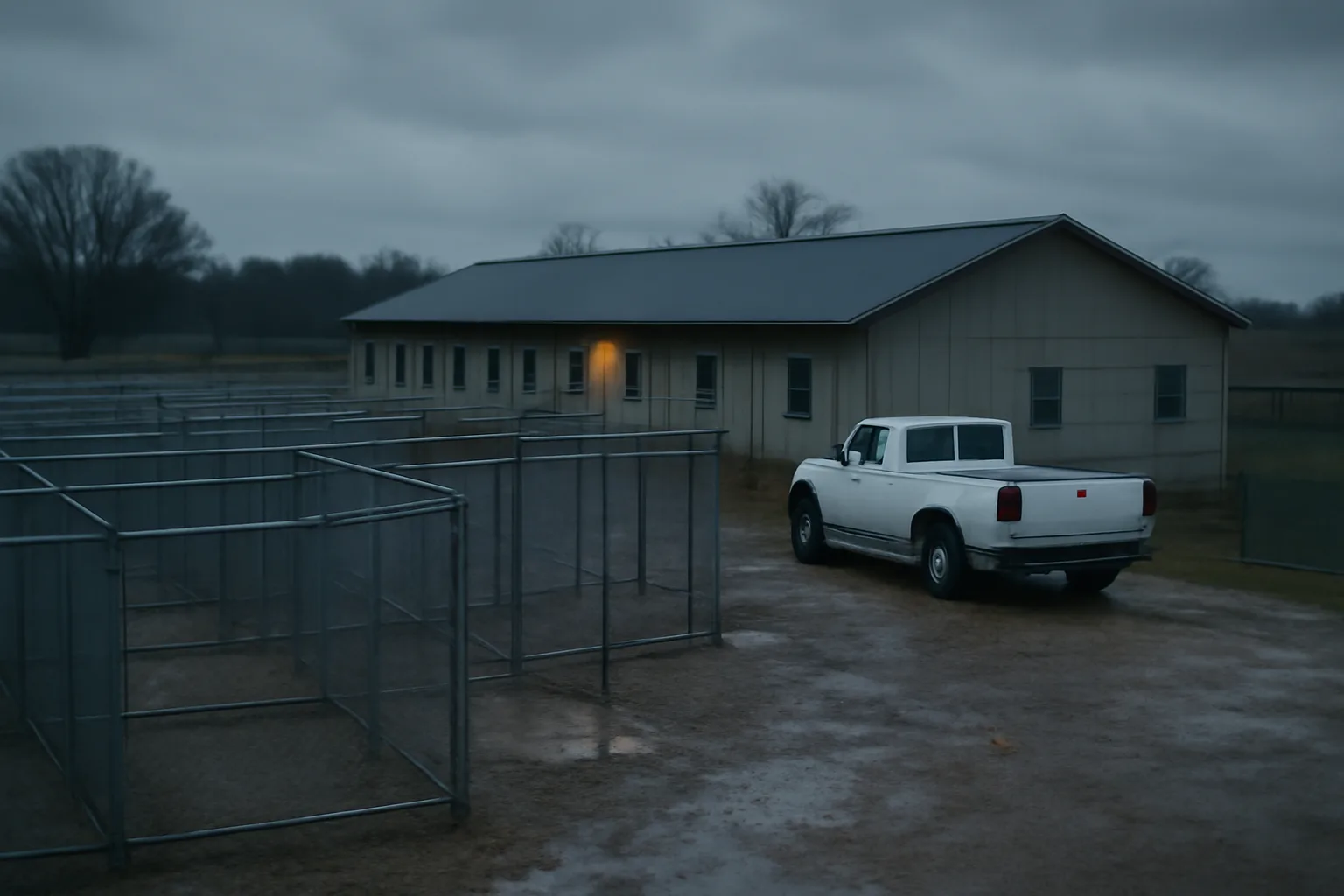
Ridglan Farms is a large-scale dog breeding operation in Mount Horeb, Wisconsin, that bred beagles for sale to research laboratories. It operated for decades under a USDA Class A dealer license, the category APHIS uses for breeders who sell animals they've bred themselves [1]. Animal welfare groups, including the Companion Animal Protection Society and Alliance for Animals & the Environment, spent years filing complaints and pushing litigation over kennel conditions, and Wisconsin's own state inspection reports documented repeated citations at the facility over multiple years [2]. In 2024, Ridglan Farms surrendered its USDA license rather than continue operating under it. A license surrender is exactly what it sounds like: the licensee voluntarily gives up the license instead of waiting for a revocation decision or continuing to face inspections and possible enforcement action. It is not the same as a license being revoked by APHIS, and it does not necessarily mean an admission of wrongdoing. The practical result was that Ridglan Farms was no longer authorized to operate as a USDA-licensed dealer. Whether it continued breeding on any smaller, exempt scale, sold off its animals, or shut down operations entirely is a separate question from the license status itself, and reporting on the exact wind-down details has varied. What's certain is the license surrender itself, which is a matter of public USDA record.
Why would a breeder surrender a USDA license instead of fighting to keep it?
Surrendering a license is often a strategic move, not a forced outcome. APHIS enforcement against Animal Welfare Act licensees can include official warnings, license suspension, license revocation, and civil penalties, with maximum penalties set by statute and periodically adjusted for inflation [3]. Fighting an enforcement action means administrative hearings, legal fees, and the possibility of a public revocation record that follows the operator into any future licensing attempt. A voluntary surrender can look cleaner on paper. It stops the inspection clock and can end an active investigation faster than a contested proceeding would. But it doesn't erase the history. USDA maintains inspection reports and enforcement records that are subject to Freedom of Information Act requests, and past violations tied to an individual or corporate entity can resurface if that person or business tries to get licensed again under APHIS or a state program. For context, USDA inspection reports for AWA-licensed dealers, exhibitors, and breeders are public, and the agency's Animal Care Information System search tool lets anyone look up inspection history by facility name or license number. If you're evaluating a breeder, or you're a breeder trying to understand what your own inspection trail will look like to a future buyer or landlord, that database is the first place to check.
When does a dog breeder actually need a USDA license?
Not every breeder needs one, and this is where a lot of hobby-to-commercial breeders get caught off guard. Under the Animal Welfare Act regulations, a breeder generally needs a USDA Class A license if they sell puppies wholesale (not directly to the end buyer) and have more than four breeding females, unless they qualify for the retail pet store exemption [4]. The rule that trips people up is the direct-sale exemption. If you sell puppies face-to-face, in person, to the person who will keep the dog as a pet, you may be exempt regardless of how many litters you produce, under the "retail pet store" definition in 9 CFR 1.1 [5]. The moment you sell sight unseen (internet sales shipped to a buyer you never meet in person) or you sell to a broker, pet store, or research facility, that exemption generally disappears and USDA licensing kicks in. The four-breeding-female threshold is specific: it counts intact adult female dogs used for breeding, not total dogs on the property. A breeder with five or more breeding females who sells any dogs at wholesale, or sells any dogs sight unseen, needs to look hard at whether they need a Class A (breeder who sells animals they bred) or Class B (broker/reseller) license . If this is even a maybe for your operation, don't guess. Call your APHIS Animal Care regional office before you cross the line, not after an inspector shows up.
How to become a dog breeder legally (state, county, and federal steps)
Becoming a legal breeder means stacking three layers of compliance, and most people only think about one of them at first. First, check your state. States including Wisconsin, Iowa, Pennsylvania, and Ohio have their own dog breeder or kennel licensing laws that apply on top of any federal requirement, often triggered by a lower number of dogs or litters than USDA thresholds use . Wisconsin, for instance, regulates "dog breeders" under state statute for anyone who sells 25 or more dogs in a year that were raised on the premises, a threshold separate from the USDA's . Second, check your county and municipality. Zoning is usually the part people skip and then get shut down over. A property zoned residential or even general agricultural may not permit a commercial kennel or breeding operation without a conditional use permit or variance. This is a local government decision, made at the county or township level, and it has nothing to do with whether you're USDA-compliant. Being right with APHIS does not make you right with your zoning board. Third, handle the federal layer if you meet the threshold: Class A or Class B licensing through USDA APHIS Animal Care, including the required facility inspection before your first license is issued . A realistic sequence: confirm your zoning allows the use before you buy or build, get your state breeder or kennel license application in early since some states require inspections tied to it, and only then worry about USDA licensing if your sales volume and method put you over the threshold. Doing it backward, building the kennel first and asking zoning questions later, is how breeders end up in enforcement hearings before they've sold a single puppy. For a broader walk-through of putting a facility license and zoning application together, see dog kennels and dog boarding.
How do you get papers for a dog, and what do papers actually mean?
"Papers" almost always means AKC registration papers, or occasionally papers from another breed registry like the United Kennel Club (UKC). Registration papers are not a government license and have nothing to do with USDA, state, or county compliance. They're a private record of pedigree kept by a nonprofit breed club. To register a litter with the American Kennel Club, the breeder registers the litter first (both parents typically need to already be AKC-registered), then individual puppy buyers register their specific puppy using the paperwork the breeder provides at sale . If you bought a puppy and the breeder never registered the litter, you generally can't get "papers" after the fact unless the breeder does the registration retroactively, and some breeders never do. If you're a breeder trying to figure out how to get papers for your dog's puppies: register with AKC or your chosen registry before or shortly after the litter is born, keep accurate whelping records, and provide each buyer with a signed AKC registration application (blue slip) or the litter registration number at the time of sale. This is a separate process from any state kennel license or USDA dealer license. A dog can be fully legal to sell in every regulatory sense and still have no registry papers at all, plenty of well-run kennels sell dogs without AKC registration because the parents aren't registered stock.
How do you register a dog with the city or county (dog license, not breed papers)?
This is a different "registration" entirely, and the confusion between the two is constant. A dog license (sometimes called a pet license or animal registration) is a local government requirement, usually issued by the county or city animal control or clerk's office, and it's about rabies vaccination tracking and animal control, not pedigree. Most counties require an up-to-date rabies vaccination certificate from a licensed veterinarian, a completed application, and a fee, often in the range of $10 to $25 annually for a spayed/neutered dog and somewhat higher for an intact dog, though exact fees vary by county and you should check your county's own fee schedule rather than assume a number . Many counties issue the license through the county treasurer, clerk, or a designated animal control department, and some tie it to a physical tag the dog must wear. For breeders and boarding/daycare operators, this matters twice over: your own personal pets need individual dog licenses in most counties, and if you're running a kennel, some jurisdictions require every dog on the premises above a certain count to be individually licensed or covered under a kennel-level license instead. Don't assume a kennel license substitutes for individual dog licenses without checking your specific county code.
How much does dog boarding cost, and how does that connect to breeder licensing?
Boarding pricing isn't directly about breeder licensing, but a lot of breeders diversify into boarding or daycare as a second revenue stream on the same property, so the two questions end up in the same conversation constantly. Dog boarding in the U.S. commonly runs $25 to $85 per night depending on region, facility type, and whether it's a standard kennel run or a higher-end suite, with upscale urban facilities charging more and rural or basic kennel-style boarding charging less. There's no single federal or state-published "average boarding cost" dataset; pricing is set by individual businesses and shaped by local market competition, so any number you see (including the range above) is a market observation, not a regulated rate. What is regulated is whether you can legally operate boarding at all on a given property. Many of the same states that license dog breeders also license commercial boarding kennels separately, often under a single "animal facility" or "kennel" license category, and the same county zoning rules that apply to a breeding kennel usually apply to a boarding kennel too. If you're a breeder thinking about adding boarding to bring in cash flow between litters, check both your state's kennel licensing statute and your county zoning ordinance before you advertise a single night's stay. For more on how boarding-specific pricing and licensing work together, see pet boarding and dog hotels near me.
What does the Ridglan Farms case teach breeders about inspection risk?
The biggest lesson isn't about beagles or research breeding specifically. It's that public inspection records follow you. A pattern of repeat violations, even non-critical ones documented over years, builds a paper trail that eventually becomes ammunition against you, whether that's from an advocacy group, a state agency, or USDA itself. APHIS inspection reports for licensed facilities are public record and searchable. Wisconsin's state-level Department of Agriculture, Trade and Consumer Protection (DATCP) also conducts its own dog dealer inspections independent of USDA, and those reports have their own public disclosure process under Wisconsin's open records law . A facility can be cited by both agencies for different things in the same year, and neither citation history disappears just because a license changes hands or gets surrendered. The practical takeaway for any breeder or kennel operator nearing USDA thresholds: treat every inspection like it's going into a permanent file, because it is. Fix cited issues immediately and document the fix. Don't let "repeat noncompliant item" show up twice in a row if you can help it; that's the phrase that turns a routine inspection into an enforcement referral.
Does surrendering a license end all liability or inspection history?
No. Surrendering a USDA license stops future inspections tied to that specific license, but it doesn't erase past inspection records, pending investigations already underway, or civil penalty actions that predate the surrender. APHIS has pursued enforcement actions, including monetary penalties, against individuals even after they stopped holding an active license, when the violations occurred while the license was active [3]. State-level consequences can also outlast a federal license surrender. If a state agriculture department or attorney general's office has an independent state-law case open (animal cruelty statutes, consumer protection claims tied to sick puppy sales, or state kennel license violations), surrendering the USDA license does nothing to that separate track. Civil litigation from advocacy groups, similarly, isn't resolved by a license status change. If you're a breeder facing repeat citations and you're considering walking away from your license rather than fighting for renewal, understand that it may reduce future federal inspection exposure but it is not a clean legal exit. Talk to an actual attorney who handles agricultural or animal welfare regulatory law before you make that call. This article is not legal advice and we don't represent breeders before any board or agency.
What should a breeder do differently to avoid ending up in a Ridglan-style situation?
Start with the paperwork you can control before anyone else looks at it. Get your USDA license status (if applicable), your state breeder or kennel license, and your county zoning approval all lined up before you scale past a handful of breeding females. Trying to retroactively fix zoning after a neighbor complains, or trying to get a USDA license after you've already been selling wholesale for two years, puts you in a defensive posture from day one. Build a real facility standards habit, more than a pre-inspection scramble. USDA's Animal Welfare Act regulations under 9 CFR Parts 2 and 3 spell out specific space, sanitation, veterinary care, and record-keeping requirements for licensed breeders, and most state programs mirror or reference these standards even when the state isn't USDA . Read the actual regulation text once, don't just rely on secondhand summaries, because the specific square-footage-per-dog and enclosure requirements matter in an inspection. Keep records that would look fine to a stranger. Whelping dates, vet visits, vaccination records, sales records showing whether a sale was direct-to-buyer or wholesale (this affects your USDA exemption status), and copies of every inspection report you've ever received. If an inspector, a reporter, or an advocacy group ever requests your history, you want to be the one who already knows what's in it. If you're building out a facility and you want a structured way to pull your state license requirements and county zoning checklist into one packet before you apply anywhere, that's the exact gap our $149 one-time Kennel License & Zoning Packet is built to fill. It's not a substitute for a lawyer or for actually reading your state statute, but it organizes the fill-in-the-blank pieces (state license category, county zoning use classification, required attachments) so you're not starting from a blank page.
How to get a dog license for your own pets versus licensing your kennel
These are two separate applications almost everywhere, and conflating them is a common first-time-owner and first-time-breeder mistake. An individual dog license (or pet license) covers one dog, usually tied to proof of current rabies vaccination, and is renewed annually or every three years depending on the jurisdiction's rabies vaccine protocol acceptance. You get this from your county or city animal control office, county clerk, or treasurer, and the process is typically: get the rabies certificate from your vet, fill out a short form, pay the fee, get a tag . A kennel license (sometimes called a commercial kennel license, breeder license, or multiple dog permit) is a different application entirely, usually issued at the state or county level, and it's what authorizes you to keep more than the standard household limit of dogs (often 3 to 5 dogs triggers a kennel license requirement in many municipal codes) or to breed and sell dogs commercially. This application usually requires a facility inspection, proof of zoning compliance, and sometimes a separate fee schedule based on number of dogs. Check both. A lot of new breeders get their individual dog licenses current, assume they're covered, and then get cited for operating an unlicensed kennel once their dog count crosses the local threshold.
Frequently asked questions
What happened to Ridglan Farms' USDA license?
Ridglan Farms, a Wisconsin beagle breeding facility that sold dogs to research labs, voluntarily surrendered its USDA Class A dealer license in 2024 after years of state inspection citations and advocacy group litigation. A surrender is a voluntary action by the licensee, distinct from USDA revoking the license through a contested enforcement proceeding.
Does a USDA license surrender mean the breeder admitted wrongdoing?
Not necessarily. Surrendering a license is often a strategic choice to stop an active investigation or avoid a contested revocation hearing, rather than an admission. It does not erase the public inspection history tied to the facility, which remains searchable through USDA's Animal Care Information System.
How much does dog boarding cost?
Dog boarding typically runs $25 to $85 per night in the U.S., depending on region, facility type, and amenities like private suites versus standard kennel runs. There's no federal or state-set rate; pricing is set by individual businesses based on local market competition, so check quotes from boarding facilities in your specific area.
How do I register a dog?
It depends what kind of registration you mean. For a local dog license, contact your county or city animal control office or clerk with a current rabies vaccination certificate. For breed registry "papers," register through AKC or another registry, which requires the litter and parents to already be registered with that organization.
How do you get papers for a dog?
Breed registry papers, most commonly AKC, require the breeder to register the litter (with both parents already AKC-registered) and provide each buyer a signed registration application at the time of sale. If the breeder never registered the litter, papers generally can't be obtained retroactively unless the breeder completes that registration later.
How do you get papers for a dog you already own without a breeder?
If you bought or adopted a dog with no registration paperwork, you typically cannot get AKC papers after the fact unless you can locate the original breeder and they complete a litter registration. Some registries offer a limited or "ILP" (Indefinite Listing Privilege) style path for spay/neuter only, purebred-appearing dogs, worth checking directly with the registry.
How do I become a dog breeder legally?
Confirm your county zoning allows a kennel or breeding use before building anything, get any required state breeder or kennel license (thresholds vary by state), and determine whether you cross USDA's Class A licensing threshold, generally more than four breeding females combined with wholesale or sight-unseen sales. Handle zoning first; it's the step most breeders skip.
How do I get a dog license?
Contact your county or city animal control office, clerk, or treasurer. You'll typically need a current rabies vaccination certificate from a veterinarian, a completed application, and a fee often between $10 and $25 annually, though exact costs vary by county, so check your local fee schedule.
Do all dog breeders need a USDA license?
No. Breeders who sell directly, in person, to the end buyer as pets generally qualify for the retail pet store exemption regardless of litter volume. USDA Class A licensing generally applies once a breeder has more than four breeding females and sells wholesale or sight-unseen, per 9 CFR 1.1's definitions.
What's the difference between a USDA Class A and Class B license?
A Class A license covers breeders ("dealers") who sell animals they bred and raised themselves. A Class B license covers brokers or resellers who buy animals from other sources, including other breeders or random sources, and resell them. The two categories have different inspection and record-keeping requirements under USDA regulations.
Can a breeder operate after surrendering their USDA license?
It depends on scale and sales method. If the breeder drops below USDA's threshold (four or fewer breeding females, or shifts entirely to direct retail sales) they may legally operate without a federal license. But any state breeder license and county zoning approval requirements still apply independently and don't change based on USDA license status.
How do I find inspection reports for a specific breeder or kennel?
USDA's Animal Care Information System (ACIS) lets you search inspection reports by facility name, license number, or state for any current or former APHIS-licensed dealer, breeder, or exhibitor. Some state agriculture departments maintain separate, independently searchable inspection records for state-licensed kennels.
Is a dog license the same as breed registration papers?
No, and this confusion is extremely common. A dog license is a local government requirement tied to rabies vaccination tracking, issued by county or city animal control. Breed registration papers (AKC, UKC, etc.) are a private nonprofit registry's pedigree record and have no connection to any government licensing requirement.
Sources
- USDA APHIS, Animal Care Information System (ACIS) public search: Public searchable database of USDA inspection reports for licensed animal facilities
- eCFR, 9 CFR 1.1 Definitions (retail pet store exemption): Definition of retail pet store exemption for direct, in-person sales to end buyers
- eCFR, 9 CFR Part 2, Subpart A, Licensing: Distinction between Class A and Class B USDA licenses for dealers and brokers
- Wisconsin Department of Justice, Wisconsin Public Records Law Guide: Wisconsin's open records law governs public disclosure of state agency inspection reports
- eCFR, 9 CFR Part 3, Subpart A, Specifications for Dogs: Federal space, sanitation, and veterinary care standards required for licensed dog breeding facilities