Last updated 2026-07-25
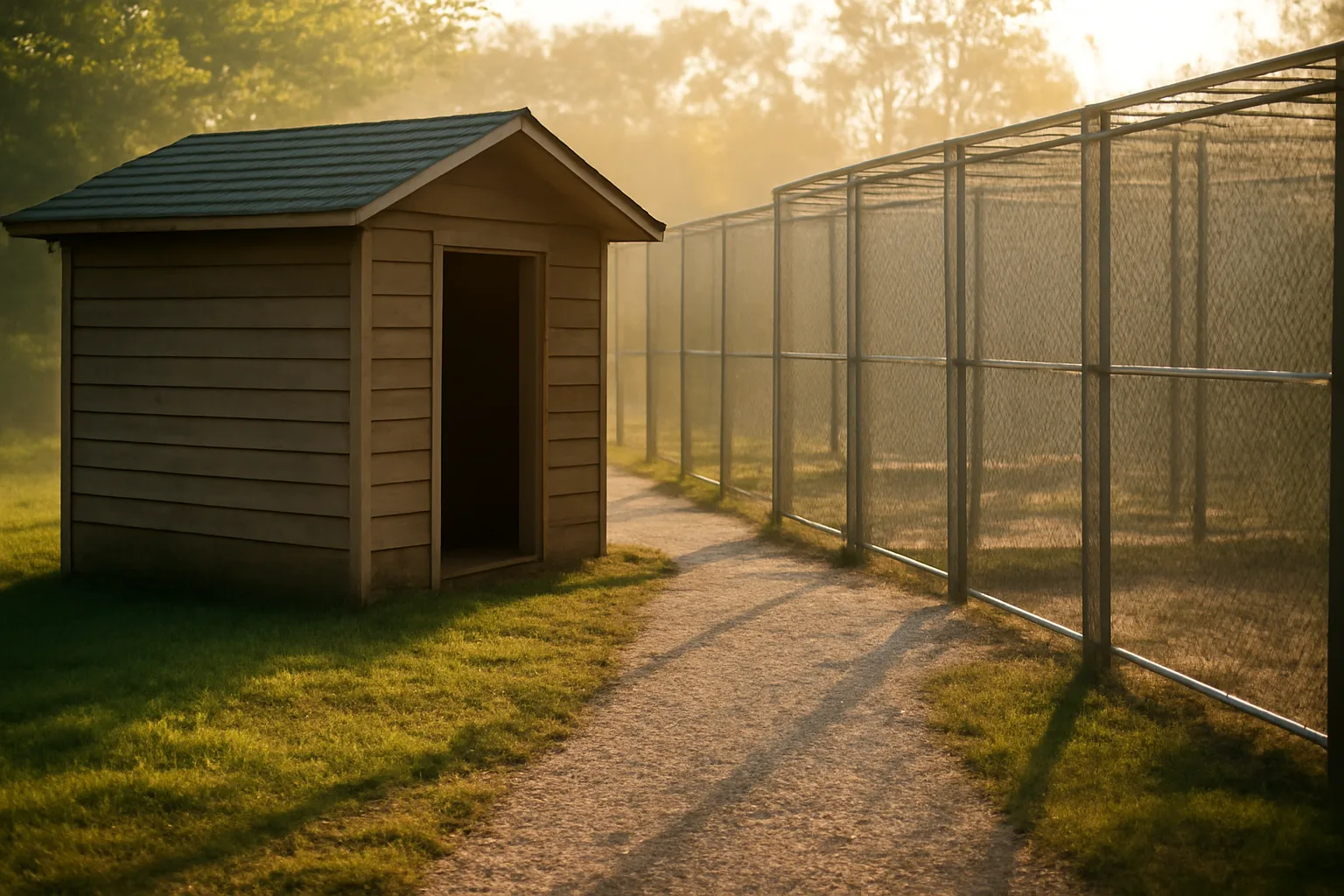
TL;DR
A dog breeding business needs USDA APHIS licensing if you have more than 4 breeding females and sell dogs sight-unseen, plus state/county kennel licenses and local zoning approval. AKC or breed "papers" come from registering litters with a registry, not from any government agency. Costs vary widely by state and county, so budget for both a USDA license fee and local permit fees.
How do you become a dog breeder legally?
Legally, becoming a dog breeder means clearing three separate layers of rules, and most new breeders only find out about the third one after a neighbor complains. The first layer is federal: if you sell puppies sight-unseen (online, shipped, through a broker) and you keep more than 4 breeding females, USDA APHIS wants you licensed as a "Class A" dealer under the Animal Welfare Act [1]. The second layer is state: most states require a kennel or commercial breeder license once you hit a certain number of adult dogs or litters sold per year, and the thresholds are all over the map. The third layer is local: county or city zoning almost always treats a breeding kennel as a distinct land use, separate from an ordinary household pet limit, and this is the layer people skip and regret. Here's the part nobody tells you at the start: passing federal and state licensing does not mean your property is zoned for it. A county can allow you to legally hold a USDA license and still shut you down for operating a kennel in a residential zone without a conditional use permit. Check your specific county zoning code before you sign a lease, buy land, or build a whelping building. If you're also boarding or day-boarding dogs on the side, the zoning and facility rules overlap heavily with dog boarding and dog kennels operations, so it's worth reading both sets of rules together. A rough sequence that keeps people out of trouble: confirm zoning first, then apply for state/county kennel or breeder license, then apply for USDA license if you cross the federal threshold, then register with a breed registry once litters start. Skipping ahead to registry paperwork before your zoning is settled is the single most common mistake new breeders make.
Do I need a USDA license to breed dogs?
You need a USDA license only if you meet the federal definition of a "dealer" under the Animal Welfare Act. The regulation defines a dealer, in relevant part, as someone who sells or negotiates the sale of animals for research, exhibition, use as a pet, or breeding purposes, with specific carve-outs for small hobby breeders [1]. The practical trigger most breeders actually hit is the retail pet store exemption threshold: breeders who sell puppies only through in-person, face-to-face transactions (buyer physically visits and sees the dog and the premises) are generally exempt, no matter how many litters they produce. The license requirement kicks in when you sell dogs "sight unseen," meaning online, by phone, or through a broker or pet store, without the buyer ever visiting your facility, and you maintain more than 4 breeding females (intact females of breeding age) [1]. The regulation defining "retail pet store" and the four-female threshold is codified at 9 CFR 1.1, which excludes from that definition any person maintaining more than four breeding female dogs, cats, and/or small exotic or wild mammals who sells any offspring born and raised on the premises to the public for use as pets [1]. Hobby breeders who sell every puppy to a buyer who physically visits their home or kennel usually never trigger USDA licensing at all, regardless of litter count. It's the combination of high breeding-female count plus remote sales that creates the federal obligation. If you're not sure which side of the line you fall on, read the definitions section directly and, if still unclear, call your USDA APHIS Animal Care regional office before you list a puppy online [1]. USDA license fees are tiered by gross annual sales from animals and are set out in federal regulation at 9 CFR 2.6; the exact tier and dollar amount for your operation should be confirmed against that section and any subsequent Federal Register updates at the time you apply, since fees are periodically revised [2].
How do you register a dog breeding business (state and county level)?
Registering the business itself (an LLC, a sole proprietorship, a DBA) is the easy part and works the same as any small business: file with your secretary of state, get an EIN from the IRS, open a business bank account. That's not where breeders get stuck. What trips people up is the separate, non-optional step of licensing the kennel or breeding operation with your state department of agriculture or state veterinarian's office, plus your county or city clerk. States that regulate commercial breeders directly, like Pennsylvania, define a "kennel" or "commercial kennel" by the number of dogs kept or sold in a year and require a state kennel license on top of any local one, with fees and inspection standards set out in the state's dog law [3]. Other states leave breeder licensing entirely to counties and municipalities, so the same two-person kitchen breeding operation could need zero state paperwork in one state and a full state kennel license three states over. Because this varies so much, the only honest answer is: call your state department of agriculture and your county planning/zoning office directly, ask specifically about "commercial dog breeder" or "kennel license" categories, and get the threshold (number of females, number of litters, or gross sales) in writing. Don't rely on what a breeder in another state tells you; the numbers genuinely differ.
How do you get papers for a dog? (and how is that different from a license?)
This is the question that confuses new breeders the most, so let's be direct: "papers" and "licenses" are two completely different systems run by two completely different kinds of organizations. A license (USDA, state, county) is a government permit that lets you legally operate a breeding or kennel business. "Papers" (AKC registration, UKC registration, a breed-specific registry) is a private pedigree record that documents a dog's parentage and breed. No government agency issues dog papers. The American Kennel Club is a private nonprofit registry, not a government body, and it registers litters based on the breeder's application, the sire and dam's own registration, and (for some breeds or situations) DNA verification. To get papers for a litter through AKC, a breeder generally needs: both parents already registered with AKC, a completed litter registration application submitted within the timeframe AKC specifies, and payment of AKC's litter and individual registration fees, which are published on AKC's own fee schedule and change periodically. If the sire was bred by artificial insemination with fresh or frozen semen, or if AKC flags the litter for verification, DNA testing of the sire, dam, and puppies may be required before registration completes. If you're asking "how do I get papers for my dog" as an owner of an unregistered adult dog rather than a breeder registering a litter, the honest answer is: in almost all cases, you can't retroactively get full AKC papers for a dog whose parents weren't registered and whose birth wasn't recorded with AKC at the time. AKC does offer a Purebred Alternative Listing (PAL) program for dogs that appear purebred but lack registration paperwork, which allows entry into AKC companion events (agility, obedience) without conferring breeding or conformation-show eligibility. That's the realistic path for a dog bought without papers who you'd still like to compete with in non-conformation events.
How do you get a dog license (the everyday pet license, not a breeder license)?
A "dog license" for an individual pet owner is almost always a county or city requirement, separate from anything related to breeding businesses, and it's usually cheap and simple. Most counties require owners to license dogs, typically starting at 3 to 6 months of age, and require proof of current rabies vaccination as a condition of issuing the license. The process is nearly universal: bring proof of rabies vaccination (and sometimes spay/neuter status, which affects the fee) to your county treasurer, animal control office, or county clerk, pay the fee, and get a tag. Fees vary by county and by whether the dog is altered; many counties charge a lower fee for spayed/neutered dogs specifically to encourage sterilization, and unaltered dog licenses commonly cost roughly double the altered rate in counties that use a tiered fee structure. Some states, like Ohio, set licensing at the county auditor level with a statutory framework and statewide minimum/maximum fee ranges rather than one flat number [4]. If you're a breeder, your adult breeding dogs still need individual pet licenses in most jurisdictions on top of any commercial kennel license. The kennel license covers your business operation; the individual dog license covers each animal. Don't assume one substitutes for the other; check with your county clerk.
How much does dog boarding cost, and why does it matter for breeders?
If you're building a breeding operation, you'll likely need boarding-adjacent services at some point (whelping support, co-owned dogs staying with handlers, stud dogs boarded during breeding season), so it's worth knowing what boarding actually costs in the market. Dog boarding in the US commonly runs somewhere in the range of $25 to $85 per night for standard kennel or in-home boarding, with upscale or "luxury" suite-style boarding running higher in major metro areas; exact pricing depends heavily on region, whether the facility offers play groups, and whether it's overnight-only or includes daycare. There's no single federal or state price-setting body for boarding rates, so these numbers come from market rate observation and vary by locality, not from a regulatory source. Multi-dog discounts and add-ons (medication administration, grooming, extra playtime) commonly shift the final bill up or down by another 10 to 30 percent. If you're weighing whether to add boarding or daycare services alongside breeding to diversify revenue, the zoning and facility-standard implications are substantial: boarding kennels are often regulated under a different local ordinance category than breeding kennels, with different noise, waste, and structure setback requirements. Read pet boarding and doggy day care before assuming your breeding kennel permit covers a boarding wing too. Facilities like Dogtopia operate under franchise-standard commercial pet care licensing, which is a useful comparison point if you're scoping what a commercial-grade facility build looks like versus a small home-based breeding kennel.
What does USDA inspect, and what are the facility standards for licensed breeders?
Once you're a USDA-licensed dealer, your facility is subject to the Animal Welfare Act's specific structural and husbandry standards, and APHIS conducts inspections to verify compliance, with unannounced inspections being standard practice under the agency's enforcement approach . The federal standards for dogs cover primary enclosure size (calculated by the dog's body length, with formulas set out in 9 CFR 3.6), temperature ranges for indoor and outdoor housing, sanitation and waste disposal schedules, veterinary care requirements, and recordkeeping on the source and disposition of every dog . As of the 2023 update to USDA's dog housing rules, licensees must also provide dogs a minimum amount of exercise, with specific compliance options spelled out in the regulation for group housing versus individual housing . States that regulate commercial kennels independently often layer their own facility standards on top of USDA's, sometimes stricter. Pennsylvania's dog law, for example, sets its own kennel sanitation, temperature, and enclosure requirements enforced by the state's dog wardens, in addition to whatever USDA requires of federally licensed operations [3]. If your state has its own commercial kennel statute, assume you must satisfy both sets of standards, more than the more lenient one. For build-out planning, cross-reference facility standards against your local zoning conditional-use requirements too; a county conditional use permit for a kennel commonly imposes its own setback, fencing, and noise-mitigation conditions that exist entirely separate from USDA or state agriculture department rules.
What zoning approvals does a dog breeding kennel need?
Zoning is decided at the county or municipal level, and it is the single most variable, most locally-specific part of this whole process; there is no federal or state standard that overrides it. Most residential zones cap the number of dogs a household may keep without a permit, commonly somewhere around 3 to 5 dogs depending on the jurisdiction, before the property is reclassified as operating a "kennel" use requiring a conditional use permit or special exception. Agricultural or rural-residential zones are often more permissive and sometimes explicitly allow small-scale kennels by right, while suburban and urban residential zones almost universally require a hearing before a zoning board or planning commission. A typical conditional use process for a breeding kennel involves: a written application to the county planning department, a site plan showing dog enclosures and their distance from property lines, a public hearing where neighbors can comment or object, and a board vote. Boards commonly attach conditions covering hours of outdoor dog access, maximum dog count, fencing height, and noise mitigation. None of this is optional paperwork; a violation can mean a stop-work order or a nuisance citation even if you're fully USDA and state licensed. Because every one of these thresholds, forms, and hearing procedures is set locally, the only reliable source is your own county zoning office, not a general guide. If you want a structured starting point for organizing the paperwork across all three layers (state license application, county zoning packet, USDA determination worksheet) before you walk into a hearing, KennelPermit's $149 one-time Kennel License & Zoning Packet builds a jurisdiction-specific packet you fill in with your local numbers; it's a document organizer, not legal representation, and it won't appear at a hearing on your behalf. Start at the license packet builder.
How much does it cost to start a dog breeding business overall?
There's no single national number here, and anyone who quotes you one flat figure is guessing. Costs stack across several genuinely separate categories: business formation (state filing fees, typically well under $500 in most states), a state or county kennel/breeder license (ranges enormously by jurisdiction), a USDA license if you trigger the federal threshold (tiered by gross sales, per the fee structure in 9 CFR 2.6) [2], zoning application and hearing fees (often a few hundred dollars for the application plus possible public notice costs), facility build-out (whelping areas, runs, fencing, climate control, which can run from a few thousand dollars for a small home setup into six figures for a purpose-built commercial kennel), veterinary costs (health testing, vaccinations, ongoing care), and registry fees for litters (AKC litter and individual dog registration fees, published on AKC's own schedule). The honest range for a small, home-based, part-time breeding operation with one or two litters a year, no USDA license needed, and simple zoning is probably a few thousand dollars in first-year costs beyond the dogs themselves. A commercial-scale operation crossing the USDA threshold, needing a conditional use zoning permit and a purpose-built kennel facility, is a different order of magnitude entirely, easily reaching tens of thousands of dollars before the first litter is sold. Get your specific state and county fee numbers in writing before you build a budget around someone else's figures.
How is a breeding kennel different from a boarding or daycare kennel, licensing-wise?
They often fall under the same general "kennel" zoning category locally, but the licensing bodies and standards diverge once you look closely. Breeding kennels are primarily regulated (when regulated federally) under the Animal Welfare Act's dealer provisions if sight-unseen sales and breeding female counts trigger USDA jurisdiction [1] [1]. Boarding and daycare facilities, by contrast, generally fall outside USDA's dealer definition entirely (since they're not selling animals) but may be separately regulated by some states under animal care facility or commercial establishment statutes, and are almost always subject to local health and zoning rules around waste, noise, and occupancy. If you're planning a hybrid operation (breeding plus boarding, or breeding plus daycare, which is common as a way to keep cash flow steady between litters), budget for meeting both sets of standards and expect the zoning board to ask about both uses in a single hearing rather than treating them as separate approvals. Reading up on dog hotels near me style commercial boarding models can help you see what a fully built-out, non-breeding facility looks like at the standards level, which is a useful comparison when you're deciding how much of your build-out budget goes toward whelping infrastructure versus general boarding capacity.
Frequently asked questions
How much does dog boarding cost?
Standard dog boarding in the US commonly runs $25 to $85 per night depending on region, facility type, and whether daycare or play groups are included. Upscale suite-style boarding in major metro areas can run higher. There's no federal or state price regulator for boarding, so rates are set by local market conditions, not law.
How do you register a dog?
Two different things use the word "register." Getting a local pet license means bringing rabies vaccination proof to your county clerk or animal control office and paying a fee. Getting breed "papers" means registering a litter with a private registry like AKC, which requires both parents already being registered with that registry.
How much is dog boarding?
Expect roughly $25 to $85 per night for typical boarding, with the low end usually home-based or basic kennel boarding and the high end covering suite-style or daycare-inclusive packages in higher cost-of-living areas. Multi-dog discounts and add-ons like medication administration or grooming commonly shift the total by another 10 to 30 percent.
How do you get a dog papers?
Papers come from a private breed registry (AKC, UKC, etc.), not any government agency. To register a litter with AKC, both parents must already be AKC-registered, the breeder submits a litter application within AKC's required window, and pays the published litter and individual registration fees. DNA verification is sometimes required.
How do you register a dog with a breeder license?
Registering your breeding business (LLC or DBA) is a separate step from licensing the kennel itself. You form the business with your state, then separately apply for a state or county kennel/breeder license (if your state or county requires one) based on the number of dogs or litters you keep or sell annually.
How to become a dog breeder legally?
Confirm your property's zoning allows a kennel use first, then apply for any required state or county breeder/kennel license, then check whether you cross USDA's federal licensing threshold (more than 4 breeding females plus sight-unseen sales), then register litters with a breed registry once you're producing puppies to sell.
How to get a dog license for an individual pet?
Bring proof of current rabies vaccination to your county treasurer, clerk, or animal control office, pay the license fee (often lower for spayed/neutered dogs), and receive a tag. Most counties require licensing starting around 3 to 6 months of age; renewal is usually annual or tied to your rabies vaccination cycle.
How to get papers for a dog that doesn't have any?
In most cases you can't retroactively get full breeding/conformation papers for a dog whose litter wasn't registered at birth. AKC's Purebred Alternative Listing (PAL) program lets dogs that appear purebred compete in companion events like agility and obedience without full registration, but it does not grant breeding or conformation eligibility.
How to get papers for my dog if I want to breed her?
Your dog needs to already be individually registered with the registry (like AKC) before her litter can be registered. If she was never registered as a puppy herself, check whether the registry's alternative listing program (like AKC PAL) allows a path forward, but be aware PAL dogs generally cannot produce AKC-registerable litters.
Can I get papers for my dog myself without going through the breeder?
Generally no, if the litter was never registered with a registry at the time of birth by the original breeder, there's no retroactive individual path to full registration papers later. Contact the registry directly (AKC or the relevant breed registry) to ask about alternative listing programs, but expect limits on breeding eligibility for those dogs.
Do I need a USDA license to sell puppies from home?
Only if you keep more than 4 breeding females and sell puppies sight-unseen (online, shipped, through a broker) without buyers visiting in person. Breeders who sell every puppy face-to-face to a buyer who visits the property generally fall under USDA's retail exemption regardless of litter volume, per the definitions in 9 CFR 1.1.
What's the difference between a kennel license and AKC registration?
A kennel license is a government permit (state or county) that authorizes you to legally operate a breeding or boarding kennel business. AKC registration is a private pedigree record proving a dog's parentage and breed. You can hold one without the other; most breeders need both to operate and sell legitimately.
Sources
- Electronic Code of Federal Regulations, 9 CFR 1.1, definition of "retail pet store": USDA licensing threshold of more than 4 breeding females plus sight-unseen sales; exemption for face-to-face retail sales
- Electronic Code of Federal Regulations, 9 CFR 2.6, license fees: USDA Animal Welfare Act license fees are tiered by gross annual animal sales
- Pennsylvania Department of Agriculture, Dog Law (3 Pa.C.S. Chapter 7): Pennsylvania's state-level kennel licensing and facility standards under its Dog Law
- Ohio Revised Code 955.01 et seq., Dog licensing: Ohio's county-level statutory dog licensing framework
- Electronic Code of Federal Regulations, 9 CFR Part 3, Subpart A (Dog housing and care standards): Federal enclosure size, sanitation, and exercise standards for USDA-licensed dog breeders