Last updated 2026-07-23
TL;DR
Dogtopia is a dog daycare and boarding franchise, not a licensing body. Boarding there typically runs $40-$75+ per night depending on market, similar to independent kennels. Anyone opening a facility (franchise or not) still needs a state/county kennel license, local zoning approval, and, for breeders selling wholesale, possible USDA APHIS registration. This article covers costs, papers, registration, and breeder licensing side by side.
what is dogtopia and how does it relate to licensing rules
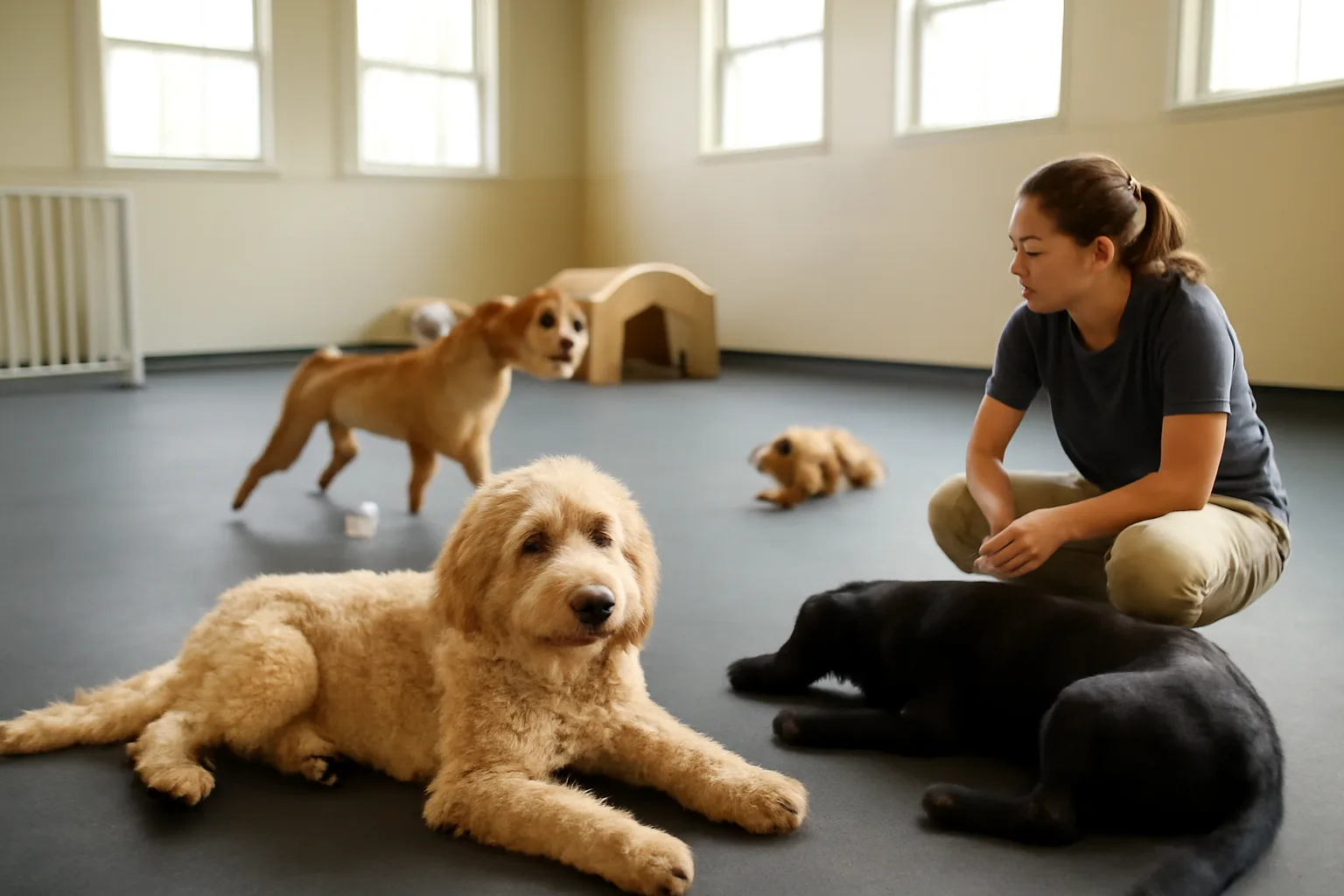
Dogtopia is a franchised chain of dog daycare, boarding, and spa facilities with locations across the United States and Canada. It's a private business brand, not a government program, so it doesn't set licensing rules and it can't issue you a kennel license or breeder permit. If you're researching Dogtopia because you're thinking about opening a location (as a franchisee) or a competing independent facility, the rules that actually govern you come from three separate places: your state's animal welfare or agriculture statute, your county or city zoning code, and (only if you breed and sell dogs wholesale) the USDA Animal and Plant Health Inspection Service (APHIS). A Dogtopia franchise still has to clear the same local hurdles as any independent boarding or daycare business: a facility inspection, a business or kennel license, and a zoning permit or conditional use approval for the specific parcel. Franchise disclosure documents typically note that local licensing and permitting is the franchisee's responsibility, not the franchisor's. That's standard for pet care franchises generally. So the honest starting point is this: Dogtopia's brand answers questions about service quality and price point. It has nothing to do with whether your city allows a kennel use in that zoning district, or whether your state requires a kennel license above a certain number of dogs boarded per year.
how much does dog boarding cost
| Basic kennel/crate boarding | $25-$45 |
|---|---|
| Daycare-style group boarding | $40-$65 |
| Private suite/luxury boarding | $60-$110+ |
| Large or giant breed surcharge | +$5-$15/night |
Boarding prices vary by region, dog size, and whether the stay includes daycare-style play groups versus a private suite. Independent kennels and franchise daycare chains land in roughly the same national range: about $25 to $85 per night for a single dog, with most markets clustering around $40 to $65. Factors that move the price: city cost of living (urban markets like the Bay Area or NYC metro run higher), whether the facility offers 24-hour supervised play versus crate-and-rotate boarding, add-ons like grooming or extra walks, and whether you're booking a holiday period (many facilities add a holiday surcharge of $10-$20/night). There's no federal price-tracking agency for pet boarding, so there's no single authoritative number; the ranges above come from aggregating publicly posted rate sheets across regional chains and independent kennels, and they should be treated as a general planning range, not a guarantee for any specific location. If you're the operator setting prices rather than the pet owner comparing them, the more useful benchmark is your break-even cost per run or suite per night, which typically includes labor (usually the largest line item), utilities, insurance, and debt service if you financed buildout. Facilities in the $79-plus per suite category are usually private-suite or luxury boarding, not open-play daycare-style boarding. | Boarding type | Typical nightly range (national) |
what license does a boarding or daycare facility actually need
Almost every state and many counties require some form of kennel license, commercial animal establishment permit, or pet care facility license before you can legally board, groom, or run daycare for dogs you don't own. The exact name and threshold differ by state; some trigger licensing at a certain number of dogs housed at once (often 3 to 10, depending on the jurisdiction), others require any commercial boarding operation to register regardless of headcount. You'll typically deal with two separate approvals that don't talk to each other: a state or county kennel/animal facility license (health, sanitation, staffing, vaccination record requirements) and a local zoning permit or conditional use permit confirming the parcel is zoned for a kennel or commercial animal care use. Many operators get the state license first and then discover the property isn't zoned for the use, which is why zoning should be checked before signing a lease, not after. County zoning offices publish their own animal-use definitions and setback rules (distance from property lines, residential zones, or water sources), and these are enforced separately from state agriculture department rules. Always check both. For a walk-through on preparing for the zoning side specifically, see dog kennels and dog boarding. Because requirements genuinely differ by state and county, and change over time, treat any specific fee or ordinance citation from a third party as a starting point to verify, not a final answer. Your state department of agriculture's licensing division and your county zoning or planning office are the two calls to make before signing a lease or breaking ground.
how to get a dog license (the pet owner question)
This is a different question than facility licensing, and it trips up a lot of searches. A 'dog license' for an individual pet owner is usually a local (city or county) requirement, separate from any kennel or breeder license, and it typically requires proof of rabies vaccination plus a small annual fee (commonly $10-$25, though this varies widely by municipality). Most counties handle dog licensing through the county clerk, animal control office, or county treasurer, and renewal is often tied to your rabies vaccination expiration date. Some states set the rabies vaccination requirement statewide while leaving the licensing fee and enforcement to the county or city. If you operate a boarding or daycare facility, you don't need a 'dog license' for each dog in your care (that's the owner's responsibility), but you do need to verify vaccination records, including rabies, before accepting a dog. Many state kennel regulations explicitly require kennels to keep vaccination records on file for every boarded animal, and some states mandate a specific look-back period (proof of rabies vaccination within the past 1 or 3 years, depending on the vaccine label and state rule).
how do you register a dog, and how is that different from getting papers
'Registering a dog' usually means one of three very different things, and mixing them up causes real confusion: (1) local dog licensing with your city/county for identification and rabies compliance, (2) breed registry registration with an organization like the American Kennel Club (AKC) to document pedigree, or (3) microchip registration with a chip manufacturer's database (like a national pet recovery registry) so a lost dog can be traced back to you. Local registration (the license) is a legal requirement in most municipalities. Breed registry registration is optional and purely about pedigree documentation and eligibility for conformation shows or litter registration. Microchip registration is a practical safety step, not a legal license, though some counties do accept a microchip number as part of their local licensing paperwork. For a facility operator, none of these three registration types substitute for your business's kennel license or zoning approval. A dog can be AKC-registered and microchipped and still be boarded at a facility operating without a valid state kennel license.
how do you get papers for a dog (AKC and other registries explained)
'Papers' colloquially means breed registry documentation, most commonly from the American Kennel Club, proving a dog's parentage and breed. To get AKC papers for a puppy, the litter needs to be registered by the breeder, both parents need to already be AKC-registered (or eligible through the relevant foreign registry or Purebred Alternative Listing process), and the breeder pays a litter registration fee and submits an application, after which individual puppy registration certificates can be issued to buyers. If you bought a dog without papers and want to register it retroactively, options are limited. If the parents were registered but the breeder never filed litter paperwork, you may be able to work with the breeder to file it late. If the dog's parentage isn't documented at all, AKC's Purebred Alternative Listing (PAL) program allows dogs that appear to be purebred but lack papers to get a PAL number, which allows entry into some AKC companion events (agility, obedience) but not conformation showing, and does not retroactively create a full pedigree. There's no federal 'papers' registry; AKC is a private nonprofit registry, and there are others (United Kennel Club, for example) with their own separate rules. None of these registries are government agencies and none of them substitute for a state breeder license or USDA registration if you cross the wholesale threshold covered below.
how to become a dog breeder legally
Becoming a legal dog breeder involves stacking three separate compliance layers, and most first-time breeders only find out about the second and third layers after they've already sold a few litters. First, check your state's breeder licensing law. A growing number of states require a commercial breeder license once you exceed a certain number of breeding females or litters sold per year (thresholds and definitions vary significantly by state, so check your specific state department of agriculture page rather than assuming a national number). Second, check county zoning; breeding and whelping puppies at a residential property can trigger the same commercial-kennel zoning questions boarding facilities face, especially once you exceed a 'personal pet' headcount. Third, check USDA APHIS rules, covered in the next section, which apply based on how you sell puppies, more than how many you breed. Beyond the legal layer, responsible breeding practice generally includes health testing for breed-specific genetic conditions (hip/elbow scoring, eye clearances, cardiac screening depending on breed), a written health guarantee, and a spay/neuter or limited-registration agreement for pet-quality puppies. None of that is federally mandated, but it's the norm among reputable breed clubs and is often required for parent breed club referral programs. If you're already boarding or offering daycare and considering adding breeding to the business, treat it as a separate license application, not an add-on to your existing kennel permit. Most states categorize 'breeder' and 'commercial kennel/boarding facility' as distinct license types with different inspection checklists.
when does a breeder need a USDA license (APHIS threshold)
This is the single most misunderstood rule in dog breeding. USDA APHIS regulates breeders under the Animal Welfare Act, but the trigger is how you sell dogs, not simply how many you own or breed. Under USDA's regulations, a breeder who sells puppies sight unseen (meaning the buyer never physically inspects the animal or the breeding facility in person before purchase, such as internet sales, many broker sales, or sales shipped without an in-person visit) and who has more than four breeding female dogs generally needs to be licensed as a 'Class A' dealer under the Animal Welfare Act. The regulation defining this threshold is codified at 9 CFR 2.1, which sets out licensing requirements for dealers under the Act. [1] Breeders who sell only face-to-face, meaning the buyer meets the puppy and the breeding premises in person before the sale, are generally exempt from USDA licensing regardless of how many breeding females they have, under the 'retail pet store' exemption carved out in the Animal Welfare Act regulations at 9 CFR 1.1 (definitions) and reflected in APHIS's 2013 retail pet store rule. [2] This exemption is precisely why many hobby and small commercial breeders structure their sales as always in-person. The four-breeding-female threshold is specific: it counts intact adult female dogs used for breeding, not total dogs owned, and not males. If you have four or fewer breeding females and sell sight-unseen, you're typically exempt; five or more breeding females selling sight-unseen typically requires a USDA license. Always confirm your specific situation against the current regulation text and APHIS guidance, since exemption details (like what counts as 'sight unseen') have been the subject of rule changes and litigation over the years. [3] Separately, several states layer their own commercial breeder license on top of (or instead of) the federal requirement, with thresholds that often don't match the federal four-female line, so a breeder can be exempt federally but still required to hold a state license.
how to prepare for a zoning hearing before you sign a lease
Zoning is where most new boarding, daycare, and breeding operations get stuck, not licensing. A kennel, boarding facility, or breeding operation is often classified as a specific conditional use or special exception in residential and even some commercial zones, meaning it's not automatically allowed just because the property is zoned commercial. Before you commit to a location, call the county or city planning/zoning office directly and ask three questions: is 'kennel,' 'animal boarding,' or 'commercial breeding' a permitted use, a conditional use, or a prohibited use in this specific zoning district; is there a public hearing requirement (many conditional use permits require a planning commission or zoning board hearing with public notice to neighbors); and are there specific standards, like minimum lot size, setback from property lines or residential structures, sound attenuation, or a cap on the number of dogs. If a hearing is required, expect to submit a site plan, a description of hours of operation and expected noise/odor mitigation, and sometimes a traffic or parking analysis. Neighbor objections about barking noise are the single most common reason boarding and breeding conditional use permits get denied or delayed at hearing, so addressing sound insulation and outdoor play scheduling proactively in your application materials tends to help. This is the part of the process where a lot of first-time operators either overpay for legal help they don't need yet, or underprepare and get bounced at the hearing. A structured packet that walks through the state kennel license application, the county zoning checklist, and hearing prep documents (like KennelPermit's $149 one-time Kennel License & Zoning Packet, at /license-packet-builder) can save real time compared to piecing it together from five different .gov PDFs, though it's not a substitute for your own state and county's specific application forms, and it's not legal representation before any board.
facility standards inspectors actually check
For a Dogtopia franchisee or an independent operator alike, the state kennel inspection (and any USDA inspection, if you're licensed as a breeder-dealer) generally checks the same core categories: sanitation and waste removal schedule, ventilation and temperature control, primary enclosure size relative to dog size, availability of potable water at all times, a documented vaccination and health record system, fire safety and emergency evacuation plan, and staff-to-dog supervision ratios during group play. USDA's Animal Welfare Act regulations at 9 CFR Part 3, Subpart A set specific minimum standards for licensed dog dealers, including primary enclosure size formulas based on the dog's length, and these are the baseline many state kennel codes borrow language from even for non-USDA-licensed boarding facilities. [4] Daycare-specific concerns that inspectors and insurers focus on beyond the baseline kennel rules: play group size limits, separation of dogs by size or temperament, and having a documented incident/bite protocol. These aren't universally codified in every state's kennel statute yet, but they're increasingly common in state boarding-specific rules and are near-universal requirements from liability insurers regardless of what the state mandates. For more detail on facility layout and standards specifically, see doggy day care and pet boarding.
dogtopia franchise vs. independent boarding facility: what changes for licensing
| State kennel/boarding license | Franchisee's responsibility | Owner's responsibility | |
|---|---|---|---|
| County zoning/conditional use permit | Franchisee's responsibility | Owner's responsibility | |
| Facility build-out standards | Often set by franchisor brand spec | Owner designs to code minimums | |
| SOPs, staff training materials | Usually provided by franchisor | Owner develops independently | |
| USDA APHIS registration | Not applicable (daycare/boarding isn't USDA-regulated the way breeding sales are) | Same; only applies if the business also sells dogs wholesale/sight-unseen | |
| Franchise fee (industry-typical range for pet care franchises) | Often in the tens of thousands, per the specific brand's FDD | Not applicable | One detail worth flagging: USDA APHIS licensing applies to dog breeders and dealers, not to boarding or daycare businesses. If a facility is purely boarding, grooming, and daycare with no dog breeding or sales, APHIS registration isn't part of the compliance picture at all; it only becomes relevant if the same business or owner also breeds and sells puppies wholesale or sight-unseen. |
The licensing and zoning burden doesn't change based on whether the owner is a franchisee or an independent operator; both need the same state kennel license and local zoning sign-off. What does change is who's typically responsible for template compliance documents, standard operating procedures, and staff training programs; a franchisor usually provides those, while an independent operator builds them from scratch. | Requirement | Franchise (e.g., Dogtopia) | Independent facility |
Frequently asked questions
How much does dog boarding cost per night?
Most U.S. boarding runs $25-$85 per night depending on the market and service level, with $40-$65 being typical for daycare-style group boarding. Private suites and luxury boarding often run $60-$110 or more. There's no single national price authority; these are aggregated ranges from published rate sheets, not a guarantee for any specific facility.
How do you register a dog with the city or county?
Contact your county clerk, treasurer, or local animal control office; most require proof of current rabies vaccination and a small annual fee (often $10-$25, but this varies by municipality). This local license is separate from breed registry papers and separate from any facility kennel license.
How do you get papers for a dog?
'Papers' usually means breed registry documentation from an organization like the American Kennel Club. The breeder registers the litter after both parents are already registered, then individual puppy registration certificates get issued. If parentage documentation is missing, AKC's Purebred Alternative Listing (PAL) allows some companion event eligibility but doesn't create a full pedigree retroactively.
How can I get papers for my dog if I don't know the breeder?
Without breeder cooperation or documented parentage, you generally can't get full pedigree papers after the fact. If your dog appears purebred, AKC's PAL program can issue a listing number allowing entry into some companion events, but it won't establish conformation eligibility or a verified pedigree.
How do you get a dog license?
Bring proof of current rabies vaccination to your city or county's licensing office (often the county clerk, treasurer, or animal control department) and pay the local fee. Requirements and fees are set locally, not federally, so check your specific county or city government page.
How to become a dog breeder legally?
Check your state's commercial breeder licensing threshold, confirm your property is zoned for breeding/whelping, and determine if you cross USDA's threshold (more than four breeding females and sight-unseen sales generally require a USDA license under the Animal Welfare Act). Health testing and written health guarantees aren't legally required but are standard practice.
Does Dogtopia require its own special license?
No. Dogtopia is a franchise brand, not a licensing authority. Every location still needs the same state kennel/boarding license and county zoning approval that any independent boarding or daycare facility needs; the franchisor typically provides operational templates but doesn't handle government licensing for the franchisee.
What is the USDA threshold for dog breeders?
Under the Animal Welfare Act, breeders with more than four breeding females who sell dogs sight-unseen (without an in-person buyer visit) generally need a USDA Class A dealer license under 9 CFR 2.1. Breeders who sell only face-to-face are typically exempt under the retail pet store exemption, regardless of headcount.
How is a dog license different from breed registry papers?
A dog license is a legal local requirement proving rabies vaccination compliance, issued by your city or county. Breed registry papers (like AKC registration) are optional pedigree documentation from a private nonprofit organization and have no legal enforcement function; you can have one without the other.
Do I need a zoning permit to open a boarding or daycare facility?
In most cities and counties, yes. Kennel, boarding, and daycare uses are commonly classified as a conditional use or special exception requiring a public hearing, even in commercially zoned areas. Always call the county or city zoning/planning office before signing a lease.
Does a boarding facility need a USDA license?
Generally no. USDA APHIS licensing under the Animal Welfare Act applies to breeders and dealers who sell dogs, not to boarding, daycare, or grooming operations. It only becomes relevant if that same business also breeds and sells puppies wholesale or sight-unseen.
How much does it cost to start a dog boarding business, including licensing?
Licensing and zoning fees themselves are usually modest (often ranging from under $100 to a few hundred dollars for the license application, though this varies significantly by state and county), but build-out, insurance, and lease costs dominate total startup cost, which commonly runs into the tens of thousands of dollars or more depending on facility size.
Sources
- eCFR, 9 CFR 2.1 (Requirement to obtain a license, Animal Welfare Act regulations): Dealers, including certain dog breeders selling sight-unseen with more than four breeding females, must obtain a Class A or Class B license
- Federal Register, APHIS retail pet store rule (78 FR 57227, Sept. 18, 2013): Definition change narrowing the retail pet store exemption to require face-to-face sales for exemption from USDA dealer licensing
- eCFR, 9 CFR 1.1 (Definitions, Animal Welfare Act regulations): Definitions of 'retail pet store,' 'dealer,' and breeding female thresholds used to determine USDA licensing exemption
- eCFR, 9 CFR Part 3, Subpart A (Specifications for humane handling, care, treatment of dogs): Minimum primary enclosure size and facility standards for USDA-licensed dog dealers/breeders
- American Kennel Club, Purebred Alternative Listing (PAL): PAL program allows unregistered purebred-appearing dogs limited event eligibility without full pedigree
- USDA APHIS, Animal Welfare Act enforcement summary (Federal Register notices index): USDA APHIS publishes Animal Welfare Act rulemaking and licensing amendments through the Federal Register
- eCFR, 9 CFR Part 2, Subpart A (Licensing): Federal licensing framework and classes (Class A, Class B) for animal dealers under the Animal Welfare Act