Last updated 2026-07-26
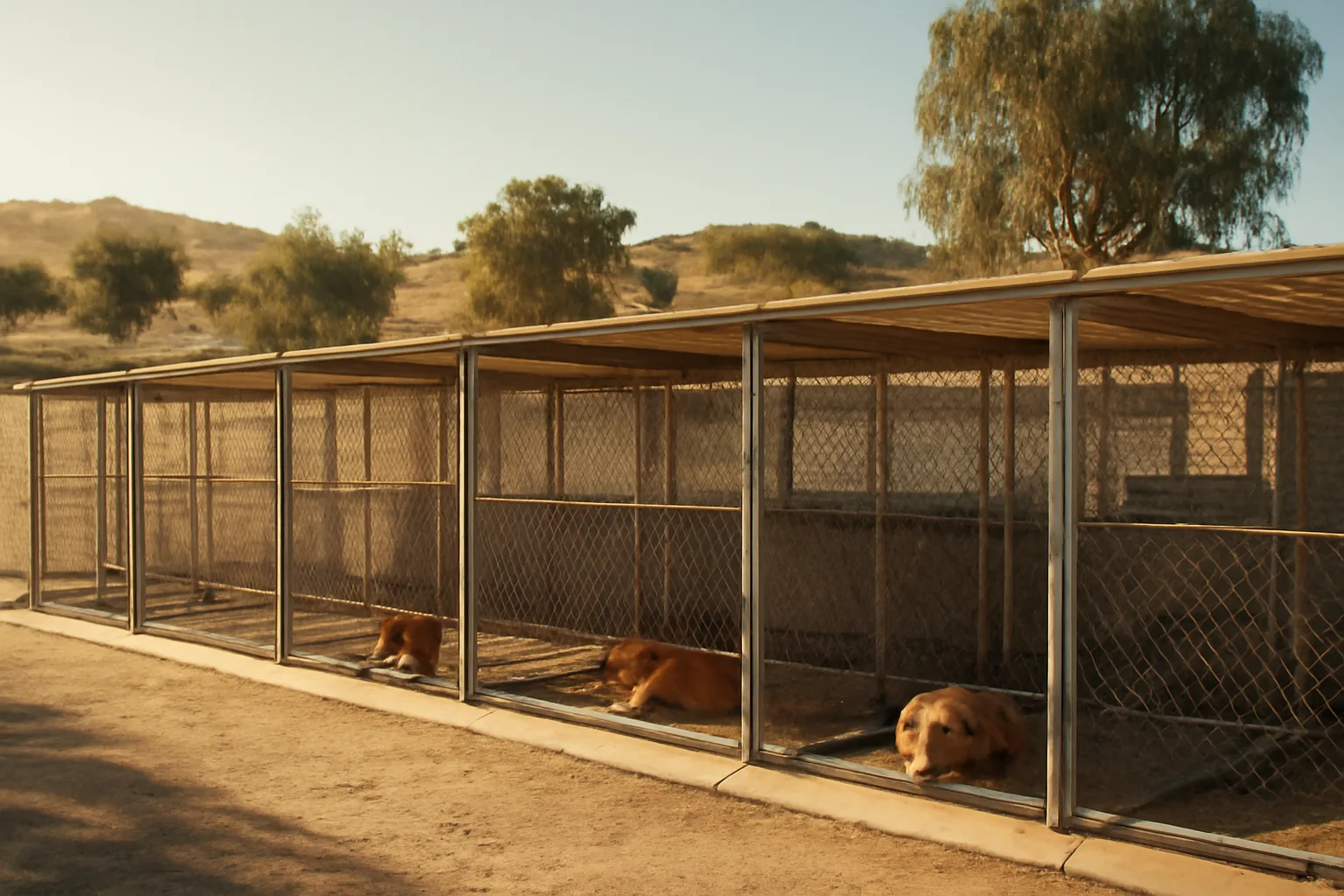
TL;DR
Riverside County kennel licenses come from Riverside County Animal Services or your city's animal control department if you're inside city limits, plus a zoning clearance from Riverside County Planning or your city planning department. Most facilities need a conditional use permit, a facility inspection, and proof the site is zoned for animal boarding before the county will issue anything. Budget weeks to months, not days.
Who issues a kennel license in Riverside County
It depends entirely on where your address sits. If your property is in unincorporated Riverside County, Riverside County Animal Services is your licensing agency, and they work under the county's animal control ordinance found in Riverside County Code Title 6 [1]. If you're inside a city, like Riverside, Temecula, Murrieta, Corona, or Palm Springs, that city almost certainly runs its own animal control program (some contract back to the county, some don't), so you'd apply through the city's department, not the county directly. This matters more than people expect. A kennel that's technically two miles from downtown Riverside but sits in an unincorporated pocket is a county case. A kennel three blocks away inside city limits is a city case, with different fees, different zoning maps, and sometimes a different definition of what counts as a "kennel" at all. Riverside County defines a kennel as a facility keeping a set number of dogs over a certain age for boarding, breeding, or sale, and once you cross that threshold the license requirement kicks in regardless of whether you call yourself a hobby breeder or a boarding business [1]. Before you fill out a single form, call the county's animal services licensing line or check your city's municipal code online to confirm jurisdiction. It's a five-minute phone call that saves people weeks of resubmitted paperwork.
How do you register a dog in Riverside County (individual pet license vs. kennel license)
Registering a single pet is a different process from licensing a kennel, and a lot of new operators mix these up. An individual dog license in Riverside County requires proof of a current rabies vaccination and payment of a license fee, with the fee typically lower for spayed or neutered dogs than for intact animals, per Riverside County Animal Services' licensing program. You can usually register online, by mail, or in person at an Animal Services shelter location. A kennel license is a business-level permit that covers the facility, not one dog. If you're opening a boarding operation or running a breeding program that houses multiple adult dogs, you need the facility-level kennel license (and the zoning clearance behind it) in addition to, not instead of, individual dog licenses for animals you personally own. Riverside County requires rabies vaccination as a condition of any dog license, consistent with California's statewide rabies control law under California Health and Safety Code Section 121690 [2]. If a client or new hire asks "how do I register a dog" versus "how do I get a kennel license," the honest answer is: registering a dog is the easy part, usually a same-day online form. Getting a kennel license is the part that takes real lead time, because it triggers zoning review and a site inspection.
What zoning do you need before you apply for a kennel license
Zoning clearance comes first, and it's the step that trips up almost everyone. Riverside County Planning classifies animal-related uses (kennels, catteries, animal boarding) as conditional uses in most zones, meaning you need a Conditional Use Permit (CUP) approved through Riverside County's Land Use Ordinance, Ordinance No. 348, before Animal Services will finalize a kennel license [3]. Some agricultural zones allow kennels with fewer restrictions; most residential and even a lot of commercial zones don't allow them outright. The CUP process typically involves a pre-application meeting with Riverside County Planning, a site plan showing setbacks, noise mitigation, and animal housing area, a public notice period, and a hearing (often in front of a hearing officer or the Planning Commission, depending on the CUP's scope). Expect the county to look hard at noise, since barking complaints are the number one reason neighbors show up to these hearings. Some jurisdictions require acoustic studies or sound barriers as a condition of approval; whether Riverside County requires this depends on your specific zone and proximity to residences, so ask your assigned planner directly. If your city (not the county) has jurisdiction, check that city's zoning code instead. Temecula, Murrieta, and Corona all maintain their own municipal zoning ordinances with their own kennel and animal boarding definitions, and they don't automatically mirror the county's rules. For a broader walkthrough of what a zoning hearing packet should include nationally, see our guide on dog kennels zoning prep, and compare how boarding-specific zoning differs from daycare zoning in our dog boarding overview.
How much does dog boarding cost to operate legally (licensing and permit fees)
| Kennel/facility license fee | Riverside County Animal Services or city | Confirm on current fee schedule | |
|---|---|---|---|
| Conditional Use Permit application | Riverside County Planning or city planning dept | Often a deposit-based system, can run into the thousands for staff time [3] | |
| Site inspection | Animal Services | Often bundled into license fee | |
| Individual dog licenses | Animal Services | Lower for altered dogs | |
| USDA Class A/B license (breeders/some boarding, if thresholds met) | APHIS | $40 to $985 annually depending on business size [4] | Most first-time applicants underestimate the CUP cost, not the license fee. The license itself is often the cheapest line item. The zoning process, especially if it requires public hearings, noticing, or a traffic/noise study, is usually where the real money and time go. |
The honest answer: it depends on your jurisdiction, your CUP complexity, and your facility size, so treat any number here as a guided range, not a quote. Riverside County Animal Services publishes kennel license fees on its fee schedule, which you should confirm directly since fees are adjusted periodically. On top of the license fee, budget separately for the CUP application fee through Riverside County Planning, which is billed on a cost-recovery, deposit basis for many discretionary permits, meaning the county bills actual staff time against your deposit rather than charging one flat number [3]. Here's a rough breakdown of the cost buckets you're actually paying for, not what boarding a dog costs (that's a separate question, covered below): | Cost bucket | Who charges it | Typical range (verify locally) |
How much is dog boarding (what customers pay, for context)
This is a different question than licensing cost, but operators researching licensing often get here searching the same phrase, so it's worth separating clearly. What customers pay for boarding varies by region and service level, generally running somewhere in the neighborhood of $25 to $85 per night for standard boarding in most U.S. markets, with luxury or medical-needs boarding running higher. There's no single authoritative national government source tracking private boarding prices, so treat any number you see, including this range, as a market estimate rather than a regulated figure. If you're building a business plan around Riverside County demographics, look at comparable facility pricing in your specific city (Riverside, Temecula, and Palm Springs price very differently) rather than relying on a national average. Our pet boarding and dog hotels near me guides break down how service tier affects pricing structure if you're setting rates for the first time.
How do you become a dog breeder legally in Riverside County
Becoming a legal breeder in Riverside County means clearing three separate layers: local animal control licensing, county zoning approval for keeping breeding animals at your address, and potentially federal USDA licensing if you sell above a certain volume. Riverside County's animal ordinance treats an unaltered female dog kept for breeding differently from a spayed pet in terms of licensing requirements and fees [1], so your first move is confirming with Animal Services whether your specific setup (number of intact females, litters per year) triggers kennel-level licensing rather than a standard pet license. Zoning is the layer breeders skip most often, and it's the one that gets home-based breeding operations shut down after a neighbor complains. If you're breeding at a residential address in an unincorporated area, check with Riverside County Planning whether your zone allows animal breeding as a permitted use, an accessory use, or whether it requires a CUP [3]. Many residential zones cap the number of adult dogs allowed without a permit. Federally, if you sell more than a small number of puppies directly to the public sight-unseen (for example, over the internet or by phone, without the buyer meeting the puppy in person before purchase), or if you sell wholesale to pet stores or brokers, you may cross into USDA Animal Welfare Act licensing territory. APHIS requires a Class A (breeder) or Class B (dealer) license once you meet specific thresholds tied to the number of breeding females and sales method, with detailed definitions and exemptions laid out in the Animal Welfare Act regulations at 9 CFR Part 2 [4]. Get this wrong and you're operating an unlicensed dealership under federal law, which carries real penalties. For the broader breeding compliance picture including record-keeping and vet care standards under the Animal Welfare Act, our dog kennels article covers facility standards breeders are held to once licensed.
How do you get papers for a dog, and does that relate to licensing at all
This is worth clearing up because it's one of the most common confused searches: "dog papers" usually means AKC registration or a similar breed registry pedigree document, and it has nothing to do with your county kennel license or your state agriculture department. Registry papers come from private organizations like the American Kennel Club, not from Riverside County or the State of California. To get AKC papers for a litter, the breeding parents typically need to already be AKC-registered themselves, and the breeder submits a litter registration application to the AKC after the puppies are born. None of this substitutes for your local kennel license or zoning clearance. You can have a fully AKC-registered litter and still be operating illegally if you never got your CUP or kennel license from Riverside County. Conversely, you can be perfectly licensed by the county and have zero registry papers if you're not breeding purebreds or don't care about registry status. If a customer or new employee asks how to get papers for their dog, or how to get papers for a puppy they already own, direct them to the breed registry the parent dogs were registered with (AKC, UKC, or others), not to animal control. Animal control and county planning departments do not issue pedigree documents.
How to get a dog license (the individual pet license step, separate from kennel licensing)
Getting an individual dog license in Riverside County (as opposed to a facility kennel license) generally requires three things: proof of current rabies vaccination, your dog's basic information (breed, age, color, spay/neuter status), and payment of the license fee, submitted to Riverside County Animal Services or your city's equivalent department. Most jurisdictions in the county let you renew or apply online now, though first-time applications sometimes still require an in-person visit or mailed proof of vaccination. California state law requires rabies vaccination for dogs over a certain age as a matter of public health, under Health and Safety Code Section 121690, and local licensing enforces that vaccination requirement at the county and city level [2]. If you're running a boarding or daycare facility, every dog on your kennel license roster (if the county requires listing owned/breeding dogs) generally needs its own current rabies vaccination and individual license on top of your facility's kennel license. Don't confuse renewal timing across jurisdictions. Riverside County and each city inside it may have different renewal cycles (often annual, sometimes multi-year tied to vaccination duration), so check your specific city or county notice rather than assuming a statewide standard.
What inspections happen before Riverside County issues a kennel license
Expect at least one physical site inspection from Riverside County Animal Services before your kennel license is finalized, and possibly a separate building or fire inspection depending on your CUP conditions. Animal Services inspectors typically check housing and containment (fencing, enclosure height, drainage), sanitation, ventilation, separation of sick animals, and food/water access, consistent with general animal welfare standards enforced at the county level [1]. If you also fall under USDA jurisdiction (see the breeder and dealer thresholds above), APHIS conducts its own separate inspections under the Animal Welfare Act's facility standards, covering things like enclosure size formulas, temperature ranges, and record-keeping, laid out in 9 CFR Part 3 [5]. A county inspection passing you does not mean you'd pass a USDA inspection, and vice versa. They're different agencies checking against different rulebooks, and a lot of operators assume clearing one covers the other. It doesn't. Before your scheduled inspection, walk your own facility using whatever checklist your local Animal Services office provides (most post one) and fix anything obviously broken (torn fencing, standing water, missing rabies tags on resident animals) ahead of time. Inspectors are far more likely to flag a facility on a re-inspection basis if the first visit turns up easy-to-spot problems. Our doggy day care and dogtopia articles look at how daycare-specific layouts (separate play yards, viewing areas) tend to fare differently in inspections than pure overnight boarding kennels.
When does USDA (APHIS) licensing apply on top of county licensing
USDA licensing is a federal layer that sits entirely separate from your Riverside County kennel license, and plenty of local operators never trigger it. APHIS requires a license under the Animal Welfare Act for certain commercial breeders and dealers, generally those selling animals wholesale, selling to pet stores or brokers, or selling directly to the public sight unseen (meaning the buyer never physically inspects the animal or the breeding facility before purchase), as defined in the Act's implementing regulations at 9 CFR Part 2 [4]. The regulations carve out an exemption for retail pet stores and people who sell animals only after in-person, face-to-face transactions, but that exemption narrows fast once you sell online, ship puppies, or sell through a third party. If you're boarding dogs commercially rather than breeding them, USDA licensing usually isn't triggered by boarding alone, but it's worth checking the federal definitions closely if your business model blends boarding with any breeding or dealing activity. USDA license classes carry their own annual fees, ranging roughly from $40 to $985 depending on the size of your operation, under the fee schedule set out in 9 CFR Section 2.6 [4]. A kennel that's fully compliant with Riverside County zoning and Animal Services licensing can still be operating illegally at the federal level if it should have a USDA license and doesn't. Check both.
How long does the whole process actually take, start to finish
Nobody publishes a single official timeline covering county licensing plus CUP approval plus USDA licensing together, because it depends on how contested your CUP hearing is and how backed up your specific planning department is that quarter. As a rough real-world planning assumption: a straightforward individual dog license is often same-day or same-week. A kennel facility license with no zoning issues (say, in an ag zone that already permits kennels) might take a few weeks once your site inspection is scheduled. A full Conditional Use Permit process, including public notice and a hearing, commonly runs several months from application to final decision, and that's before construction or facility buildout time. If you also need a USDA license, APHIS application review adds its own separate timeline on top, and that agency has faced documented backlogs in past years, so build in a buffer rather than assuming a fixed number of weeks. The practical order of operations that avoids the most rework: confirm jurisdiction (county vs. city) first, confirm your zoning designation and whether a CUP is required second, get your CUP application moving third, and only finalize your kennel license application once zoning is cleared or clearly on track. Applying for a kennel license before your zoning is settled is the single most common way operators waste months resubmitting paperwork. This is the exact gap our $149 one-time Kennel License & Zoning Packet is built to close: a structured way to organize your zoning documentation and license application materials before you walk into the county office, not a substitute for the county's own review or a guarantee of approval. You can start building yours at /license-packet-builder.
What happens if you operate without a kennel license or CUP
Operating an unlicensed kennel in Riverside County exposes you to code enforcement action, potential fines, and in the CUP context, a possible cease-and-desist order that shuts your business down mid-operation, which is far more expensive than getting the paperwork right up front. Riverside County's animal control ordinance gives Animal Services enforcement authority over unlicensed kennel operations [1], and county code enforcement separately handles zoning violations tied to operating a use without a required CUP. The realistic risk isn't usually a surprise inspection out of nowhere. It's a neighbor complaint (barking, odor, traffic) that triggers both an Animal Services visit and a code enforcement referral at the same time. Once that happens, you're negotiating from a weaker position than if you'd gotten the CUP before opening. If you're already operating without a completed CUP, the fastest fix is usually calling Riverside County Planning proactively rather than waiting for enforcement to find you. Voluntary disclosure and a genuine application in progress reads very differently to a hearing officer than a business caught mid-violation with no paperwork filed at all.
Frequently asked questions
How much does dog boarding cost in terms of licensing fees in Riverside County?
It varies by facility type and whether you need a Conditional Use Permit. Confirm current kennel license fees directly with Riverside County Animal Services [2], and budget separately for CUP application costs through Riverside County Planning, which are often billed as a deposit against actual staff review time [4] rather than a flat fee.
How do I register a dog in Riverside County?
Bring proof of current rabies vaccination and your dog's basic information to Riverside County Animal Services (or your city's animal control department if you're inside city limits), and pay the applicable license fee. Many jurisdictions allow online registration and renewal now. Spayed or neutered dogs typically pay lower fees than intact dogs [2].
How much is dog boarding for pet owners in the Riverside County area?
There's no official government price tracker for private boarding rates. Market rates nationally often fall somewhere between $25 and $85 per night depending on service tier, but Riverside County pricing varies significantly by city, so check comparable local facilities directly rather than relying on a national average.
How do you get a dog papers if you already own the puppy?
Registry papers (AKC or similar) come from the breed registry, not from any government agency. If the puppy's parents were registered with AKC at the time of breeding, the breeder typically completes litter registration paperwork with AKC directly. If the parents weren't registered, standard registry papers generally aren't available after the fact.
How do you register a dog with the county versus getting breed papers?
County registration is a public safety license tied to rabies vaccination, handled by Riverside County Animal Services or your city. Breed papers (AKC pedigree registration) are a private registry document handled entirely separately by organizations like the American Kennel Club. You can have one without the other.
How do I become a dog breeder legally in Riverside County?
Confirm your property's zoning allows breeding (a Conditional Use Permit is often required under Riverside County's Land Use Ordinance) [4], get any required kennel license from Animal Services [1], and check whether your sales volume or sales method (sight-unseen sales, wholesale) triggers USDA Class A breeder licensing under the Animal Welfare Act [5].
How do I get a dog license, and is it the same as a kennel license?
No. A dog license covers one pet and requires current rabies vaccination plus a fee paid to Animal Services [2][3]. A kennel license covers a facility and requires zoning clearance, a site inspection, and often a Conditional Use Permit. Boarding or breeding operators usually need both individual licenses and a facility-level kennel license.
How do I get papers for my dog if I don't know the breeder?
Without breeder or registry information from the original seller, formal pedigree papers usually aren't available. Some registries offer DNA-based breed identification or informal registration for mixed-breed or unknown-history dogs, but that's different from a standard pedigree document tied to registered parents.
How can I get papers for my dog after the fact if it was never registered as a puppy?
If the parents weren't registered with a breed registry at breeding time, you generally can't retroactively obtain standard pedigree papers. Some registries offer alternative or indefinite listing programs for purebred-appearing dogs without full pedigree documentation; check directly with the specific registry (AKC or otherwise) for their current options.
Does Riverside County require a Conditional Use Permit for every kennel?
Not necessarily every kennel, but most zones require one for boarding, breeding, or daycare facilities. Some agricultural zones allow kennels with fewer restrictions. Confirm your parcel's specific zoning designation with Riverside County Planning before assuming you either need or don't need a CUP [4].
What's the difference between Riverside County licensing and a city's licensing inside the county?
Riverside County Animal Services and Riverside County Planning handle unincorporated areas. Cities like Riverside, Temecula, Murrieta, and Corona run their own animal control and planning departments with separate ordinances, fees, and zoning maps. Confirm your exact address's jurisdiction before applying anywhere.
When do I need a USDA license instead of or in addition to a county kennel license?
USDA (APHIS) licensing applies federally to certain breeders and dealers, generally those selling wholesale, to brokers, or directly to buyers sight unseen. It's separate from and in addition to your county kennel license. Check the Animal Welfare Act regulations directly, since exemptions for small in-person sellers are specific [5].
Sources
- Riverside County Code, Title 6 (Animals): Riverside County's animal ordinance defines kennel licensing requirements and enforcement authority
- California Health and Safety Code Section 121690: California state law requiring rabies vaccination for dogs, enforced through local licensing
- Riverside County Ordinance No. 348 (Land Use Ordinance): Conditional Use Permit requirement for kennel and animal-related uses in most zoning designations
- 9 CFR Part 2, Subpart A (Animal Welfare Act, Licensing): USDA Class A/B licensing thresholds for breeders and dealers, exemptions for in-person retail sales, and license fee ranges under 9 CFR 2.6
- USDA APHIS, 9 CFR Part 3 (Animal Welfare Act Standards): Federal facility standards for enclosure size, temperature, and sanitation that USDA-licensed facilities must meet