Last updated 2026-07-25
TL;DR
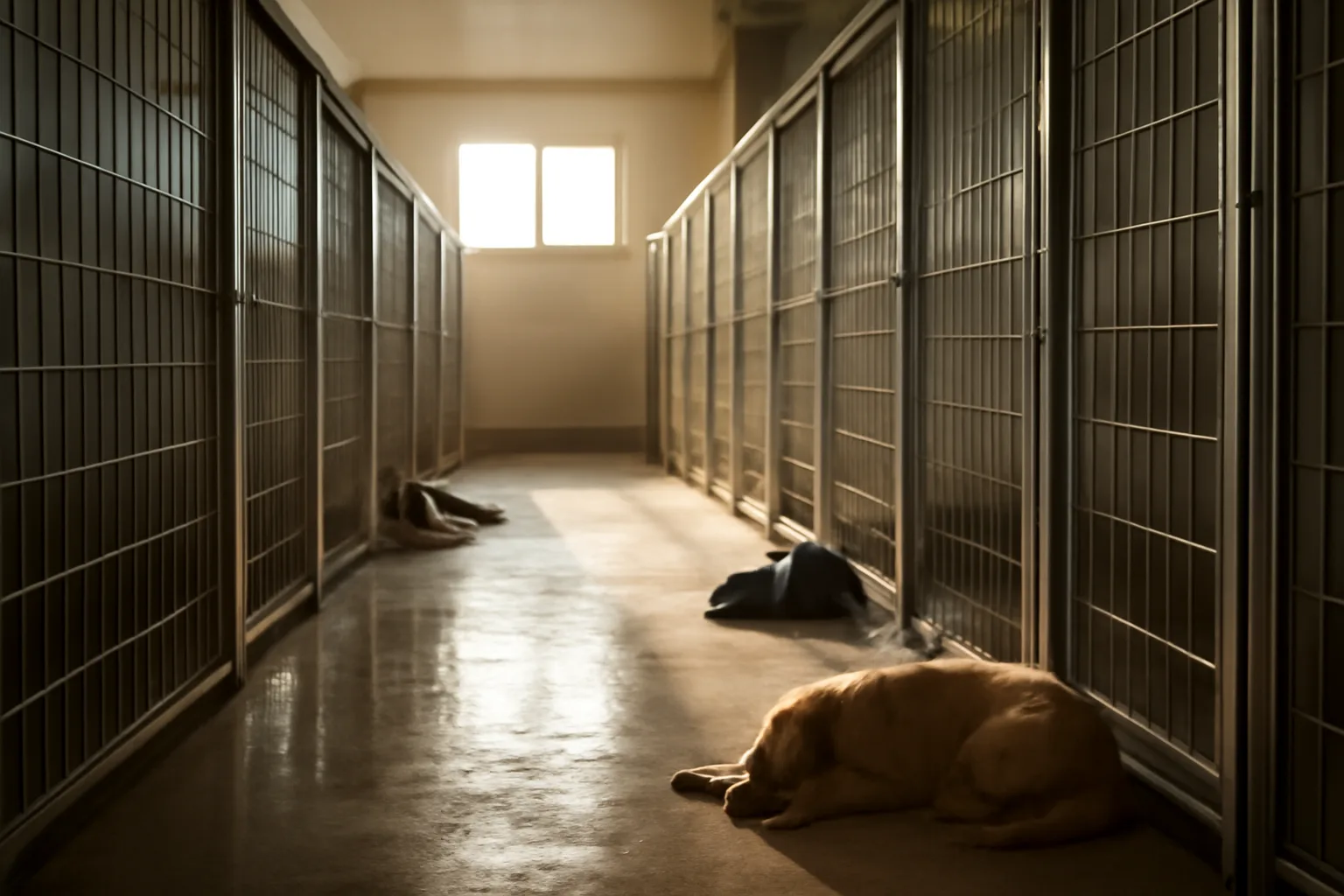
A boarding facility is a licensed operation that houses dogs overnight for pay. Expect state or local kennel licensing (often $50-$500+ depending on the state), a county zoning check, and facility standards covering space, sanitation, and staffing. Dog boarding itself typically costs owners $30-$75 per night, more for large breeds or add-on care.
what is a boarding facility, exactly?
A boarding facility is any business that houses dogs (or other pets) overnight in exchange for payment. That's the legal line that separates it from a friend watching your dog for a weekend: money changes hands, and in most states that triggers a kennel or commercial animal establishment license. The term covers a lot of ground. A converted garage with six runs counts. So does a 200-dog resort with a splash pad and webcam feed. States generally don't care about your décor, they care about how many dogs you're holding at once, whether you're breeding on-site too, and whether you're within city limits or out in unincorporated county land. Most states regulate boarding under an "animal shelter," "pet dealer," or "kennel" statute, and the definitions matter because they determine your license category and fee tier. Some states set the threshold by number of animals housed (often 3 to 10 dogs triggers a commercial kennel license), others by whether you accept the public for compensation at all, regardless of headcount. If you're just getting oriented, the dog boarding overview and pet boarding comparison page are good next stops before you start filing paperwork.
how much does dog boarding cost?
| Basic kennel/run | $25-$40 | Run or crate, 2-3 potty breaks, basic feeding | |
|---|---|---|---|
| Standard boarding | $40-$65 | Larger run/room, 1-2 group playtimes, bedding | |
| Suite/luxury | $65-$120+ | Private room, webcam, extra walks, some enrichment | |
| Boarding + daycare combo | $50-$90 | Full-day play plus overnight stay | Multi-dog discounts (siblings sharing a room) are common, often 10-20% off the second dog. Add-ons like medication administration, bath before pickup, or specialty diets typically run $5-$20 extra per service. If you're building a rate sheet from scratch, look at what dog hotels near me style competitors charge in your specific metro before setting your own prices; national averages don't tell you much about your zip code. |
Dog boarding in the U.S. generally runs $30 to $75 per night for a standard dog, with higher-end resorts and large-city markets pushing past $100/night for suites, webcams, or extra playtime add-ons. Small dogs and basic kennel runs sit at the low end; large breeds, private suites, and daycare-plus-boarding packages sit at the top. There's no single authoritative national price survey the way there is for, say, veterinary visits, so treat any specific average with some skepticism; it depends heavily on region, facility type, and whether the quote includes daycare, medication administration, or grooming. Rural boarding kennels in the Midwest routinely charge under $30/night. Boutique boarding in coastal metro areas can run $80-$150/night for a suite with webcam access and multiple daily walks. Here's a rough breakdown of what operators commonly price boarding at, by tier: | Tier | Typical nightly rate | What's usually included |
what license do I need to open a boarding facility?
You'll almost always need two separate approvals: a state (or sometimes county) kennel/commercial animal establishment license, and local zoning clearance or a conditional use permit. They are not the same process and are handled by different offices, so budget time for both. State-level licensing varies enormously. Pennsylvania, for example, requires a kennel license under its Dog Law for anyone keeping 26 or more dogs, with license classes and fees set out in statute [1]. Many other states fold boarding kennels into their broader "animal facility" or "pet shop" licensing category administered by the state Department of Agriculture, sometimes with an inspection requirement before the license issues. County and city zoning is the part operators most often underestimate. Boarding kennels are frequently classified as a conditional or special use in residential-adjacent zones, meaning you need a hearing, more than a form. Some counties cap the number of dogs allowed per acre or require a minimum lot size and setback from property lines specifically for kennel runs. Don't assume state approval means you're zoned. It's entirely possible to get your Department of Agriculture kennel license approved and then have the county planning department tell you your parcel isn't zoned for a commercial kennel use at all. Check zoning first; it's usually the harder and slower approval, and it's the one that can kill a location entirely.
how do I prepare for a zoning hearing for my boarding facility?
Preparing for a zoning hearing means gathering your site plan, noise and odor mitigation plan, traffic/parking estimate, and neighbor notification records before you ever walk into the hearing room. Most counties require public notice to adjacent property owners 10-30 days ahead, so start early. Boards weighing a kennel conditional use permit typically want to see: how many dogs will be on-site at peak, what hours dogs will be outside, what sound barriers exist (fencing, tree lines, distance from property line), how waste is handled, and what your traffic pattern looks like for drop-off and pickup. Bring a site plan drawn to scale, not a sketch. Neighbor objections are the single biggest reason kennel conditional use requests get denied or tabled. Barking complaints specifically show up again and again in county planning board minutes across the country. If you can show a real sound-dampening plan (indoor-only overnight hours, staggered outdoor time, distance buffers) you address the objection before it's raised. Bring your state kennel license application (or approval, if you have it) to the hearing too. Some boards want to see that you're already coordinating with the Department of Agriculture side, since it signals you understand this is a two-track process, not one form.
what are the facility standards for a boarding kennel?
Facility standards generally cover cage/run size per dog, temperature control, sanitation and disease control, staffing ratios, and record-keeping, and they come from whichever agency issues your license, not from a single national code. If you're regulated under USDA APHIS (more on that below), the specific numeric standards are federal and detailed. If you're only state/locally licensed, standards vary by state and are often less numerically specific but still enforced during inspection. Under the federal Animal Welfare Act regulations that apply to USDA-licensed facilities, primary enclosures must give each dog enough space to stand, sit, turn, and lie down normally, with specific minimum square footage tied to the dog's length plus 6 inches, per 9 CFR 3.6 [2]. Temperature in indoor housing facilities generally can't be allowed to fall below 50°F for dogs not acclimated to cooler temperatures, per 9 CFR 3.2 [3], and facilities need a daily sanitation schedule for enclosures. Even where USDA rules don't apply (most pure boarding-only operations without breeding or wholesale sales don't fall under APHIS licensing at all, see below), state agriculture departments and county health codes commonly require: adequate ventilation, separate isolation space for sick animals, secure fencing, potable water access, and a written vaccination policy (rabies at minimum, often bordetella and canine influenza for boarding/daycare specifically). For a deeper standards comparison across states, see dog kennels and doggy day care for the daycare-specific overlay, since many boarding operators run both under one roof.
does USDA APHIS regulate boarding facilities?
Generally, no. Pure boarding and daycare operations, where you're only caring for dogs owners already possess, are not USDA/APHIS licensed activities. APHIS licensing under the Animal Welfare Act applies to dealers, exhibitors, and certain breeders, not boarding-only kennels. Where this gets confusing is for combination operators: facilities that board dogs and also breed and sell puppies. If you're selling puppies (more than boarding other people's dogs) and you meet APHIS's dealer thresholds, you need a separate USDA license for that side of the business regardless of your boarding operations. The Animal Welfare Act's implementing regulations define who counts as a "dealer" required to hold a USDA license, largely turning on wholesale sales and sales where the buyer doesn't see the animal in person before purchase, per 9 CFR 1.1 [4]. A commonly cited threshold: breeders selling puppies wholesale or sight-unseen who have more than 4 breeding females are typically required to obtain a USDA license, though the exact regulatory language turns on specific business practices, more than a headcount, so check the current federal definition directly [4]. Bottom line for a boarding-only operator: your regulatory relationship is with your state Department of Agriculture and county zoning office, not APHIS. If you add breeding to the business model, that's a separate license track worth reviewing on its own.
how do you register a dog?
Registering a dog usually means one of two different things, and people conflate them constantly: getting a municipal dog license (a legal requirement in most cities/counties, tied to rabies vaccination) or registering a dog's pedigree with a breed registry like the AKC (a voluntary paperwork process, not a legal requirement). For municipal/legal dog registration: most counties require you to license your dog annually or biennially, usually through the county clerk, animal control, or treasurer's office, and proof of current rabies vaccination is almost always required to get the tag. Fees are typically modest, often $10-$25/year, sometimes less for spayed/neutered dogs and more for intact dogs (many counties charge double for unaltered dogs specifically to encourage spay/neuter). For breed registry registration (getting a dog "papers"): that's a completely different, non-governmental process, covered next.
how do you get a dog license?
You get a dog license through your city or county's animal control, clerk's office, or treasurer's office, and you'll typically need proof of current rabies vaccination plus a small annual fee. The exact office varies by jurisdiction, some states run this at the county level, others push it to the municipality. The process is usually simple: bring (or upload) your rabies certificate from your vet, pay the fee, and you get a tag and a license number tied to your address and the dog's microchip or rabies tag number. Many counties now let you renew online once you're in the system. What happens if you skip it? Enforcement varies a lot. Some counties actively fine unlicensed dogs found by animal control, others rarely enforce it outside of bite/complaint investigations. Either way, it's cheap insurance: a lost dog with a current license is generally easier to reunite with an owner than one without, since the license number is searchable by animal control. If you're a boarding facility operator, note that some counties want to see proof that a percentage or all of boarded dogs carry a current local license or rabies tag before granting your commercial kennel license, so check your specific county requirement, it's not universal but it does show up.
how do you get papers for a dog?
"Papers" almost always means AKC (American Kennel Club) or another breed registry's registration certificate, which documents a dog's pedigree, not a legal license. Getting papers requires that the dog's parents were both registered with that same registry at the time of breeding, and the breeder files a litter registration. If you bought a puppy from a breeder who registered the litter, you (as the buyer) typically receive an AKC "registration application" at pickup, which you then complete and submit (often online) to get the individual dog's own registration certificate in your name. There's a registration fee, and pricing is set by the registry, not by government, so check the current AKC fee schedule directly rather than relying on an old number. If your dog doesn't have registered parents, you generally cannot get standard papers after the fact. Some registries offer limited alternative paths for dogs that appear purebred but lack full documentation, which can allow participation in certain club-sanctioned activities (agility, obedience) without full pedigree registration, but that's not the same as a full pedigree "papers" registration [5]. So if you're asking "how can I get papers for my dog" after the fact and the parents weren't registered, the honest answer is: usually you can't get full pedigree papers retroactively. An alternative listing program or a different registry's rules may offer a partial path, but check that registry's specific current requirements rather than assuming.
how do you become a dog breeder (and when does that require a USDA license)?
Becoming a dog breeder legally starts with your state's breeder licensing rules (many states require a kennel or breeder license once you exceed a certain number of breeding females or litters per year), plus possible county zoning approval if you're breeding commercially from a residential-zoned property. Separately, and this is the part that trips people up, if you sell puppies directly to the public sight-unseen (online, shipped, without the buyer meeting the dog first) or you sell wholesale to pet stores or brokers, you may cross into USDA/APHIS "dealer" territory and need a federal license on top of any state license. The Animal Welfare Act regulations define "dealer" in a way that captures exactly this kind of wholesale or sight-unseen sale, per 9 CFR 1.1 [4]. Many small hobby breeders stay under this threshold by selling only to buyers who visit in person and by keeping breeding female counts low; check the specific numeric and practice-based tests in the federal definition, since the rules distinguish by sales method as much as by headcount [4]. Practically, here's the sequence that keeps most new breeders out of trouble: confirm your state's breeder license threshold with your Department of Agriculture, confirm your county allows breeding as a use on your property (this is a zoning question, same as boarding), and run your sales model against the federal dealer definition before you scale past a hobby-sized operation.
boarding facility vs. breeding operation: different rules, different agencies
| Primary regulator | State Dept. of Agriculture / county | State Dept. of Agriculture + USDA APHIS (if thresholds met) | |
|---|---|---|---|
| Zoning concern | Noise, traffic, lot size | Same, plus animal density rules | |
| Typical license fee range | Varies widely by state; often $25-$500+ | State fee plus separate APHIS license fee if applicable | |
| Federal involvement | Essentially none | Yes, if selling wholesale/sight-unseen above APHIS thresholds | |
| Inspection frequency | Varies by state/county | USDA-licensed breeders face APHIS inspections | If you're running a mixed operation (board dogs and also breed a few litters a year), you genuinely need to satisfy both tracks separately. Don't assume your boarding license covers breeding activity, and don't assume a hobby breeder exemption covers a commercial boarding kennel on the same property. |
Boarding and breeding are regulated by almost entirely different bodies, and conflating them is the single most common licensing mistake new operators make. Boarding is generally a state Department of Agriculture / county animal control matter. Breeding, once you cross certain sales thresholds, adds a federal USDA/APHIS layer on top. | Factor | Boarding facility | Breeding operation |
how much does it actually cost to get licensed and open?
Total startup licensing cost for a boarding facility typically breaks into three buckets: the state/local kennel license fee itself, zoning/permit application fees, and any inspection or plan review fees, and all three vary by jurisdiction, so treat any number here as a planning range, not a quote. State kennel license fees alone commonly range from under $50 to several hundred dollars depending on the state and the number of dogs you're licensed for; Pennsylvania's Dog Law, for instance, sets license classes by number of dogs kept, with fees set in the statute and adjusted periodically [1]. Zoning/conditional use permit application fees are usually separate and can run from roughly $100 to $1,000+ depending on the county and whether a public hearing is required. Then there's the part almost nobody budgets for correctly: consulting or legal help to prepare zoning materials, plus the time cost of a delayed opening if your first hearing gets tabled for more information. This is the exact gap a packaged approach can close. A $149 one-time Kennel License & Zoning Packet, for example, is built to walk you through the state licensing checklist and zoning hearing prep materials in one pass rather than researching each agency cold, though it doesn't replace an actual attorney or represent you before your local board, and it can't guarantee approval since every state and county sets its own rules. If you want a structured starting point before your first county meeting, the license packet builder is built for exactly that gap. Whatever route you take, build in a real contingency line. Most delays in this business come from zoning, not the state license, so budget the extra weeks accordingly.
what records and inspections should I expect once I'm open?
Once licensed, expect periodic inspections from whichever agency issued your license (state Department of Agriculture, county animal control, or in some states, a health department), plus your own internal record-keeping obligations for vaccinations, incident reports, and occupancy logs. USDA-licensed facilities (breeders/dealers under APHIS) face documented inspection requirements under the Animal Welfare Act regulations, and the standards inspectors check against, covering housing, sanitation, and recordkeeping, are laid out in 9 CFR Part 3 . State-licensed boarding kennels typically face a less frequent, less standardized inspection cycle, sometimes annual, sometimes complaint-driven only, depending on the state's resources. Good internal records to keep regardless of what's legally required: a daily occupancy log, vaccination records for every boarded dog, an incident/injury log (bites, escapes, illness), and staff training records. Not every state requires all of these on paper, but every state's inspector will ask for something in this category, and having it organized ahead of time is the difference between a 20-minute inspection and a half-day one. If you're expanding to multiple locations or adding daycare to an existing boarding operation, treat each location as its own licensing and zoning event. Approval at one address doesn't carry over to a second site, even within the same county.
Frequently asked questions
How much does dog boarding cost per night?
Most dog boarding runs $30-$75 per night for a standard dog, with basic kennel runs at the low end and private suites or resort-style facilities in major metros pushing $80-$150+. There's no single national price survey, so local competitor rates in your specific market are a better guide than any national average.
How do you register a dog with the city or county?
Contact your county clerk, treasurer, or animal control office. You'll typically need proof of current rabies vaccination and pay a small annual or biennial fee, often $10-$25, sometimes discounted for spayed/neutered dogs. This is separate from breed registry (AKC-style) registration, which is voluntary paperwork, not a legal requirement.
How do you get a dog license?
Bring proof of current rabies vaccination to your city or county's animal control, clerk, or treasurer's office and pay the license fee. Some counties allow online applications and renewals once you're in the system. Requirements and fees vary by jurisdiction, so check your specific county's animal control page.
How do you get papers for a dog?
"Papers" refers to breed registry documentation (like AKC registration), which requires that the dog's parents were both registered at the time of breeding. If you bought from a registering breeder, you complete a registration application at pickup. If the parents weren't registered, you generally cannot get full papers retroactively.
How can I get papers for my dog if I don't have the breeder's info?
Without documentation of registered parents, standard pedigree papers usually aren't possible after the fact. Some registries offer limited alternative programs that allow participation in certain activities without full pedigree registration. Check the specific registry's current rules directly before assuming any path is available.
How do you become a dog breeder legally?
Check your state Department of Agriculture's breeder licensing threshold (often based on number of breeding females or litters per year), confirm your property is zoned for breeding, and review the federal dealer definition under 9 CFR 1.1 if you plan to sell wholesale or sight-unseen. Selling only to in-person buyers at low volume often stays under federal licensing thresholds.
Does a boarding facility need a USDA license?
Generally no. Pure boarding and daycare operations (caring for dogs owners already own) aren't USDA/APHIS-licensed activities. APHIS licensing applies to dealers, exhibitors, and breeders selling above certain thresholds. If you also breed and sell puppies wholesale or sight-unseen from the same facility, that side of the business may need a separate USDA license.
What's the difference between a kennel license and a zoning permit?
A kennel license is issued by your state Department of Agriculture (or sometimes county), confirming you meet animal care and facility standards. A zoning permit or conditional use approval comes from your county or city planning office, confirming your property is legally allowed to host a commercial kennel use. You typically need both, and they're separate processes.
How many dogs can I board before I need a commercial license?
It varies by state. Some states set a specific headcount threshold (for example, Pennsylvania's Dog Law licensing tiers apply once you keep 26 or more dogs), while others require a license for any boarding done for compensation regardless of count. Check your specific state Department of Agriculture's kennel licensing statute.
What space requirements apply to dog boarding kennels?
For USDA-licensed facilities, federal rules under 9 CFR 3.6 require primary enclosures to give each dog room to stand, sit, turn, and lie down normally, with minimum square footage tied to the dog's length plus 6 inches. State-licensed, boarding-only facilities follow state-specific space standards, which vary and are often less numerically detailed.
What temperature do boarding kennels need to maintain?
Under federal Animal Welfare Act regulations (9 CFR 3.2), indoor housing facilities generally can't be allowed to drop below 50°F for dogs not acclimated to cooler temperatures. State and local boarding rules often mirror similar minimums, but check your specific state's facility standards since this isn't universally federal for boarding-only operations.
Why do zoning hearings deny kennel applications most often?
Neighbor objections over barking noise are the most commonly cited reason kennel conditional use permits get denied or tabled at the county level. Bringing a concrete sound-mitigation plan (indoor overnight housing, staggered outdoor time, distance buffers from property lines) to the hearing addresses this objection before it's raised.
Can I run boarding and breeding at the same facility?
Yes, but you need separate approvals for each activity. Your boarding operation is regulated by your state/county kennel license and zoning approval; your breeding operation may additionally require a USDA APHIS license if you sell puppies wholesale or sight-unseen. One license doesn't cover the other.
Sources
- Pennsylvania General Assembly, Dog Law (3 P.S. Ch. 3): Pennsylvania kennel license classes and requirements tied to number of dogs kept (26+ threshold)
- USDA APHIS, 9 CFR 3.6 (Animal Welfare Act regulations, primary enclosures for dogs): Minimum enclosure space requirements for dogs under federal Animal Welfare Act regulations
- USDA APHIS, 9 CFR 3.2 (Animal Welfare Act regulations, facility temperature): Indoor housing facility minimum temperature requirement of 50°F for dogs not acclimated to cooler temperatures
- USDA APHIS, 9 CFR 1.1 (Animal Welfare Act regulations, definitions of dealer and related terms): Federal definition of dealer, turning on wholesale sales and sales where the buyer doesn't see the animal before purchase
- USDA APHIS, 9 CFR Part 3 (Animal Welfare Act regulations, standards for dogs and cats): Federal standards covering housing, sanitation, and recordkeeping that USDA inspectors check for licensed facilities