Last updated 2026-07-25
TL;DR
Dog boarding near you typically costs $25 to $85 a night at a standard kennel or in-home service, and $40 to $120+ at daycare-style facilities with suites. Price depends on your dog's size, added services (grooming, extra walks), and whether the facility is licensed and inspected. Always ask to see the kennel's state or county license before you book.
how much does dog boarding cost
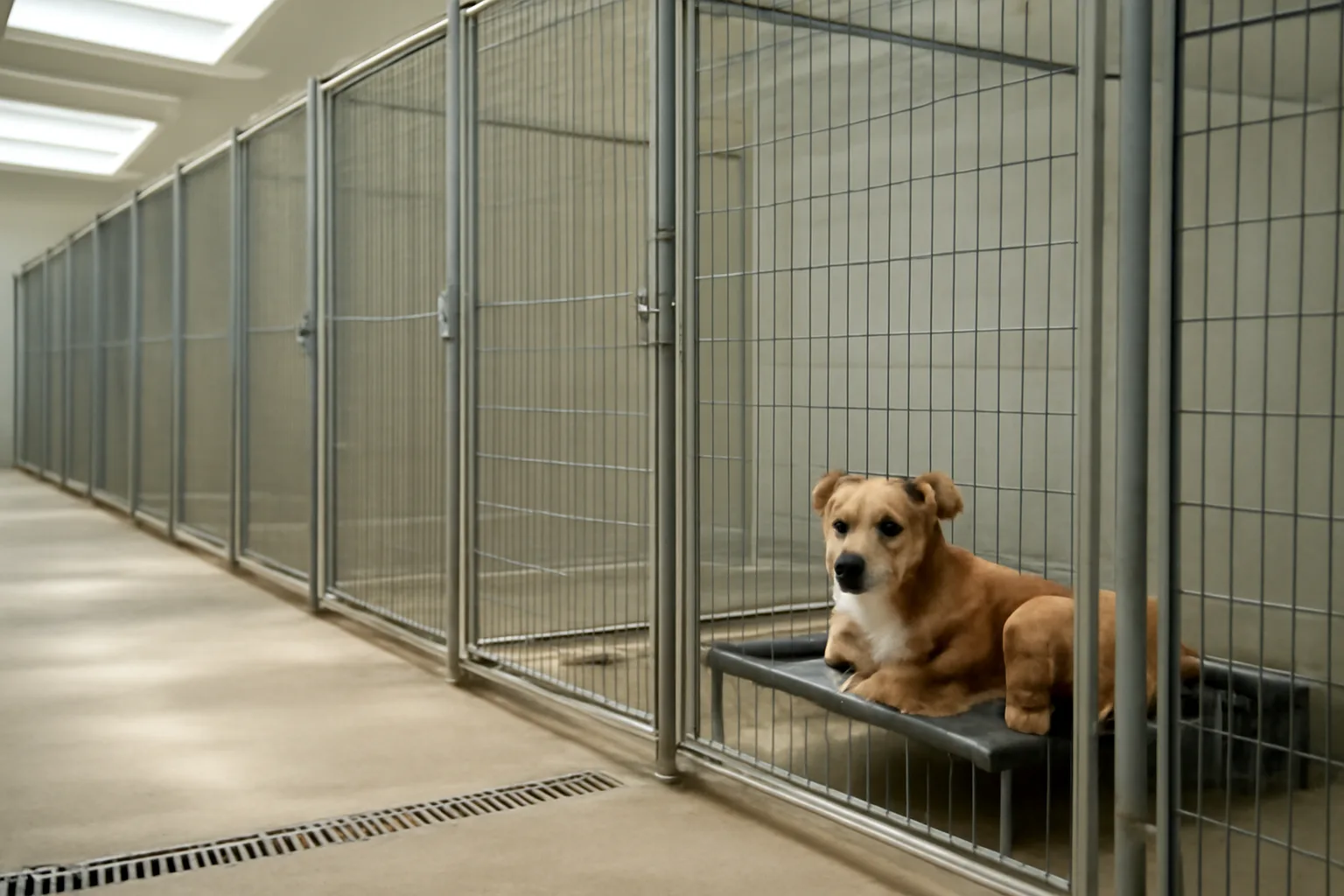
Expect to pay somewhere between $25 and $85 per night for standard dog boarding, with luxury suites at daycare-style facilities running $50 to $120 or more per night in expensive metro areas. In-home pet sitting booked through platforms like Rover often lands in a similar range, commonly $25 to $75 a night depending on your city and the sitter's experience [1]. A few things move the price a lot. Dog size matters: many kennels charge more per pound tier, so a 90-pound Lab costs more to board than a 12-pound terrier. Add-ons matter too. Extra potty breaks, one-on-one playtime, medication administration, and grooming before pickup can each add $5 to $25 per day. Holiday weeks (Thanksgiving, Christmas, July 4th) often carry a surcharge of 10% to 25%, and many facilities require holiday bookings weeks in advance. The honest range nobody likes to hear: there's no national average published by any government source, because boarding is a private service with prices set locally. The figures above come from consumer marketplace data, not a regulatory agency, so treat them as a planning range, not a guarantee. If a quote in your area is way outside $25 to $120 a night, ask what's included before assuming you're being overcharged or getting a deal. For a side-by-side look at boarding versus daycare versus in-home sitting, see our breakdown on dog boarding options and pricing structures.
how is dog boarding priced, and what actually drives the difference
| Small dog (under 20 lbs) | Base rate, often the cheapest tier | |
|---|---|---|
| Large dog (60+ lbs) | +$5 to $20/night over small-dog rate | |
| Standard kennel run | $25 to $45/night | |
| Daycare-style suite with webcam | $45 to $90/night | |
| Luxury suite (TV, raised bed) | $70 to $150+/night | |
| In-home pet sitting (your house) | $25 to $75/night | |
| Holiday surcharge | +10% to 25% | |
| Medication administration | +$5 to $15/day | |
| Extra playtime or private walk | +$10 to $25/session | Geography drives a lot of this too. A kennel in a rural county with cheap land and low overhead can charge less than a boutique daycare in a dense city where rent per square foot is high. If you're comparing options, our guide to dog hotels near me covers what separates a basic kennel from a full-service pet hotel. |
Boarding pricing breaks down into a handful of predictable levers: dog size, facility type, location, season, and add-on services. Here's how they typically stack up. | Factor | Typical price impact |
what should i check before booking a boarding facility
Ask to see the facility's license before you hand over your dog. Most states and counties require boarding kennels to hold some form of license or permit, and reputable operators will show it without hesitation. If a facility hedges or says it's 'not required here,' verify that yourself with your county zoning office or state department of agriculture rather than taking their word for it. Walk the facility if they'll let you. Many won't allow full tours during business hours for disease control reasons, which is actually a good sign, not a red flag. Ask about vaccination requirements: reputable kennels require proof of rabies, distemper/parvo (DHPP), and often bordetella (kennel cough) vaccination before intake. Ask what happens in a medical emergency: is there a relationship with a nearby vet, and who makes the call to treat. Ask about staff-to-dog ratios and whether dogs are grouped by size or temperament during playtime. Ask how overnight staffing works, since many boarding facilities do not have a live person on-site 24/7, which surprises some pet owners. None of this is regulated the same way everywhere. The questions matter more than assuming a standard exists. If you're comparing a chain versus an independent operator, our review of dogtopia as a franchise model versus doggy day care independents walks through what differs in practice.
how do i register a dog
Registering a dog usually means one of two things: getting a dog license from your city or county (a legal requirement in most jurisdictions), or registering a purebred dog with a breed registry like the American Kennel Club (a voluntary pedigree record, not a legal requirement). For a dog license, you typically need proof of current rabies vaccination and a completed application from your local animal control or county clerk's office. Fees are set locally and vary widely, often $10 to $25 a year for a spayed/neutered dog and somewhat more for an intact dog in jurisdictions that charge a differential (a policy some counties use to encourage spay/neuter). Check your specific county's animal control page for the current fee schedule, since these numbers change and are set locally, not by any state or federal standard. For AKC registration, you register a litter or an individual dog through the American Kennel Club's registration process, which requires the dog's parentage to be documented and, for a litter, the breeder to submit a litter registration through AKC's process for registering a litter of puppies [2]. This is separate from any government licensing and doesn't substitute for it.
how to get a dog license
Getting a dog license is a local government process, not a federal one, and the exact steps depend entirely on your city or county. In general you'll need: proof of current rabies vaccination, your dog's basic info (breed, color, sex, spay/neuter status), and a fee paid to your county or city clerk, animal control department, or treasurer's office. Many counties now let you apply online or by mail, and some require renewal annually while others issue multi-year licenses tied to your rabies vaccination schedule. Some jurisdictions mail a renewal reminder; many don't, so missing a renewal is common and can result in a late fee. If your dog doesn't have a license and animal control finds out (a lost-dog pickup is the most common way this happens), you may face a fine in addition to back fees owed. The fine amount is set locally and varies enormously, so there's no honest single number to give here. Check your county's animal control or county clerk page directly for your area's current process and fee.
how do you get a dog papers, and what does 'papers' actually mean
"Papers" for a dog almost always means registration papers with a breed registry, most commonly the American Kennel Club (AKC), proving the dog's pedigree (parentage and breed lineage). It is not a government document and has nothing to do with a dog license. To get papers for a purebred dog, the litter's breeder registers the litter with the AKC (or another registry like the United Kennel Club) shortly after the puppies are born, then transfers individual puppy registration to each buyer at the time of sale. If you bought a puppy described as "purebred" but the breeder never registered the litter, you generally cannot get papers after the fact unless the breeder does the registration retroactively and the registry allows it. If you already own an adult dog with no papers and you don't know the breeder, there is no way to manufacture pedigree papers later. Some registries offer a "Purebred Alternative Listing" or similar limited-registration program for dogs of documented breed type without full papers, but this is not the same as a verified pedigree and won't satisfy anyone looking for full lineage documentation. If you're the breeder side of this question rather than the buyer, the next section covers what registering a litter actually involves.
how do you register a dog (as a breeder registering a litter)
If you're a breeder, registering a dog means submitting a litter registration to a breed registry (AKC is the largest in the US) after the puppies are born, listing the sire, dam, whelping date, and number of puppies. AKC requires that both parents already be AKC-registered before individual puppy registrations from that litter can be issued [2]. This process is entirely separate from any state or county licensing you may need as a breeding operation. Breed registry registration confirms pedigree; state and local licensing confirms you're legally allowed to operate a kennel or sell dogs in your jurisdiction. Plenty of breeders handle one and skip the other by mistake, and it usually catches up with them at tax time or during a zoning complaint. If you're planning to breed and sell dogs regularly, read the next two sections on USDA thresholds and state licensing before you register a single litter. Those rules affect whether you can legally operate at all, regardless of what registry paperwork you have.
how to become a dog breeder
Becoming a dog breeder legally involves three separate layers most first-time breeders don't realize are distinct: federal USDA licensing (if it applies to you), state breeder licensing (required in many but not all states), and local zoning approval (almost always required if you're keeping more than a household number of dogs). At the federal level, the USDA's Animal Welfare Act requires a license for certain breeders who sell dogs wholesale or sight-unseen. The regulatory definitions of who counts as a licensable "dealer" and the retail pet store exemption are set out in the Animal Welfare Act regulations at 9 CFR Part 2, Subpart A [3]. A widely cited threshold: breeders who sell more than 25 dogs a year that were born and raised on their own premises to buyers who never see the animal in person (direct-to-buyer online or wholesale sales) generally need a USDA license, per those same regulations. If you sell exclusively face-to-face at your home, a threshold exemption may apply, but the details are specific enough that you should read the regulation text directly rather than relying on secondhand summaries. At the state level, many states require a commercial breeder license once you exceed a certain number of adult breeding females or litters per year, with thresholds and fees set independently by each state's department of agriculture. These numbers are genuinely not standardized across states, so there's no honest single answer, you have to check your specific state. At the local level, most counties classify keeping more than a small number of intact adult dogs (commonly four to six, though this varies) as a "kennel" use requiring a zoning permit or conditional use approval, separate from any state breeder license. This is the step first-time breeders skip most often, and it's the one most likely to generate a neighbor complaint that triggers a shutdown order. Putting together the federal, state, and county pieces correctly before you sell your first litter saves real money and stress. Our $149 one-time Kennel License & Zoning Packet walks new breeders and boarding operators through the specific documents each layer typically requires, though it's a planning tool, not legal advice, and doesn't substitute for confirming requirements directly with your state and county offices.
what is the usda threshold for dog breeders and boarders
The USDA's Animal Welfare Act requires a license from anyone who breeds and sells dogs commercially above certain thresholds, and separately covers commercial boarding and daycare operators in some circumstances, though most standalone boarding kennels fall under state, not federal, licensing. For breeders, the key regulatory language defining who needs a Class A (breeder) or Class B (dealer) license under the Animal Welfare Act sits in 9 CFR Part 2, Subpart A, sections 2.1 through 2.11 [3]. The regulation's definition of "retail pet store" and its exemptions determine whether a given breeder needs a license, with the well-known carve-out being direct, in-person retail sales where the buyer physically inspects the animal before purchase. For boarding and daycare, the Animal Welfare Act generally does not require a USDA license for a facility that only boards or provides daycare for pets, since that activity isn't regulated as "dealing" in animals. State and county licensing (not federal) is the relevant framework for boarding and daycare operators in nearly every case. Where it gets murkier is if a boarding facility is co-located with a breeding operation that meets USDA thresholds, at which point the breeding side needs a federal license even though the boarding side likely doesn't. Because this is federal law with real enforcement consequences (unlicensed dealing under the AWA can result in fines and seizure under 7 U.S.C. 2149 [4]), read the current regulation text at 9 CFR Part 2 directly, or call your APHIS regional office, rather than relying on a blog post summary, including this one.
how much does it cost to get a dog boarding or breeding license
License costs vary enormously depending on the layer (federal, state, county) and your jurisdiction, so any number given here needs to be treated as a range, not a quote. USDA APHIS Animal Welfare Act license fees are tiered by the licensee's gross income from regulated activity in the prior year. The fee structure and tiers are set out in the Code of Federal Regulations at 9 CFR 2.6, which lists application and annual license fees scaled by gross income bracket; applicants should check the current text of that section directly since fee tiers are adjusted periodically [5]. State breeder or kennel licenses range widely: some states charge a flat annual fee in the $25 to $200 range, others scale fees by number of dogs or litters. County zoning permits or conditional use permits for a kennel operation can run from under $100 for a simple administrative permit to $1,000 or more when a public hearing, site plan review, or variance is required. Because county fees fund the hearing and inspection process itself, more complex zoning situations (higher-density neighborhoods, more dogs, closer property lines) generally cost more to process. There's no way to give a single honest total cost across all three layers, because it depends entirely on your state, your county, and your business scale. Budget for application fees, a possible re-inspection fee if you fail the first inspection, and the time cost of a zoning hearing if one is required. Our guide to pet boarding licensing walks through the layered cost structure in more detail state by state.
what's the difference between a dog license, breed registry papers, and a kennel/breeder license
These three things get confused constantly, and mixing them up causes real problems, so here's the clean breakdown. A dog license is a local government requirement for any dog owner, proving your dog is vaccinated against rabies and registered with your county or city, typically renewed annually for a modest fee. This applies to pet owners generally, more than breeders or boarding operators. Breed registry papers (AKC, UKC, etc.) are a private, voluntary pedigree record proving a dog's parentage and breed lineage. They have no legal standing with any government body and don't substitute for a dog license or a kennel license. A kennel or breeder license is a state and/or county requirement for anyone operating a boarding, daycare, or breeding business above a certain scale, entirely separate from the first two. This is the one that requires zoning approval, facility inspections, and often a public hearing if you're in a residential-zoned area. A boarding operator or breeder can hold all three, some, or none of these depending on their situation, and none of them substitute for the others. If you're expanding from a hobby into a real boarding or breeding operation, our guide to dog kennels licensing covers the transition point where county zoning usually starts paying attention.
Frequently asked questions
How much does dog boarding cost per night?
Standard dog boarding runs roughly $25 to $85 per night depending on dog size, facility type, and location, with luxury suites at daycare-style facilities reaching $50 to $150+ per night. These figures come from consumer marketplace pricing, not a government source, so treat them as a planning range and get a direct quote from facilities near you.
How do I register a dog with the AKC?
The breeder registers the litter with the AKC after the puppies are born, listing the sire, dam, and whelping date, then transfers individual puppy registration to each buyer at sale. Both parent dogs must already be AKC-registered for the litter to qualify. This is separate from any city or county dog license.
How do you get papers for a dog you already own?
If the breeder never registered the litter with a registry like the AKC, you generally can't get full pedigree papers after the fact unless the breeder does a retroactive registration and the registry permits it. Some registries offer limited alternative listing programs for dogs of documented breed type, but these aren't the same as verified pedigree papers.
How do you get a dog license in your county?
Bring proof of current rabies vaccination to your county or city animal control office, clerk's office, or apply online if your county offers it, and pay the local licensing fee. Fees and renewal periods are set locally, commonly $10 to $25 a year for a spayed/neutered dog, and vary by jurisdiction, so check your specific county's page.
How to become a dog breeder legally?
You generally need to check three separate layers: a USDA license if you exceed federal Animal Welfare Act thresholds (9 CFR Part 2), a state breeder license if your state requires one, and county zoning approval for keeping breeding dogs above your area's household pet limit. Skipping any layer risks fines or a shutdown order.
What is the USDA threshold that requires a breeder license?
Under the Animal Welfare Act, breeders who sell animals wholesale or sight-unseen (not face-to-face) above certain volume thresholds generally need a USDA APHIS license, with direct retail sales where the buyer inspects the animal in person typically exempt. The exact regulatory text is in 9 CFR Part 2, Subpart A; read it directly since exemption details matter.
Does a boarding kennel need a USDA license?
Generally no. The Animal Welfare Act's licensing requirement targets breeding and dealing in animals, not boarding or daycare services. Most standalone boarding and daycare operators need state and/or county licensing instead, not a federal USDA license, unless they're also operating a breeding business that meets federal thresholds.
How much does a dog breeder license cost?
It depends on the layer: USDA APHIS license fees are tiered by gross income per 9 CFR 2.6 and typically range from roughly $40 to several hundred dollars annually; state breeder licenses commonly run $25 to $200 a year; county zoning permits range from under $100 to $1,000+ if a hearing is required.
What's the difference between a dog license and AKC papers?
A dog license is a legal requirement from your local government proving rabies vaccination and registration, renewed annually for a fee. AKC papers are a private, voluntary pedigree record proving breed lineage. They serve completely different purposes and neither substitutes for the other.
How many dogs can you have before you need a kennel license?
This is set entirely by your county or city zoning code, not by any state or federal standard, and commonly falls somewhere between four and six adult dogs before you're classified as operating a "kennel" use. Check your specific county zoning ordinance, since limits vary widely even between neighboring counties.
Can I register a dog without papers as purebred?
Not through standard full pedigree registration if the parentage was never documented by the breeder. Some breed registries offer limited or alternative listing programs for dogs that appear to be a specific breed without documented lineage, but these carry less weight and aren't accepted everywhere full pedigree papers are required.
Is dog boarding cheaper than a pet sitter?
Not necessarily. In-home pet sitting and standard kennel boarding often land in a similar $25 to $75 per night range, depending on your city and the sitter's experience. Boarding facilities may cost less per night for larger dogs at some price tiers, while in-home sitting can save on transport but doesn't include supervised group play.
Sources
- Rover, average dog boarding and sitting rates: Typical in-home pet sitting and boarding price ranges by city
- American Kennel Club, Registering a Litter of Puppies: Process and requirements for registering a litter with AKC, including that both parents must be AKC-registered
- eCFR, 9 CFR Part 2, Subpart A (Licensing under the Animal Welfare Act): Who needs a USDA license under the Animal Welfare Act, retail pet store exemption, and licensing classes
- eCFR, 9 CFR Part 2 (Animal Welfare Act licensing regulations): Federal regulatory text defining licensing classes and thresholds under the Animal Welfare Act
- eCFR, 9 CFR 2.6 (License fees): Tiered fee structure for USDA APHIS Animal Welfare Act licenses based on gross income
- U.S. Code, 7 U.S.C. 2149 (Violations by licensees): Enforcement consequences, including fines, for violations of the Animal Welfare Act by licensees