Last updated 2026-07-24
TL;DR
Dog boarding typically costs $25 to $85 per night depending on region and amenities, with luxury suites running higher. If you're a pet owner, check that any facility holds a valid state or county kennel license before booking. If you're opening a boarding business, licensing requirements come from your state, your county zoning office, and (if you sell or transport dogs commercially) potentially USDA APHIS, not from one federal boarding law.
How much does dog boarding cost?
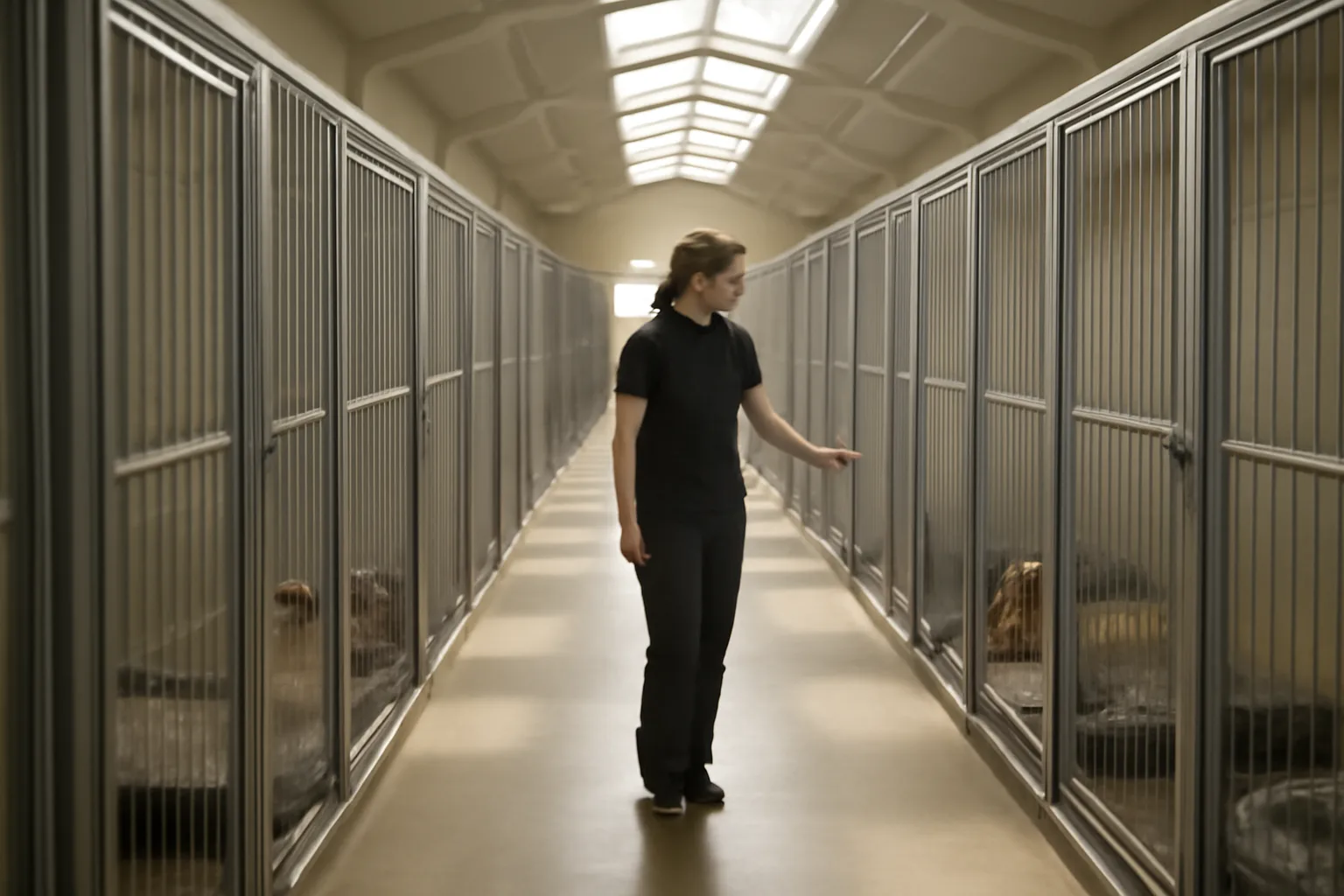
Most dog boarding runs $25 to $85 per night in the US, with the median sitting closer to $40 to $50 for a standard kennel run at a licensed facility. Prices swing hard based on region, whether the dog gets a private suite versus a shared run, and whether daycare or extra walks are bundled in. City facilities in expensive metros (San Francisco, Manhattan, Boston) commonly charge $60 to $120 a night for upgraded suites with webcams and play time included. Rural and small-town kennels can run as low as $20 to $30 a night for a basic run with a couple of potty breaks. There's no federal price survey that tracks this nationally, so these ranges come from aggregating what state-licensed kennels and industry associations report, not a single government dataset. Pet Boarding & Daycare Association members and trade publications generally cite the same $25-$85 range, and that matches what most people find searching their own zip code. Add-ons push the number up fast. Expect to pay extra for: - Medication administration ($5-$15/day)
- Extra one-on-one playtime or walks ($10-$25/session)
- Bathing before pickup ($15-$40)
- Holiday surcharges (many kennels add 10-20% around Christmas, Thanksgiving, and July 4th) If you're comparing dog boarding options in your area, ask for the all-in nightly rate including any mandatory fees, more than the base number quoted on the phone.
How is dog boarding priced, and what drives the range?
| Home-based/in-home boarder | $25-$45 | Basic care, may include house access | |
|---|---|---|---|
| Traditional kennel (runs) | $30-$55 | Feeding, potty breaks, basic play | |
| Daycare-boarding hybrid (Dogtopia-style) | $45-$75 | Group play, webcams, sometimes bathing | |
| Luxury suite/boutique hotel | $65-$120+ | Private suite, TV, one-on-one attention | If you're checking out chains, Dogtopia and similar franchises tend to price at the upper-middle of that range because of the daycare-plus-boarding model, while a standalone doggy day care operator without overnight suites may only do boarding as an add-on service. |
Boarding price depends mostly on four things: facility type, location, dog size, and season. A big-box daycare chain with heated floors and staff-to-dog ratios posted on the wall costs more than a home-based boarder running under a state cottage-kennel exemption. Size matters because large dogs eat more, need bigger runs, and take more staff time to walk and clean up after. Many facilities charge a size surcharge of $5 to $15 per night for dogs over 50-75 lbs. Season matters because demand spikes around major holidays. Facilities that are half-empty in February can be fully booked six weeks out for Thanksgiving week, and pricing (or at least a required deposit) usually reflects that. Here's a rough national comparison by facility type: | Facility type | Typical nightly rate | What's usually included |
How do I know a boarding facility is actually licensed?
Ask directly for the kennel's license number and which agency issued it, then verify it yourself rather than taking their word for it. Most states require commercial boarding kennels to hold a state license, a county license, or both, and many counties layer on a separate zoning approval or conditional use permit on top of any state license. There is no single federal license for boarding a pet owner's own dog overnight. USDA's Animal Welfare Act licensing applies to specific commercial activities like breeding for wholesale, dealing, exhibiting, and certain transport, not to a kennel that boards pets for their owners. The Animal Welfare Act regulations at 9 CFR 2.1 define who must be licensed as a "dealer," "exhibitor," or related regulated class, and a facility that only boards owned pets generally doesn't fall into those categories [1]. States and counties still regulate boarding kennels on their own. So when you're vetting a facility, check two things: does your state's department of agriculture (or equivalent) list a kennel or animal facility license requirement, and does the county have zoning or a conditional use permit on file for that address. A facility that dodges the question or can't produce documentation is a bigger risk than one that charges $10 more a night.
How do you register a dog?
Registering a dog usually means one of two things: getting a local dog license from your city or county (required almost everywhere for owned dogs), or registering the dog's pedigree with a kennel club like the AKC (optional, for purebred dogs). For the local license, you typically need proof of a current rabies vaccination, your address, and a small fee, often $10 to $25 a year, though this varies enormously by county and whether the dog is spayed/neutered (unaltered dogs often pay double). Most counties require this under their own animal control ordinance rather than state law, so the exact form and fee is a county website lookup, not a state one. For kennel club registration (getting a purebred dog's papers), that's a completely separate, private process run by AKC or another breed registry, not a government requirement. We cover that difference in detail below.
How do you get a dog license, and where do you apply?
You get a dog license through your city or county clerk's office, animal control department, or county treasurer, depending on how your local government splits the duty. It is almost always a county or municipal requirement, not a state one, so the process, price, and paperwork differ by zip code. Typical steps: 1. Get your dog a rabies vaccination from a licensed vet (most counties require current rabies proof before they'll issue a license). 2. Find your county or city's animal control or clerk page and pull the license application (often downloadable as a PDF, sometimes available online). 3. Pay the fee, commonly $10 to $25 annually for altered dogs and $20 to $50 for unaltered dogs, though some counties charge flat rates regardless of spay/neuter status. 4. Attach the rabies certificate and any spay/neuter proof. 5. Get your tag and keep it on the collar; some counties fine owners for an unlicensed dog if animal control catches it. Some states set a floor for county licensing programs. For example, Ohio requires dog owners to register with the county auditor annually under Ohio Revised Code 955.01, with the license serving as the legal registration for the animal [2]. Other states leave licensing entirely to individual municipalities, so a next-door county can have a completely different fee and renewal date.
How do you get papers for a dog (AKC registration)?
"Papers" almost always means AKC (or another breed registry) registration proving a dog's pedigree, and you get them through the breeder at the time of purchase, not through any government office. If a dog's parents were both AKC-registered and the litter was registered by the breeder, the breeder gives (or should give) the buyer an AKC Dog Registration Application or handles the online registration transfer. Here's the actual process: 1. The breeder registers the litter with AKC after the puppies are born, listing each puppy. 2. When you buy a puppy, the breeder gives you either a physical "blue slip" (Dog Registration Application) or completes an online litter registration you can claim. 3. You submit that application, along with the AKC fee (roughly $25-$40 as of recent AKC fee schedules, though AKC updates pricing periodically), to register the individual dog in your name. 4. AKC mails or emails your registration certificate. If you didn't get papers at purchase and the breeder is unreachable or refuses, you generally cannot get AKC papers after the fact unless AKC's DNA/parentage verification process applies and the breeder cooperates. AKC does allow purebred-looking dogs without papers into a Purebred Alternative Listing for its own limited events, but that is not full registration and doesn't retroactively create papers a breeder never filed [3]. If someone is asking "how can I get papers for my dog" after the fact with no breeder contact, the honest answer is: probably not, unless you can track down the breeder and litter records.
How do you get papers for my dog if I don't know the breeder?
If you can't find the breeder, full AKC registration is very unlikely, but you have a few partial paths depending on what you actually need the papers for. If you just want to compete in AKC companion events (agility, obedience, rally) without full pedigree papers, AKC's Purebred Alternative Listing (PAL) program lets you enroll a dog that appears purebred but lacks papers, using photos and a vet form, for a modest one-time fee [3]. This does not give you a pedigree or breeding rights, and it won't help if you're trying to sell puppies as registered. If you want a DNA-based breed identification instead (useful for insurance, curiosity, or informal proof), commercial DNA test kits (Embark, Wisdom Panel) can identify breed makeup, though this is not the same as AKC registration and carries no legal weight. If you're a breeder yourself and lost your own paperwork trail, AKC customer service can sometimes trace registration through microchip or litter records if the original breeder registered the litter, but this depends entirely on what was filed at the time.
How do you become a dog breeder legally?
Becoming a legal dog breeder means clearing three separate layers: your state's breeder or kennel licensing law (if any), your county's zoning and animal-count rules, and, if you cross certain federal thresholds, USDA APHIS licensing. At the state level, many states now license commercial breeders directly. Requirements vary widely: some states only regulate breeders selling above a certain number of litters or dogs per year, others license any breeder selling to the public. Check your state department of agriculture's breeder or kennel licensing page before you plan a first litter. At the county level, zoning is often the actual bottleneck, not licensing. Counties commonly cap the number of adult dogs allowed on a residential parcel before it's classified as a "kennel" use requiring a conditional use permit or rezoning, and this threshold is set locally (often somewhere between 3 and 6 adult dogs), never nationally. At the federal level, the Animal Welfare Act regulations require a USDA APHIS license for breeders who sell dogs sight unseen (i.e., the buyer never physically meets the dog or the facility before purchase, common in online and broker sales) and who maintain more than four breeding females, under the dealer definition and licensing rules at 9 CFR 2.1 [1]. Breeders who sell only face-to-face, where buyers see the dog and the premises in person before taking it home, are generally exempt from federal licensing regardless of how many females they keep, under the retail pet store exemption in the same regulation [1]. So the practical order of operations for someone asking "how to become a dog breeder" is: check state breeder licensing law, check county zoning for kennel-use thresholds, then check whether your sales model (online/sight-unseen vs. in-person) and breeding female count trigger USDA licensing.
When does a breeder need a USDA license?
A breeder needs a USDA APHIS license when they sell dogs sight unseen (buyer never meets the dog and facility in person before purchase) and keep more than four female dogs used for breeding, under the Animal Welfare Act's licensing regulations at 9 CFR 2.1 [1]. That same regulation defines the retail pet store exemption: a breeder is exempt from licensing if they sell animals only in face-to-face transactions where the buyer can inspect the animal and premises before purchase, regardless of the number of females kept [1]. That in-person exemption is why a lot of small breeders selling locally never touch USDA paperwork, while breeders shipping puppies to out-of-state buyers sight unseen, even in small numbers, can trip the license requirement. This threshold matters a lot for people expanding into online sales or working with brokers. If you currently sell only face-to-face and start accepting deposits for puppies shipped to buyers who never see the dog first, you may cross into federal licensing territory even without changing your breeding female count. Confirm your specific situation against 9 CFR 2.1 and your state's own breeder statute, since some states set additional or stricter thresholds on top of the federal one.
What licenses does a dog boarding or daycare business actually need?
A boarding or daycare operator typically needs a stack of approvals, not one single license: state kennel/commercial pet care license (if your state requires one), county or city business license, county zoning approval or conditional use permit for the specific address, and sometimes a separate fire/building occupancy inspection before opening. States differ enormously here. Some states have a dedicated commercial kennel or pet care facility statute with its own inspection and fee schedule. Others fold boarding facilities into general business licensing with no animal-specific state oversight at all, leaving nearly everything to the county. There is no shortcut around checking your specific state department of agriculture page and your specific county zoning office, because both the existence and the fee of these licenses is set locally. Zoning is usually the part that catches new operators off guard. A parcel zoned for general retail or light commercial use does not automatically permit "kennel" or "animal boarding" use; many jurisdictions classify boarding, daycare, and breeding as a specific conditional use requiring a public hearing, noise mitigation plan, or minimum lot size. Sorting out zoning eligibility before signing a lease saves an enormous amount of wasted money and time. This is genuinely the stage where a lot of new operators get stuck: they find a great commercial space, sign a lease, and then discover the parcel isn't zoned for animal boarding at all. Building a rough county-by-county comparison of what paperwork you'll need before you start touring properties is worth the few hours it takes. That's the exact gap our $149 one-time Kennel License & Zoning Packet is built to fill: a structured starting point for your state licensing requirements and county zoning prep, organized so you're not starting from a blank search bar. It doesn't replace your county's actual application or a local attorney, but it gets your paperwork organized before you walk into a zoning hearing.
What should I look for when choosing a boarding facility for my dog?
Beyond price, the things that actually predict a good or bad boarding stay are staff-to-dog ratios, vaccination requirements, and how they handle emergencies. A facility that requires proof of rabies, DHPP (distemper/parvo combo), and often bordetella (kennel cough) vaccination before boarding is doing the baseline right thing, since unvaccinated dogs in a shared facility is how outbreaks happen. Be wary of any place that doesn't ask for vaccine records at drop-off. Ask what happens if your dog gets sick or injured overnight: is there a staff member on-site 24 hours, or does the facility close and leave dogs unattended overnight (common, and not necessarily disqualifying, but you should know). Ask which vet they use if yours isn't reachable. If you're comparing multiple options nearby, it helps to look at everything side by side, from home-based boarders to full-service pet boarding facilities and dog kennels, since "boarding" covers a wide spectrum of setups from a spare bedroom to a 200-run commercial facility. Searching "dog hotels near me" will surface the upper end of that range, typically the suite-style, webcam-equipped operators.
How does dog boarding differ from dog daycare?
Boarding means overnight stays, typically billed per night; daycare means drop-off care during the day only, typically billed per day or via a multi-visit pack, with the dog going home each evening. Many facilities now offer both under one roof and will discount a combined daycare-plus-boarding package for longer trips. If you're gone for a weekend, boarding is the obvious fit. If you work long hours and just need supervised playtime and a potty break during the day, daycare alone is cheaper and usually runs $20 to $45 a day depending on region. Some owners use daycare regularly and add boarding only for travel, which many facilities structure as a loyalty discount since it's a more predictable revenue stream for them.
Frequently asked questions
How much does dog boarding cost per night?
Most dog boarding costs $25 to $85 per night nationally, with basic kennel runs at the low end and luxury suites with webcams or private play time at the high end. Big-city facilities often run $60-$120 a night. Add-ons like medication, bathing, or extra playtime typically add $5-$40 more per stay.
How do you register a dog with the city or county?
Bring proof of a current rabies vaccination to your city or county clerk, treasurer, or animal control office, fill out the dog license application, pay the fee (commonly $10-$25/year for altered dogs), and attach spay/neuter proof if applicable. Requirements and fees are set locally, so check your specific county's page.
How do you get papers for a dog after buying it without them?
You generally need the original breeder to have registered the litter with AKC (or another registry) at birth. If you have no breeder contact, full registration is unlikely; AKC's Purebred Alternative Listing program lets an unpapered purebred-looking dog compete in some events, but it's not full pedigree registration.
How do you get a dog license and what does it cost?
Apply through your city or county's animal control, clerk, or treasurer's office, showing a current rabies certificate. Fees typically run $10-$25 a year for spayed/neutered dogs and $20-$50 for unaltered dogs, though exact amounts and renewal rules vary by county, since most states leave licensing to local governments.
How much is dog boarding for a week-long trip?
At $30-$60 a night average, a 7-night stay runs roughly $210 to $420 before add-ons like bathing or medication administration. Many facilities offer a modest multi-night discount (5-15% off) for stays of a week or longer, so it's worth asking directly rather than assuming the nightly rate is fixed.
How do you become a dog breeder legally?
Check your state department of agriculture for any breeder licensing statute, check your county zoning office for animal-count and kennel-use rules on your property, and check USDA APHIS regulations to see if your sales model (sight-unseen sales plus more than four breeding females) triggers federal licensing under the Animal Welfare Act.
How can I get papers for my dog if the breeder disappeared?
Without the original breeder's litter registration, full AKC papers are very unlikely. Your realistic options are AKC's Purebred Alternative Listing (for event participation only, not full pedigree) or a commercial DNA breed test for informal identification. Neither creates the legal pedigree papers a cooperating breeder would have provided at sale.
Does a dog boarding kennel need a USDA license?
Not for boarding pet owners' own dogs. USDA APHIS licensing under the Animal Welfare Act targets breeders, dealers, and exhibitors selling animals commercially, particularly sight-unseen sales, not kennels boarding pets for their owners. Boarding kennels are instead regulated at the state and county level, which varies by jurisdiction.
What's the difference between dog boarding and a dog hotel?
"Dog hotel" is mostly a marketing term for upscale boarding: private suites, webcams, TVs, and one-on-one attention, usually priced at $65-$120+ a night. Functionally it's still boarding under the same state and county licensing rules as any other overnight pet care facility, just with more amenities and a higher price tag.
How many breeding females trigger USDA licensing?
Under 9 CFR 2.1, the threshold is more than four female dogs used for breeding, combined with selling animals sight unseen (buyer never sees the dog or premises before purchase). Breeders under that female count, or those selling only face-to-face regardless of count, generally fall outside federal licensing under the Animal Welfare Act.
Is a dog license the same as AKC registration?
No. A dog license is a local government requirement proving rabies vaccination and ownership, issued by your city or county, usually costing $10-$50 a year. AKC registration is a private kennel club process proving pedigree for purebred dogs, arranged through the breeder, and has nothing to do with government animal control rules.
What zoning approval does a boarding facility need?
Most counties classify commercial dog boarding as a specific land use, often requiring a conditional use permit, special exception, or rezoning even on commercially zoned parcels. Requirements (minimum lot size, setback from residential property, noise plans) are set locally, so confirm with your specific county zoning office before signing a lease.
Sources
- Animal Welfare Act regulations, 9 CFR 2.1 (licensing requirements and exemptions): USDA licensing under the Animal Welfare Act applies to dealers/breeders meeting specific sales-method and breeding-female thresholds, with a retail pet store exemption for face-to-face sales
- Ohio Revised Code Section 955.01: Ohio requires annual dog registration through the county auditor
- American Kennel Club, "PAL Enrollment" program page: AKC's PAL program allows unpapered purebred dogs to be listed for event participation without full pedigree registration
- 9 CFR Part 2, Subpart A (Licensing) via the Electronic Code of Federal Regulations: Regulatory text of the Animal Welfare Act's implementing regulations governing dealer and breeder licensing
- Ohio Revised Code Chapter 956 (Dangerous and Kennel Licensing provisions): State-level kennel licensing framework showing how commercial kennel licensing is structured separately from individual dog registration