Last updated 2026-07-25
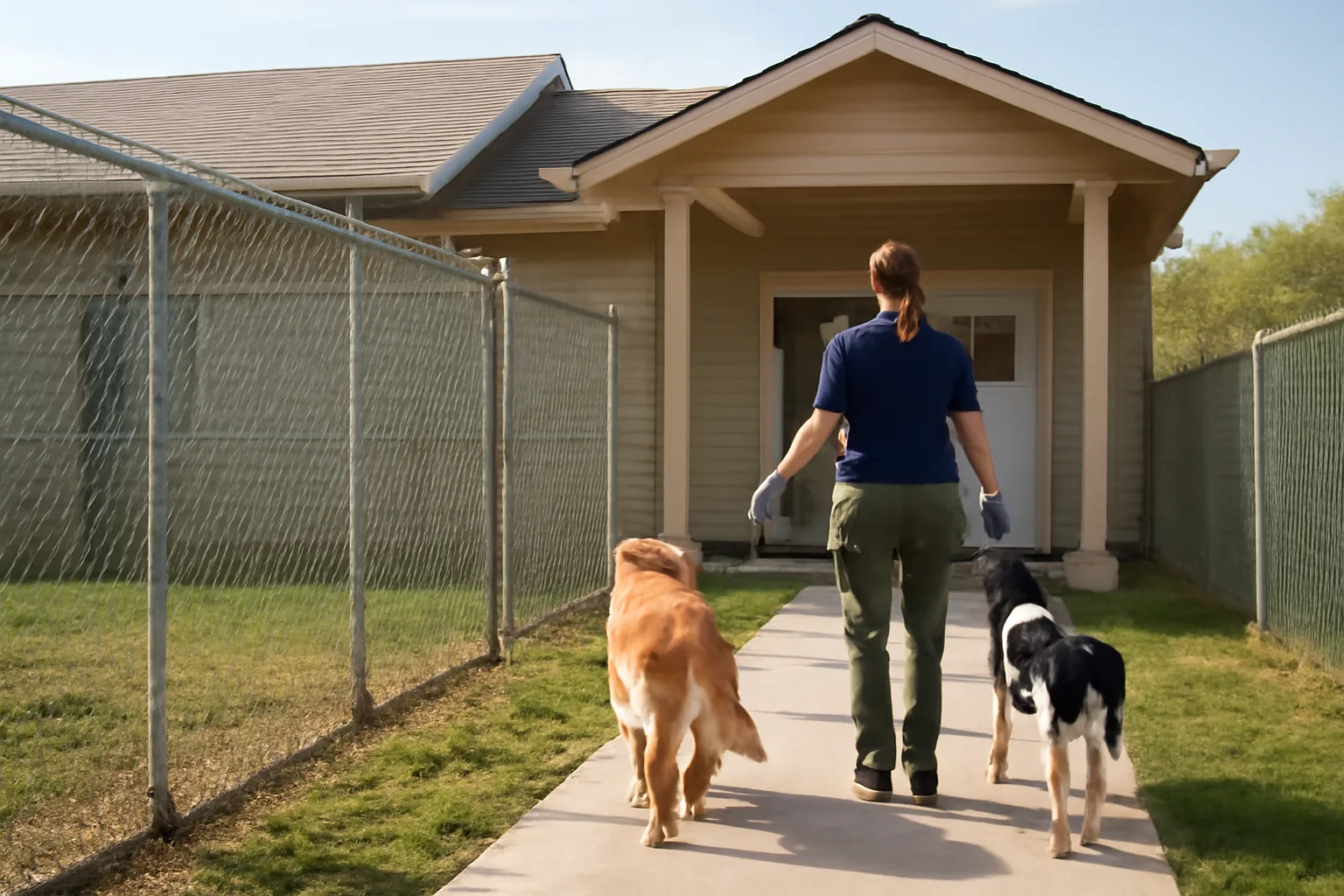
TL;DR
Yes, in almost every state and county you need some combination of a state kennel/pet-care license, a local business license, and zoning approval to board dogs, even out of your home. Requirements and fees vary a lot by state; a few states (like Nevada) have no statewide kennel license at all, leaving it entirely to the county or city.
do you need a license to board dogs?
In most of the country, yes. If you're taking money to keep dogs overnight or for daycare hours, some layer of government wants to know about it: a state kennel or animal facility license, a county or city business license, and a zoning sign-off that says your address is allowed to run a kennel use in the first place. The exact combination depends on where you are. Some states run their own kennel licensing program through the department of agriculture (Pennsylvania is the classic example, with its Bureau of Dog Law Enforcement licensing commercial kennels under 3 P.S. § 459-201 [1]). Other states leave licensing almost entirely to counties and cities, with no statewide kennel license requirement at all. The safest assumption when you're planning a boarding or daycare business: assume you need a license until you've confirmed otherwise with your specific state department of agriculture and your county clerk or zoning office. Nobody wants to find out they needed a permit after they've already signed a lease. A useful place to start mapping this out is a dog boarding overview for licensing basics, or the broader pet boarding rules if you're comparing states before you commit to a location.
what actually triggers the license requirement?
It's almost never about how cute your setup is. Licensing thresholds are usually triggered by one or more of these: taking payment for care, boarding animals you don't own, exceeding a certain number of dogs on the property at once, or operating from a commercial (versus residential) address. Pennsylvania's kennel law, for example, defines a 'kennel' partly around the number of dogs kept, and requires a kennel license once you cross that threshold, separate from any individual dog license [1]. Many states use a similar structure: below a certain number of animals, you might only need a basic business license; above it, you're a licensed kennel or animal facility subject to inspection. Home-based dog sitting through your own house, where you're not boarding strangers' dogs commercially and you stay under your state's numeric threshold, sometimes escapes kennel licensing entirely, but it usually still needs a home occupation permit or local business license. Don't assume 'it's just my house' gets you out of licensing. Zoning boards care about traffic, noise, and neighbor complaints regardless of whether you have a storefront. USDA/APHIS licensing is a separate, federal-level trigger that mostly matters for breeders and certain commercial sellers, not typical boarding kennels. Under the Animal Welfare Act (7 U.S.C. § 2131 et seq.), APHIS licenses dealers who sell animals at wholesale for resale, and the Act's implementing regulations at 9 CFR § 2.1 spell out who must be licensed as a dealer or exhibitor. A standard boarding or daycare operation caring for owned pets generally is not required to hold a USDA license [2]. We cover the federal breeder threshold in more depth further down.
how do state kennel licenses actually work?
| Pennsylvania | Kennel license (Dept. of Agriculture) | Varies by kennel class and dog count [1] | Annual | |
|---|---|---|---|---|
| Virginia | Commercial dog/cat kennel permit | Set by locality, state sets minimum standards [3] | Annual | |
| Nevada | No statewide kennel license | County/city only | Varies by county | |
| California | County-issued kennel permit (no state kennel license) | Set by county | Varies by county | A few things jump out. First, several states (Nevada and California among them) don't run a state kennel license program at all; licensing is entirely local, so your county or city ordinance is the actual controlling document. Second, even states with a state-level program, like Virginia, often push the specific fee and permit process down to the locality while the state just sets minimum care standards [3]. The practical lesson: don't google 'dog boarding license [my state]' and stop at the first state agriculture department page. You almost always need to also check your specific county or city, because that's frequently where the real licensing authority sits. |
Every state that licenses kennels does it a little differently, and the fee, inspection frequency, and renewal cycle all vary. Here's a comparison of a few states with well-documented programs, so you can see the range rather than assume one number applies everywhere. | State | License type | Typical fee range | Renewal |
what about county and city licensing on top of the state?
Yes, expect a second (or third) layer. Even in states with a state kennel license, counties and cities commonly layer on their own kennel or animal facility permit, a business license, a fire/occupancy inspection, and a zoning use permit. County animal control offices typically handle the kennel permit itself, checking things like cage spacing, sanitation, and staff-to-dog ratios. Your city or county planning department handles zoning, confirming your address is zoned for a commercial kennel use (or that you've gotten a conditional use permit or variance if it isn't). These are two different departments with two different applications, and missing one because you got approved by the other is a common and expensive mistake. If your property sits in an unincorporated area, county rules generally apply. If you're inside city limits, the city's animal control and planning departments usually take precedence, sometimes with the county's rules applying in addition. Call both before you sign a lease or make an offer on a building. This is exactly the gap our $149 Kennel License & Zoning Packet is built to help you organize: a structured checklist and fill-in packet for your state and county combination, not legal advice, but a way to walk into these calls and hearings with your paperwork already organized instead of guessing.
how much does dog boarding cost (as a business to run)?
This is a different question from licensing cost, and worth separating out clearly. Licensing and permit fees are usually a few hundred dollars combined (state kennel license fees, local business license fees, and zoning application fees each typically run somewhere in the tens to low hundreds of dollars, though some cities charge more for commercial zoning review). That's a one-time or annual cost, not your operating budget. The bigger costs are facility build-out, insurance, and staffing. Facility standards (flooring, drainage, fencing height, ventilation, fire suppression) can run from a few thousand dollars for a small home-based setup to well into six figures for a purpose-built commercial kennel or daycare. General liability insurance for a boarding/daycare business commonly runs from around $500 to $2,000+ a year depending on size and location, though you should get quotes specific to your state and dog count rather than relying on a single number. What customers pay to board their dog is a separate question from what it costs you to operate, and both vary enormously by region. Overnight boarding rates nationally range roughly from $25 to $85+ per night depending on market and amenities, with daycare running lower per day, but there's no single national average that means much; a small-town kennel and a boutique urban daycare with webcams and enrichment programs live in completely different pricing worlds. Check dog hotels near me style listings in your own market to get a realistic local comparison rather than trusting a national average.
how do you get a kennel license once you know the rules?
The general sequence looks similar almost everywhere, even though the specific forms differ. First, confirm zoning: call your county or city planning/zoning department and ask directly whether your address is zoned for a commercial kennel or animal boarding use, and whether that's a permitted use, a conditional use, or not allowed at all. Second, apply for your state kennel license if your state has one, through the department of agriculture or equivalent agency; expect to submit facility diagrams, proof of rabies vaccination protocols for animals in your care, and sometimes a facility inspection before approval [1]. Third, apply for your local business license and any required county animal facility permit, which often includes its own inspection covering things like ventilation, drainage, noise mitigation, and staff-to-dog ratios. Fourth, if zoning isn't automatically permitted for your address, you may need to go through a zoning hearing or conditional use permit process, which usually means a public notice period, a hearing before a zoning board, and sometimes conditions attached to approval (limits on dog count, hours, outdoor noise, etc). This step alone can take weeks to months depending on your jurisdiction's hearing calendar, so build that timeline into your opening date, don't assume it's a quick rubber stamp.
how to register a dog vs. how to license a boarding business (don't confuse these)
These are two completely different processes, and it's a common mix-up. Registering or licensing an individual dog (the tag on the collar) is usually a simple county or city requirement tied to rabies vaccination, done through your local animal control or county clerk, typically costing somewhere in the $10 to $50 range annually depending on the jurisdiction and whether the dog is spayed/neutered. Licensing a boarding or daycare business is a completely separate, much more involved process covering your facility, not an individual pet. You need the individual dog license/registration for your own dogs (and often need to confirm boarded dogs have current rabies vaccination and licensing before you'll accept them), but that's not what makes your business legal. If a customer asks 'how do I register my dog' before dropping their pet off with you, that's their individual pet license through their home county, separate from your kennel license. Many boarding facilities require proof of current rabies vaccination and sometimes proof of individual dog licensing as an intake condition, which is a smart practice regardless of what your state technically requires.
how to get papers for a dog (registration papers vs. AKC papers)
This question comes up a lot from people planning to breed, and it means two different things depending on context. If you mean official 'papers' proving purebred lineage (like AKC registration), that's not a government license at all; it's a private registry process through organizations like the American Kennel Club, requiring you to register the litter and each puppy with documentation of the parents' registered status. If you mean legal paperwork to sell or transfer a dog, that's typically just a bill of sale and health records, not a government-issued 'license' for the dog itself. There is no federal 'dog papers' license; AKC and similar registries (UKC, CKC) are private organizations, and their fees and process are set by them, not by any government agency, so check the registry's own current fee schedule directly rather than trusting a secondhand number. Where government licensing does enter the picture for breeders is the separate USDA/APHIS threshold covered below, which is about federal oversight of commercial breeding operations, not about paperwork proving your dog's pedigree.
how to become a dog breeder (and when USDA licensing kicks in)
Becoming a breeder legally means clearing a few different layers, and the federal one trips people up the most. Locally, most jurisdictions require an intact-dog or breeder's license or permit, sometimes with a cap on the number of litters per year, plus standard business licensing if you're selling puppies as an ongoing business. Federally, USDA APHIS requires a license under the Animal Welfare Act for breeders who sell dogs to pet stores, brokers, or others for resale. The regulatory definition of 'retail pet store' at 9 CFR § 1.1 excludes anyone selling animals sight unseen, meaning the buyer never meets the dog or visits the breeding facility in person before the sale (including most online and shipped sales), which pulls that seller back into dealer licensing territory. APHIS's own fact sheet on the retail pet store rule explains that a person who has more than four breeding female dogs, cats, or small exotic or wild mammals and sells any of their offspring sight unseen must be licensed, while breeders who let buyers see the animals and premises in person before purchase are generally exempt as retail sellers under the Act [2]. This matters a lot if you're selling puppies through a website or shipping them without an in-person visit. Cross that sight-unseen threshold with more than four breeding females and you very likely need federal licensing, on top of any state or county breeder permit. Get the current details directly from APHIS's own guidance before assuming you're exempt, because the retail exemption is specific and easy to misread [2].
how much is dog boarding, really, and does licensing affect the price you can charge?
Licensed, inspected facilities can generally charge more, because customers increasingly ask about it, especially after high-profile boarding-related deaths and injuries have made local news in various markets over the past several years. A visible state or county license, plus clear facility standards, is a competitive advantage, more than a compliance cost. Pricing itself is set by market, not by your license. A rural kennel in a low-cost area might charge $20 to $30 a night; an urban daycare-and-boarding combo with climate control, webcams, and play groups might charge $50 to $90+ a night plus add-ons for daycare, grooming, or medication administration. There's no government-set price for boarding anywhere in the US; this is purely a market decision on your end. What licensing does affect is your insurance premium (insurers often ask about your license status and inspection history when quoting), and your ability to get certain commercial leases, since some landlords and shopping centers require proof of proper licensing before signing a commercial lease for an animal-care business.
what happens if you board dogs without a license?
Consequences vary by state and county, but they're rarely worth the risk. Common outcomes include cease-and-desist orders from animal control, fines that can run from under a hundred dollars to several thousand per violation depending on the jurisdiction, and in some cases misdemeanor charges for operating an unlicensed kennel or business. Beyond legal penalties, operating unlicensed usually means you're also uninsured for the activity, since most commercial liability policies require proof of applicable licensing to pay out on a claim. If a dog is injured or escapes and you're unlicensed, you may be personally liable with no insurance backstop, which is a much bigger financial risk than any license fee. Zoning violations carry their own separate risk: a neighbor complaint can trigger a zoning enforcement action even if your state and county licenses are otherwise in order, if your specific address was never approved for a kennel use in the first place. This is why zoning confirmation has to happen before you sign a lease or buy a property, not after.
how to prepare for the zoning and licensing process (without wasting months)
Start with a phone call, not an application. Call your county or city zoning department and ask, in plain language: 'Is a commercial dog boarding/daycare kennel a permitted use at this address, and if not, what's the process to get one approved?' Get the answer in writing if you can, even just a follow-up email confirming what was said on the phone. Then build your application packet before you need it: facility floor plan, dog-count and breed-mix plan, drainage and ventilation specs, noise mitigation plan (fencing, sound barriers, hours restrictions), staffing plan, and proof of insurance quotes. Zoning boards and licensing agencies move faster when your packet already answers the questions they're going to ask; incomplete applications are the single biggest cause of delay. If your city requires a public hearing for a conditional use permit, expect to present to a zoning board, sometimes with neighbor objections in the room. Preparation here is mostly about anticipating noise, traffic, and odor concerns and having a specific, written mitigation plan ready to hand over, not showing up and hoping for the best. This is where a structured packet helps most: our Kennel License & Zoning Packet is a one-time $149 tool that organizes your state, county, and zoning-hearing paperwork into a single fill-in-the-blank builder, though it's not a substitute for a local land-use attorney if your hearing gets contested. We're not a law firm and don't represent anyone before a zoning board. For comparing kennel-style facilities against daycare-only models as you plan your build-out, see doggy day care requirements and how larger franchise operators like dogtopia structure their locations, plus general dog kennels facility standards if you're building from scratch.
Frequently asked questions
Do you need a license to board dogs in your home?
Usually yes, even from a private house. Most counties require a home occupation permit or kennel license once you're taking payment to board dogs you don't own, and zoning rules often cap how many dogs a residential property can keep. Check your county animal control and zoning office before accepting paying clients, even informally.
How much does dog boarding cost to start as a business?
Licensing and permit fees typically total a few hundred dollars combined across state, county, and zoning applications. Facility build-out is the real cost driver, ranging from a few thousand dollars for a small home setup to six figures for a purpose-built commercial kennel, plus $500 to $2,000+ a year in liability insurance.
How much is dog boarding for customers, on average?
There's no single national average that means much, since rates depend heavily on region and amenities. Overnight boarding commonly runs $25 to $85+ per night in the US, with daycare priced lower per day. Check local listings in your specific market rather than relying on a nationwide figure.
How do you register a dog with your city or county?
Individual dog registration (the license tag) usually happens through your county or city animal control office, requiring proof of current rabies vaccination, typically costing $10 to $50 a year depending on the jurisdiction and spay/neuter status. This is separate from any kennel or business license you'd need to board other people's dogs.
How do you get a dog papers for breeding purposes?
Pedigree 'papers' come from private registries like the American Kennel Club, not from government agencies, and require registering the litter with documentation of both parents' registered status. This is separate from any state, county, or federal USDA/APHIS breeder licensing, which governs your legal right to operate as a commercial breeder, not lineage documentation.
How to become a dog breeder legally?
Check your state and county for breeder permits or intact-dog licenses, often with litter caps. If you sell puppies sight unseen (no in-person meeting before sale) and keep more than four breeding females, you likely need a federal USDA APHIS Class 'A' dealer license under the Animal Welfare Act.
How to get a dog license for an individual pet?
Contact your county clerk or local animal control office, bring proof of current rabies vaccination, and pay the local licensing fee, generally $10 to $50 a year. Some jurisdictions offer discounts for spayed/neutered dogs. This individual pet license is unrelated to any commercial kennel or boarding business license.
How to get papers for a dog you already own without a pedigree?
If your dog has no registered pedigree, there's generally no way to retroactively get AKC-style papers, since registries require documented lineage from registered parents. You can still get a microchip, vaccination records, and a vet-verified health record, which function as identification and ownership proof even without breed registry papers.
How can I get papers for my dog if I bought it without any documentation?
Ask the seller or breeder directly first, since AKC and similar registries typically require the breeder to initiate litter registration. If the breeder never registered the litter, formal pedigree papers usually aren't obtainable after the fact; a vet record and microchip registration are your practical alternative for identification purposes.
Does every state require a kennel license for boarding businesses?
No. States like Nevada and California don't run a statewide kennel license program at all, leaving licensing entirely to counties and cities. Other states, like Pennsylvania, license kennels directly through the department of agriculture. Always check both your state agriculture department and your county or city separately.
What's the difference between a kennel license and a zoning permit?
A kennel license (state or county) certifies your facility meets care and sanitation standards; a zoning permit confirms your specific address is legally allowed to operate a commercial kennel use under local land-use rules. You typically need both, issued by two different agencies, before you can legally open.
Can you board dogs without USDA/APHIS licensing?
Yes, for typical boarding and daycare operations caring for owned pets, USDA/APHIS licensing generally doesn't apply. That federal license mainly targets commercial dog breeders and dealers selling animals for resale or sight unseen under the Animal Welfare Act, not facilities that board pets their owners bring in and pick up.
Sources
- Pennsylvania General Assembly, Dog Law (3 P.S. § 459-201 et seq.): Pennsylvania requires a state-issued kennel license for commercial kennels through the Dog Law
- USDA APHIS, "Animal Welfare Act and Animal Welfare Regulations" (retail pet store definition, 9 CFR 1.1) and Animal Welfare Act, 7 U.S.C. § 2132(f): Breeders with more than four breeding females selling puppies sight unseen generally need an APHIS Class A dealer license
- Code of Virginia § 3.2-6503 (Comprehensive animal care; local ordinance requirements): Virginia sets minimum standards for commercial kennels while permit administration is handled locally
- U.S. Government Accountability Office, "Horse and Dog Welfare: Additional Federal Actions Needed to Better Ensure Humane Treatment" (GAO-10-544): Federal oversight of dog dealers and breeders under the Animal Welfare Act has documented enforcement gaps relevant to licensing thresholds
- 9 CFR Part 2, Subpart A (Licensing requirements under the Animal Welfare Act): Federal regulations specify who must obtain a dealer or exhibitor license under the Animal Welfare Act