Last updated 2026-07-24
TL;DR
A doggie hotel is just industry slang for upscale dog boarding, and nightly rates typically run $35 to $95 depending on region and amenities. Opening one requires a state or county kennel license, local zoning approval, and USDA APHIS registration if you sell puppies across state lines. This guide covers costs, licensing steps, dog registration, and how breeders get papers.
What is a doggie hotel and how is it different from regular boarding?
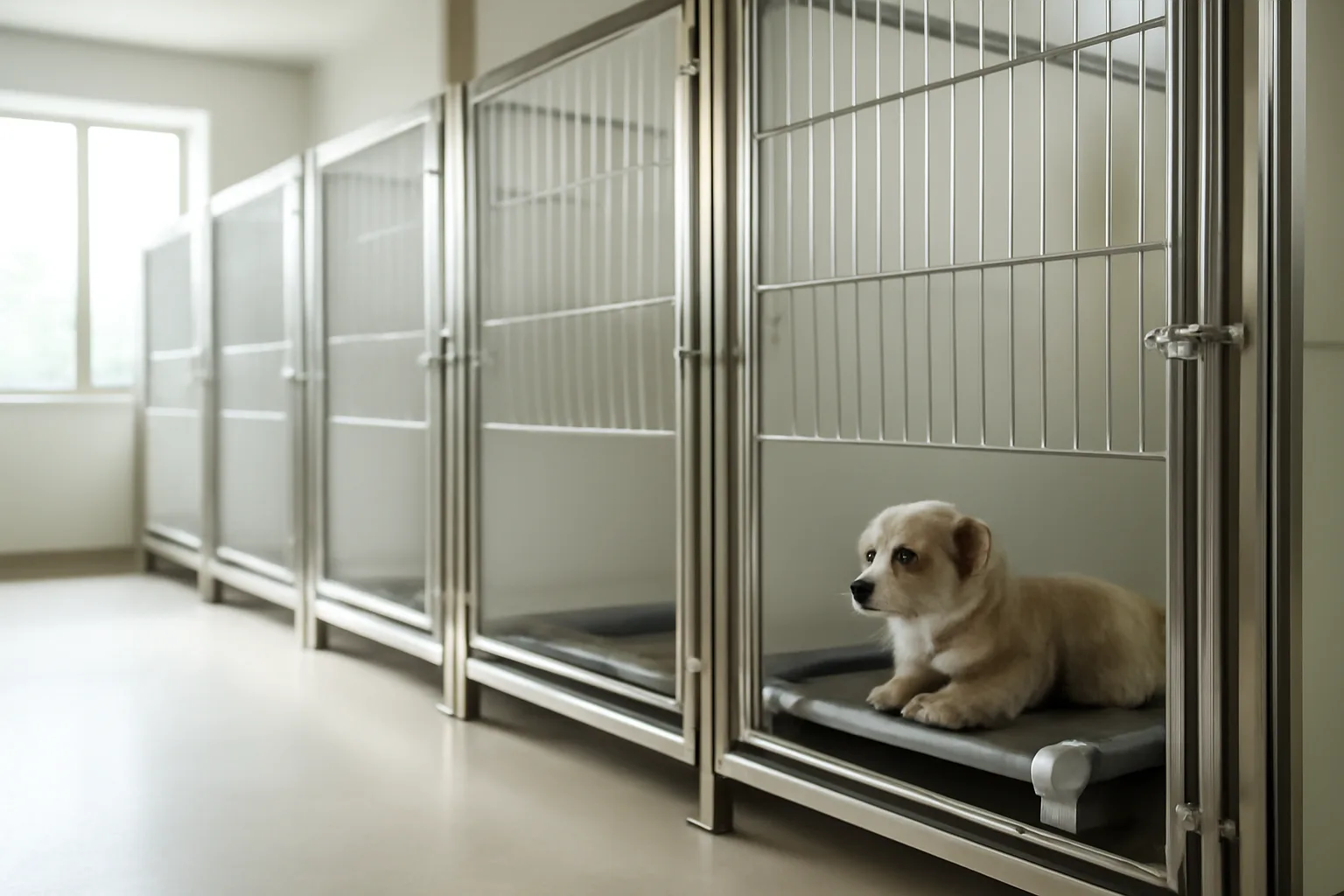
A doggie hotel is a marketing term, not a legal category. It usually means an upscale boarding facility with private suites, webcams, raised cots, and daycare add-ons, instead of a row of chain-link runs. Legally, though, your state or county still calls it a kennel, boarding facility, or animal establishment, and it needs the same license as a bare-bones boarding kennel. Don't let the branding fool you when you're filling out permit paperwork. Zoning boards and state agriculture departments don't have a "doggie hotel" classification. They classify you by function: commercial kennel, pet care facility, or animal boarding establishment, depending on the jurisdiction's code. Pennsylvania's dog law is a good example of how definitions drive licensing, not signage. Under 3 P.S. Section 459-102, a "kennel" is defined by keeping dogs for boarding, selling, or breeding purposes, and the required license category scales with how many dogs you keep, from a Kennel Class R (up to 25 dogs) up through Class D and larger commercial tiers [1]. That statutory definition is what triggers your licensing requirement, not what's painted on your sign. If you're building a business plan around the doggie hotel concept, budget separately for the license and zoning process versus the buildout. Investors and lenders will ask about both, and county zoning approval often takes longer than the license itself.
How much does dog boarding cost?
| Basic kennel/run | $35-$50 | Shared or standard kennel, scheduled potty breaks | |
|---|---|---|---|
| Mid-tier suite | $50-$70 | Private suite, raised cot, some playtime | |
| Luxury "hotel" suite | $75-$150 | Private room, webcam, extended playtime, sometimes TV | |
| Daycare (no overnight) | $25-$45/day | Supervised group or private play, no boarding | If you're pricing out a new facility, check dog boarding rates in your specific metro area before setting your own, since local comps matter more than national averages. |
Nightly dog boarding in the US generally runs $35 to $95 for a standard stay, with luxury "hotel" suites at high-end urban facilities going higher, sometimes $75 to $150 a night with webcam access, playtime packages, and private rooms. Rates vary hard by region: expect the low end in rural or Midwest markets and the high end in major metro areas like New York, San Francisco, or Los Angeles. Most facilities price in tiers. A basic kennel run might be $35 to $50 a night. A mid-tier suite with a cot and TV runs $50 to $70. Top suites with couches, cameras, and one-on-one playtime can hit $90 to $150. Daycare (no overnight stay) usually costs less, often $25 to $45 a day. Add-ons matter for revenue. Grooming, nail trims, extra playtime, medication administration, and bath packages typically add $10 to $40 per service. Many operators report building a meaningful share of gross revenue from add-ons alone, though there's no single national dataset tracking this precisely; it's an industry-observed pattern from boarding and daycare trade sources, not a government statistic. Here's a rough cost comparison by service tier: | Service tier | Typical nightly rate | What's included |
How much is dog boarding at a luxury doggie hotel versus a standard kennel?
The gap between a standard kennel and a luxury doggie hotel is usually $30 to $80 a night, driven by square footage per dog, staff-to-dog ratios, and extras like grooming or webcam feeds. A bare kennel run with twice-daily walks might run $35 a night; a boutique suite with all-day play and a live camera feed can run $100 or more in a major city. The cost driver isn't really the dog. It's real estate and labor. Urban facilities pay more per square foot and often staff at a lower dog-to-handler ratio to justify premium pricing, which pushes nightly rates up regardless of what the dog actually experiences. If you're deciding which model to build, look at your local pet boarding market first. A luxury build-out costs more upfront (flooring, HVAC per suite, cameras) but supports higher margins per dog per night. A standard kennel costs less to build but needs higher volume to hit the same revenue.
How do you register a dog and how is that different from getting a dog license?
Registering a dog usually means recording ownership with a breed registry (like the AKC) for pedigree purposes, while getting a dog license is a separate legal requirement from your city or county, tied to rabies vaccination and public health tracking. They are not the same thing, and confusing them is one of the most common mistakes new pet owners and small breeders make. Dog licensing is a local government function. Most counties and cities require an annual or multi-year dog license, usually costing $10 to $25 for spayed/neutered dogs and $25 to $50 or more for intact dogs, with the higher fee designed to nudge owners toward spaying and neutering. Requirements and fees are set at the county or city level, so you'll need to check your specific county clerk or animal control office, since there's no single national fee schedule. Breed registration through a group like the AKC is a private, voluntary process that has nothing to do with government licensing. A dog can be AKC-registered and still need a local dog license, and vice versa. If you're a boarding or daycare operator, you generally don't need to worry about breed registries at all; your compliance concern is the kennel or boarding license, covered below.
How to get a dog license
To get a dog license, you typically bring proof of current rabies vaccination and a spay/neuter certificate (if applicable) to your county clerk, city hall, or local animal control office, pay a fee, and receive a tag. Requirements vary by county, but the rabies vaccination requirement is close to universal across US jurisdictions. The general steps look like this: 1. Get your dog's rabies vaccination current (usually required before licensing). 2. Locate your county or city's licensing office, often the county clerk, treasurer, or animal control department. 3. Bring proof of rabies vaccination and, if applicable, proof of spay/neuter. 4. Pay the fee, typically $10-$25 for altered dogs, higher for intact dogs. 5. Renew annually or per your local renewal cycle (some counties do multi-year licenses tied to vaccine duration). Some states also require a state-level kennel license if you're keeping multiple dogs commercially. Pennsylvania requires kennel licenses through its Bureau of Dog Law Enforcement, with tiered classes based on the number of dogs kept, starting well below the 26-dog range and scaling upward for larger commercial operations [1]. If you're running any kind of boarding, daycare, or breeding operation, check both your county's individual dog license rules and your state's commercial kennel license rules, since these are usually two separate systems.
How to become a dog breeder
Becoming a dog breeder legally means meeting your state's breeder licensing threshold (often tied to number of breeding females or litters sold per year), registering with USDA APHIS if you sell puppies sight unseen across state lines, and passing a facility inspection covering space, sanitation, and veterinary care. There's no single national breeder license; requirements stack across federal, state, and sometimes county levels. The federal layer is the Animal Welfare Act, enforced by USDA's Animal and Plant Health Inspection Service (APHIS). Under the AWA and its implementing regulations at 9 CFR Part 2, breeders who sell puppies without the buyer or the buyer's agent physically present to observe the animal before sale (common with online, phone, and broker sales) generally must register as a "dealer" and hold a USDA license, unless they qualify for a specific retail exemption [2]. APHIS's own guidance describes anyone breeding more than four female dogs for wholesale, resale, or online sale as generally falling into the licensed-dealer category [2]. The state layer varies widely. Many states have their own commercial breeder or kennel license thresholds separate from USDA. For example, some states set the threshold at a specific number of litters or dogs sold per year, and inspections check things like enclosure size, temperature control, and record-keeping. Practical steps to become a licensed breeder: 1. Check whether you cross the USDA dealer threshold under 9 CFR Part 2 (more than 4 breeding females and sight-unseen sales) [2]. 2. Check your state department of agriculture's breeder or kennel licensing rules, since state thresholds often differ from federal ones. 3. Check county zoning; many counties zone breeding kennels differently from residential pet-keeping, and some cap the number of adult dogs allowed on residential-zoned property. 4. Prepare for a facility inspection covering space per dog, sanitation, ventilation, and veterinary care records. 5. Keep records: breeding females, litters, buyers, and health certificates, since inspectors and APHIS both expect documentation on demand. If you're also boarding or day-caring dogs alongside breeding, you may need separate licenses for each activity depending on your state's structure. Check dog kennels licensing basics if you're not sure which category applies to your operation.
How do you get a dog papers (breed registration) and what does it actually mean?
"Getting papers" for a dog means registering it with a breed registry, most commonly the American Kennel Club (AKC), which requires the litter to be registered by the breeder and both parents to already be registered with that same organization. Papers are proof of pedigree, not proof of health, legality, or government compliance. Here's how it actually works: when a breeder has an AKC-registered litter, each puppy in that litter is eligible for individual registration. The breeder typically provides the buyer with an AKC registration form (either a paper Dog Registration Application or the AKC's online litter registration process) at the time of sale, which the buyer completes and submits to the AKC along with the registration fee to get the individual dog's own registration certificate. The AKC's own rules on registration and transfer are published in Chapter 3 of its official Rules Applying to Registration and Discipline [3]. If a dog's parents were never registered, that dog generally can't get full AKC papers, regardless of appearance or lineage claims. This trips up a lot of new owners who assume any purebred-looking dog can be papered after the fact; that's not how registry systems work. Other breed-specific registries (like United Kennel Club) have their own separate rules, and mixed-breed dogs cannot get purebred registry papers at all, though some registries offer mixed-breed listing services for identification purposes only.
How to get papers for a dog you already own
If you already own a dog and want papers, your options depend entirely on whether the dog's parents were registered at the time of breeding. If the breeder registered the litter but you never completed the individual registration, you can usually still submit the original paperwork to the registry (AKC or similar) even after the sale, sometimes for a late fee. If the parents were never registered, or you don't know the breeder, you generally cannot get standard purebred papers. Some registries offer a "Purebred Alternative Listing" or similar limited-registration path for dogs that appear purebred but lack documented lineage, though these listings typically don't carry full breeding or show rights, and requirements vary by registry. DNA testing services (Embark, Wisdom Panel, and similar) can identify breed ancestry, but a DNA report is not the same as registry papers and won't get your dog into the AKC studbook. If you're trying to verify a breeder's claims before a purchase, ask for the litter registration number and the sire/dam's registered names directly, and verify them against the registry's public database if one exists, rather than relying only on the paperwork the breeder hands over.
How can I get papers for my dog if the breeder never registered the litter?
If the breeder never registered the litter, you generally cannot retroactively get standard breed registry papers for your dog, since registration has to happen at the litter level before individual dogs become eligible. This is one of the more frustrating realities for owners who bought from an unregistered or informal breeder and want to compete in shows or breed later. Your realistic options are limited. Some registries offer alternative or "indefinite listing privilege" style programs for dogs of unknown or undocumented lineage, mainly so they can participate in performance events (agility, obedience) without full pedigree status. Check the specific registry's current rules, since these programs change and aren't universal across breeds or organizations. If you plan to breed the dog yourself and want future litters registered, you'll need to start fresh: get the dog evaluated against breed standards, potentially get DNA and health testing, and check with the registry about whether an unregistered dog can be added to their system through any exception process. Most reputable breed clubs discourage breeding dogs without documented lineage or health clearances regardless of paperwork status, since papers alone don't guarantee genetic health.
How to open a doggie hotel: licensing and zoning steps
Opening a doggie hotel (boarding/daycare facility) generally requires four layers of approval: county or city zoning clearance, a state or local commercial kennel/boarding license, a business license, and sometimes a health or fire inspection, all before you can legally take in your first overnight guest. Skipping any one of these is the single most common reason new operators get shut down mid-buildout. Step by step: 1. Zoning first. Contact your county or city zoning/planning office before signing a lease. Confirm the parcel is zoned for commercial kennel or animal boarding use, or find out what conditional use permit or variance process applies. Many jurisdictions treat boarding kennels as a conditional use even in commercial zones, which means a public hearing. 2. State/local kennel license. Apply through your state department of agriculture or local animal control, depending on your state's structure. Requirements typically cover square footage per dog, ventilation, sanitation, noise mitigation, and staff-to-dog ratios. 3. Business license and tax registration. Standard local business licensing, separate from the kennel-specific license. 4. Building and fire inspections. Commercial buildouts often trigger fire code review, especially for facilities with overnight boarding, since egress and fire suppression standards for occupied overnight animal care spaces differ from daytime-only daycare. 5. USDA registration, if applicable. Only relevant if you're also breeding and selling puppies sight-unseen above the APHIS dealer threshold [2]; pure boarding/daycare operators generally don't need APHIS registration. Because zoning hearings often require a packet of supporting documents (site plan, noise mitigation plan, projected dog capacity, sometimes neighbor notification), it helps to build that packet before your hearing date, not the week of. That's the exact gap a $149 one-time Kennel License & Zoning Packet is built to close: a structured starting point for the zoning and license paperwork so you're not assembling it from scratch under deadline pressure. Check the license-packet-builder to see what's included for your state. If you're comparing your concept against existing chains, look at how dogtopia locations structure their franchise licensing versus what an independent operator needs to file directly.
What facility standards do doggie hotels need to meet?
Doggie hotels need to meet whatever state or local commercial kennel standards apply in their jurisdiction, which typically cover minimum square footage per dog, temperature control, sanitation and waste disposal, ventilation, noise control, and secure fencing or containment. There is no single national facility standard for boarding and daycare; the closest thing is the USDA's Animal Welfare Act regulations, which technically apply to licensed dealers and some boarding operations that fall under federal jurisdiction, not to most standard boarding kennels. Under the federal Animal Welfare Act regulations at 9 CFR Part 3, facilities subject to USDA licensing must provide primary enclosures with enough space for each dog to turn around, stand, sit, and lie down normally, and the regulation sets specific ambient temperature requirements for housing facilities [4]. Most pure boarding/daycare facilities aren't USDA-licensed, but state and county standards frequently mirror these same basic space and temperature concepts. Beyond space and temperature, expect your state or county inspector to check: - Segregation of sick or aggressive animals
- Waste removal frequency and disposal method
- Fire exits and evacuation plans for overnight facilities
- Staff-to-dog supervision ratios during group play
- Vaccination record-keeping for every boarded dog Check your state's specific facility standards guide, and compare against general doggy day care standards if you're running daycare alongside overnight boarding, since some jurisdictions regulate them differently.
Do you need a USDA license to run a doggie hotel?
No, most pure boarding and daycare facilities (doggie hotels) do not need a USDA license. USDA APHIS licensing under the Animal Welfare Act mainly targets breeders, dealers, exhibitors, and certain transporters, not businesses that board or day-care other people's pets. The distinction APHIS draws is about commerce in animals, not care of animals owned by others. A facility that boards client-owned dogs overnight isn't selling or transferring ownership of those animals, so it falls outside the AWA's licensing trigger, which is built around breeding, dealing, and exhibiting under the definitions in 9 CFR Part 1 [5]. If your doggie hotel also runs a side breeding program and sells puppies sight-unseen above the 4-breeding-female threshold, that side of the business may need APHIS registration, even though the boarding side doesn't [2]. Don't take this as a blanket exemption from all regulation, though. State and county kennel licensing still applies to boarding and daycare operations even without USDA involvement; you're just dealing with state agriculture departments and local zoning rather than a federal agency.
Frequently asked questions
How much does dog boarding cost per night?
Standard dog boarding runs $35 to $95 a night depending on region and facility tier. Basic kennel runs are usually $35-$50, mid-tier suites $50-$70, and luxury "hotel" suites with webcams and extended playtime can run $75-$150. Daycare without overnight stay is typically $25-$45 a day. Rates are highest in major metro markets and lowest in rural areas.
How much is dog boarding for a week?
A week of standard boarding, at $35-$70 a night, typically runs $245-$490 before add-ons like grooming or extra playtime. Weekly discounts are common at many facilities, sometimes 10-15% off the nightly rate, but there's no universal standard; ask the specific facility for their multi-night pricing.
How do you register a dog?
Registering a dog usually refers to breed registry enrollment (like AKC), which requires the litter to already be registered and both parents registered with that group. This is separate from getting a local dog license, which your city or county requires annually and is tied to rabies vaccination, not pedigree.
How do you get a dog license?
Bring proof of current rabies vaccination (and spay/neuter certificate if applicable) to your county clerk or local animal control office, pay the fee (typically $10-$25 for altered dogs, more for intact dogs), and get your tag. Renew annually or per your county's cycle. Requirements and fees vary by county.
How do you get papers for a dog?
A dog gets registry papers (like AKC) only if its litter was registered by the breeder and both parents were already registered with that organization. The breeder provides a registration application at sale; the buyer submits it to complete individual registration. Dogs from unregistered litters generally cannot get standard papers after the fact.
How can I get papers for my dog if I don't know the breeder?
Without the breeder's litter registration information, you generally can't get standard breed registry papers. Some registries offer limited listing programs for dogs of unknown lineage, mainly for performance events, not full pedigree status. DNA breed tests can estimate ancestry but don't produce official registry papers.
How to become a dog breeder legally?
Check whether you exceed USDA APHIS's dealer threshold under 9 CFR Part 2 (more than 4 breeding females plus sight-unseen sales, which generally requires federal licensing), check your state department of agriculture's breeder licensing rules, and confirm your property is zoned for breeding. Facility inspections typically check enclosure space, sanitation, and veterinary records.
Do I need a USDA license to sell puppies?
Only if you have more than 4 breeding females and sell puppies sight unseen (online, by phone, through a broker) without the buyer meeting the puppy or seeing the facility first. USDA APHIS guidance describes this group as generally needing a license; breeders who sell in person, or have 4 or fewer breeding females, typically don't.
What's the difference between a dog license and breed registration papers?
A dog license is a government requirement (county or city) tied to rabies vaccination and public safety tracking, renewed annually, usually $10-$50. Breed registration papers (AKC, UKC, etc.) are a private, voluntary pedigree record with no legal requirement attached. You can have one without the other.
How much does it cost to open a doggie hotel?
Costs vary enormously by size and market, but expect licensing and zoning fees (often a few hundred to a few thousand dollars combined), plus buildout costs that can run from tens of thousands for a basic kennel conversion to several hundred thousand for a full luxury suite build. Check your specific county and state fee schedules directly.
Does a doggie hotel need a zoning permit?
Yes, in almost every jurisdiction. Boarding kennels are commonly treated as a conditional or special use even in commercial zones, which often means a public hearing before your county or city planning board. Check with your local zoning office before signing a lease or starting construction.
Can I board dogs in my house without a license?
Usually no, if you're doing it commercially for pay beyond a very small number of dogs. Most counties define a threshold (often 3-5 dogs) above which you need a kennel or boarding license, even in a residential home. Check your specific county's animal control ordinance for the exact number.
Sources
- Pennsylvania Dog Law, 3 P.S. Section 459-102 (Definitions) and kennel license classes: Pennsylvania defines a kennel by number of dogs kept for boarding, breeding, or sale, with tiered kennel license classes based on dog count
- USDA APHIS, Animal Welfare Act licensing requirements for dog breeders, 9 CFR Part 2, Subpart A: Breeders with more than 4 breeding females who sell puppies sight unseen generally need a USDA dealer license
- American Kennel Club, Rules Applying to Registration and Discipline, Chapter 3 (Registration): AKC individual dog registration requires the litter to be registered by the breeder with both parents already AKC-registered, and the buyer submits a registration application to complete it
- USDA, Animal Welfare Act Regulations, 9 CFR Part 3, Subpart A (Dogs): Federal facility standards for enclosure space and ambient temperature ranges under the Animal Welfare Act
- USDA, Animal Welfare Act Regulations, definitions, 9 CFR Part 1: APHIS licensing definitions distinguish dealers, exhibitors, and breeders from businesses that board client-owned animals