Last updated 2026-07-25
TL;DR
Doggy daycare training means teaching dogs basic manners and structured play skills during daycare hours, usually priced separately at $30 to $75 per session or bundled into packages. Operators need a state or county kennel/boarding license (not a special "training license" in most states), plus zoning approval. USDA licensing only applies if you're breeding and selling dogs wholesale, not for daycare or training services themselves.
what is doggy daycare training and how is it different from boarding
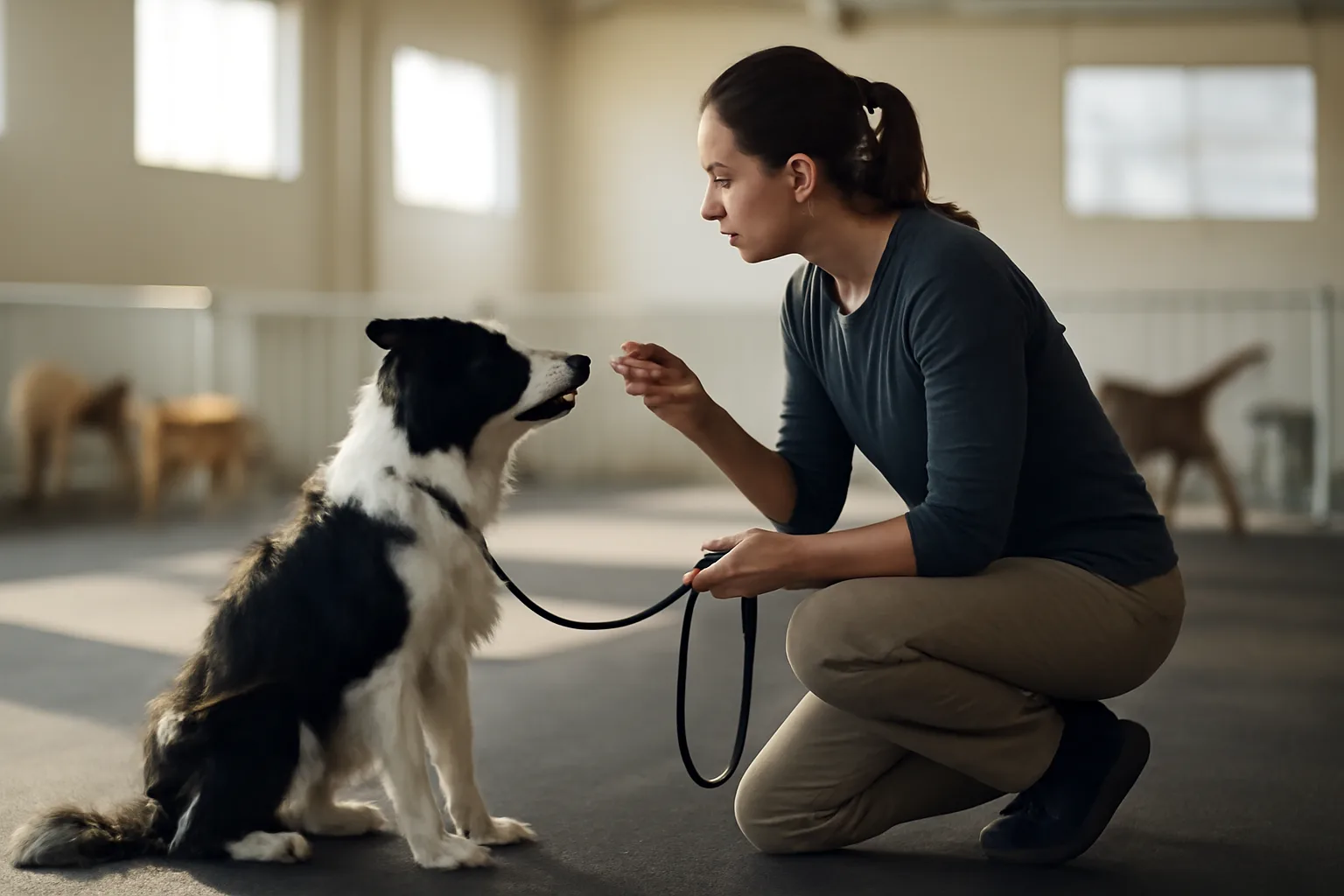
Doggy daycare training is structured skills work (basic obedience, impulse control, socialization drills) layered on top of regular daycare play. Instead of a dog just running around a playroom all day, a staff member pulls it aside for 15 to 30 minute sessions covering things like sit-stay, loose-leash walking, place training, or reactivity management. Some facilities call this "enrichment" or "structured play," others sell it as a formal add-on package. It's different from boarding in one key way: boarding is overnight housing, daycare is daytime supervised play, and training can attach to either one. A dog can board overnight and get daily training sessions, or come for daycare-only with a training add-on. Regulators generally don't care about this distinction. Most state kennel or animal facility statutes regulate based on whether you house animals or operate a commercial establishment where animals are kept, not based on whether you're teaching sit versus just supervising play [1]. If you're comparing service models before you build out a business plan, it helps to look at how dog boarding and doggy day care operations are typically licensed separately from straight training-only businesses in most jurisdictions, because boarding and daycare usually trigger kennel license requirements that a training-only studio might not.
how much does dog boarding cost
| Daycare (per day) | $20 to $45 | |
|---|---|---|
| Boarding (per night) | $25 to $85 | |
| Luxury boarding suite (per night) | $50 to $120+ | |
| Single training add-on session | $15 to $40 | |
| Board-and-train (1-2 weeks) | $600 to $3,000+ | These numbers aren't regulated by any government body. Nobody publishes an official price index for pet care services, so treat these as market ranges gathered from operator pricing pages and trade surveys, not statute. |
Dog boarding in the US typically runs $25 to $85 per night for standard care, with upscale "dog hotel" suites running $50 to $120+ per night depending on city and amenities. Daycare (daytime only, no overnight) usually runs $20 to $45 per day. These are national averages pulled from industry surveys and vary hard by region; a boarding night in a major metro can cost double what it costs in a small town. Add-on training during a boarding or daycare stay usually costs extra: expect $15 to $40 per session for basic manners work, or $200 to $600 for a multi-day "board and train" package where a dog stays a week or two and gets daily training built into the price. Board-and-train programs marketed by professional trainers commonly range from $1,000 to $3,000+ for two to four week programs, based on pricing pages published by individual training businesses; there's no single national price index for this. Here's a rough breakdown of typical pricing ranges operators report: | Service | Typical price range |
do you need a special license to offer training at your daycare
In most states, no. Dog training itself is largely unregulated at the state level in the US. There's no federal or state "dog trainer license" requirement in the vast majority of states, unlike, say, cosmetology or veterinary medicine. What IS regulated is the facility you're running the training out of. If you're housing dogs (boarding) or operating a commercial kennel where multiple dogs are kept during the day (daycare), most states and counties require some version of a kennel license, commercial animal establishment permit, or pet care facility license, regardless of whether training is part of the service menu. California, for example, doesn't license daycare or training businesses at the state level at all, leaving it entirely to city and county animal control ordinances [2]. Other states, like Ohio, DO have specific dog kennel licensing through the Department of Agriculture, but training-only businesses that don't house dogs typically fall outside that definition [3]. The practical answer: check your county zoning office and your state Department of Agriculture (or equivalent) before you assume you're exempt. A facility offering daycare plus training add-ons is licensed as a daycare/kennel; the training piece rides along for free, regulation-wise, in almost every state we've checked.
how to register a dog
Registering a dog usually means one of two things: getting a dog license (a local government requirement tied to rabies vaccination) or registering a dog's pedigree with a breed registry like the American Kennel Club. These are completely different processes and people often confuse them. For a government dog license, you typically go through your county or city clerk's office or animal control department, show proof of current rabies vaccination, pay a fee (commonly $10 to $25 per year, though this varies a lot by jurisdiction), and get a tag. Many counties require this annually or every three years, tied to the rabies vaccine's duration. For breed registry "registration" (getting papers), that's a private process through organizations like the AKC, not a government function at all, covered in detail below.
how to get a dog license
To get a dog license, you generally need three things: proof of current rabies vaccination from a licensed veterinarian, a completed application (often available online through your county clerk or animal control site), and the license fee. Most US counties require dogs over a certain age (commonly 4 to 6 months) to be licensed, and many charge a lower fee for spayed/neutered dogs to incentivize sterilization. Fees vary widely. Some counties charge under $10 a year for an altered dog, others charge $25 to $50 for an unaltered one, sometimes with a meaningful price gap specifically to nudge owners toward spay/neuter. New York City, for instance, requires all dogs over four months old to be licensed through the Department of Health and Mental Hygiene, under the city's health code licensing rule for dogs [4]. Check your specific city or county government website since this is entirely a local function; there's no federal dog licensing system.
how do you get a dog papers and how do you register a dog with a breed registry
"Getting papers" for a dog means registering it with a breed registry, most commonly the American Kennel Club (AKC) in the US. This is a private organizational process, not a government one, and it only applies if the dog is purebred and its parents were already registered. Here's how it actually works: if you buy a puppy from a breeder who registers litters with the AKC, the breeder gives you an AKC Dog Registration Application (or handles the registration online) at the time of sale. You then complete that registration, pay the AKC's registration fee (commonly in the $25 to $40 range for standard registration, though the AKC periodically adjusts pricing, so check the AKC's own fee page for current numbers), and you get a registration certificate. That certificate is what people mean when they say a dog "has papers." If you already own a dog and it doesn't have papers, in most cases you genuinely cannot get papers after the fact unless you can document its parentage through DNA testing and the breeder's registered litter records. The AKC does have a Purebred Alternative Listing Program (PAL) for dogs that look and act purebred but lack documented parentage; PAL dogs can compete in some AKC events but can't be bred and registered as purebred stock [5]. There is no way to legitimately register a mixed-breed dog as a specific purebred after the fact; any service claiming to do that is running a scam.
how to become a dog breeder
Becoming a dog breeder legally involves state and sometimes federal steps depending on scale. There's no universal "breeder's license" that covers you everywhere; requirements stack up based on how many litters or dogs you have and whether you sell wholesale or direct to the public. First, check your state's animal welfare or agriculture department. Many states require a breeder or kennel license once you exceed a certain number of breeding females or annual litters. Pennsylvania, for example, requires a kennel license from the Department of Agriculture's Bureau of Dog Law Enforcement for anyone who keeps 26 or more dogs over six months old for breeding purposes, under Pennsylvania's Dog Law, 3 P.S. Section 459-206 [6]. Other states set different thresholds or none at all, leaving it to county-level rules. Second, figure out if USDA licensing applies to you. The USDA APHIS requires a license under the Animal Welfare Act if you're a "dealer," generally meaning you sell more than a set number of dogs wholesale, sight-unseen, or through pet stores rather than in person. The Animal Welfare Act regulations at 9 CFR Part 1 define "dealer" and set out which breeders must obtain a Class A or Class B license, along with the retail pet store exemptions that have been amended over the years, so check the current regulatory text directly [7]. Third, get your zoning sorted. Breeding kennels are frequently restricted by county zoning to agricultural or rural-zoned parcels, with limits on how many adult dogs you can keep before you need a conditional use permit or special exception. This is the step people skip and regret; a county zoning board can shut down a breeding operation that's fully licensed at the state level if the property isn't zoned for it. Fourth, register with your veterinarian for a health program: brucellosis testing, vaccination protocols, and a documented relationship with a licensed vet are standard requirements across most state kennel licensing schemes, and USDA-licensed breeders are inspected on veterinary care records as part of the standards set out in 9 CFR Part 2, Subpart C .
how do you get papers for my dog if it's already an adult
If your adult dog was never registered as a puppy, getting full breed registry papers after the fact is very hard and often impossible. The AKC's standard registration path requires the breeder to have registered the litter at the time of breeding; you can't retroactively create that paper trail years later just because you're sure the dog is purebred. Your realistic options are: contact the breeder you got the dog from and ask if the litter was registered but you never completed the paperwork (this happens more than people expect, and it's fixable if the litter registration exists); look into the AKC's PAL program if you can't document parentage but want to compete in agility, obedience, or other performance events (PAL dogs get an ILP-style number but cannot be bred and registered as purebreds) [5]; or accept that DNA breed tests (like Embark or Wisdom Panel) can tell you what breeds are in your dog's ancestry for your own curiosity, but a DNA test result is not the same as AKC registration and doesn't create official papers.
what training do daycare and boarding staff actually need
There's no federal or state licensing requirement for daycare or boarding staff training in the vast majority of states; this is one of the most under-regulated corners of the pet industry. A handful of states and municipalities require staff-to-dog ratios or basic first aid certification as part of facility licensing, but formal training curricula for staff are almost entirely voluntary. That said, insurers and industry groups push hard for standardized training. Programs like Pet Care Services Association's Certified Kennel Operator credential, or private dog-daycare-specific certifications, are common ways operators demonstrate competence to landlords, insurers, and worried pet parents, even though no government body requires them. If you're building a facility from scratch, budget for staff training on canine body language and play-group management specifically; that's the area most daycare-related injury incidents and insurance claims trace back to, according to pet industry insurers, though there's no single national database tracking daycare injury rates that we could verify.
what zoning and facility rules apply if training is part of your daycare
Zoning boards generally don't distinguish between "daycare," "boarding," and "training" as separate use categories; they look at the underlying use, usually classified as a kennel, animal boarding facility, or commercial animal establishment. If your facility does any of those things, the same zoning review applies no matter how much of your day is spent on structured training versus free play. Common zoning triggers include noise ordinances (barking complaints are the single most common source of zoning pushback for daycare and boarding facilities), setback requirements from residential property lines, parking minimums tied to square footage, and outdoor exercise yard restrictions. Some counties require a conditional use permit specifically for any facility keeping more than a handful of dogs on-site at once, separate from your basic business license. Before you sign a lease, call your county zoning office directly and ask what use category a combined daycare-and-training facility falls under in your specific jurisdiction. This is genuinely the step most new operators get wrong; they assume a strip-mall commercial space is automatically zoned for animal boarding, and it frequently isn't. If you want a structured way to walk through state licensing and zoning prep before you approach a board, the Kennel License & Zoning Packet is built around exactly this gap, a one-time $149 reference packet, not legal representation, that helps you organize what to bring to your zoning hearing and which state license applications actually apply to your setup.
how much does it cost to add training services to an existing daycare
Adding training to an existing daycare is mostly a staffing and space cost, not a licensing cost, in most states. You're not usually pulling a new permit just to teach sit-stay in a corner of your existing play yard. Your real costs are: a trainer's wage or certification stipend (professional dog trainers commonly charge $50 to $100+ per hour for private lessons if you're hiring one part-time or contracting one), any additional liability insurance rider your carrier wants once you're offering structured training rather than just supervised play, and possibly a small buildout cost if you want a separate quiet training room away from the main play group. Most facilities recoup this fast. A single $30 add-on session sold to even a third of your daily daycare dogs adds real revenue with almost no marginal facility cost, since you already have the space, the dogs, and the staff on-site. The bigger cost driver is liability: talk to your insurance broker before you advertise formal training, since some general liability policies for pet care businesses draw a line between "supervised play" and "training services" and price them differently.
Frequently asked questions
how much does dog boarding cost
Dog boarding typically costs $25 to $85 per night for standard care, with upscale suites running $50 to $120+ per night. Daycare-only runs $20 to $45 per day. These are market averages from industry pricing surveys, not regulated rates, and vary a lot by city and facility tier.
how much is dog boarding with training included
Boarding with a training add-on usually adds $15 to $40 per session on top of the nightly boarding rate, or you can book a full board-and-train package running roughly $600 to $3,000+ for one to four weeks, depending on the trainer's experience and program length.
how to register a dog with the government versus a breed registry
Government dog registration means getting a local dog license through your county or city, tied to proof of rabies vaccination, usually $10 to $50 a year. Breed registry registration (AKC "papers") is a private process handled through the breeder at time of sale, unrelated to any government requirement.
how do you get a dog papers after buying it from a breeder
The breeder typically gives you an AKC registration application (or completes it online) at the time of sale if the litter was registered. You submit that application and pay the registration fee to receive your dog's individual registration certificate, commonly called its "papers."
how do you register a dog if it's a rescue or mixed breed
You can't register a mixed-breed dog as a purebred with the AKC; there's no legitimate path for that. You can get a standard local dog license (required in most counties regardless of breed) and, if you want to compete in AKC events, look into the Purebred Alternative Listing (PAL) program for dogs without documented parentage.
how to become a dog breeder legally
Check your state's agriculture or animal welfare department for breeder/kennel license thresholds (often triggered by 20-26+ breeding dogs depending on the state), confirm your property is zoned for a kennel use with your county, and check if USDA APHIS dealer licensing applies based on how you sell your puppies (wholesale versus direct retail).
how to get a dog license and what does it cost
Bring proof of current rabies vaccination to your county clerk or animal control office, fill out the license application, and pay the fee, commonly $10 to $50 a year depending on your county and whether the dog is spayed or neutered. Requirements and pricing are set locally; there's no federal dog license.
how to get papers for a dog that never had them
If the litter was never registered with a breed registry, you generally can't get official papers after the fact. Ask the original breeder if the litter registration exists but was never completed on your end; otherwise your only real options are a DNA ancestry test (not official papers) or the AKC's PAL program for event eligibility only.
how can i get papers for my dog if i don't know the breeder
Without breeder contact or litter registration records, you almost certainly cannot get official breed registry papers. A DNA test can estimate breed ancestry for personal interest, and some registries offer alternative listing programs for performance events, but neither creates true purebred registration papers.
does doggy daycare training require a special state license
Almost never as a standalone requirement. Dog training itself is largely unlicensed in the US. What triggers licensing is operating the daycare or boarding facility itself, which usually needs a state or county kennel/commercial animal establishment license regardless of whether training is offered as an add-on.
do i need a USDA license to offer daycare and training
No. USDA APHIS licensing under the Animal Welfare Act applies to breeders, dealers, and certain exhibitors, not to daycare or training-only businesses. If you also breed and sell dogs wholesale above the thresholds in 9 CFR Part 1, that side of your business could need a separate USDA dealer license.
what's the difference between a board-and-train program and regular daycare training add-ons
Board-and-train means the dog stays overnight for a set program length (often one to four weeks) with daily training built in, typically $600 to $3,000+ total. Daycare training add-ons are shorter daytime sessions, usually $15 to $40 each, layered onto a normal daycare day without an overnight stay.
Sources
- USDA APHIS, Animal Welfare Act regulations, definitions (9 CFR Section 1.1): USDA licensing is based on dealer/breeder activity, not on training services offered
- California Department of Food and Agriculture, Animal Health Branch: California does not license daycare or training businesses at the state level, leaving it to local ordinances
- Ohio Revised Code, Chapter 955, Dogs (Kennel Licensing): Ohio requires dog kennel licensing through state statute administered by the Department of Agriculture
- New York City Health Code, Article 161 (Licensing and Care of Dogs): NYC requires dogs over four months old to be licensed under the city health code
- Pennsylvania Dog Law, 3 P.S. Section 459-206 (Kennel Licenses): Pennsylvania requires a kennel license for keeping 26 or more dogs over six months old for breeding purposes
- USDA APHIS, Animal Welfare Act licensing requirements (9 CFR Part 1): Defines dealer classifications and licensing thresholds under the Animal Welfare Act
- 9 CFR Part 2, Subpart C, Veterinary Care: USDA-licensed breeders are inspected on veterinary care records as part of Animal Welfare Act compliance