Last updated 2026-07-24
TL;DR
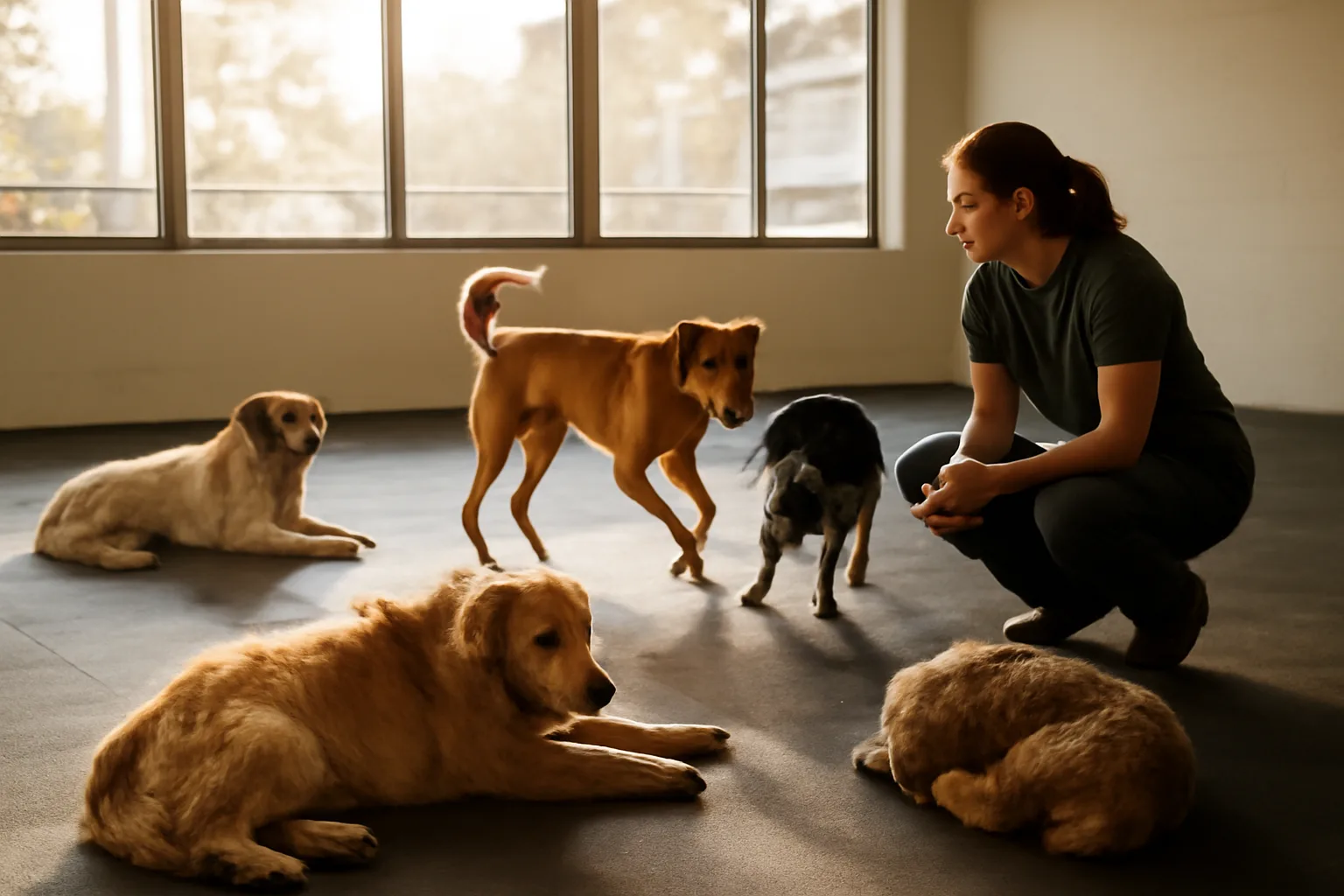
Dogtopia of Fredericksburg is a commercial dog daycare/boarding facility in Fredericksburg, VA, which means it operates under Virginia's pet shop/boarding kennel licensing rules and City of Fredericksburg zoning approval. Boarding there (or at any similar facility) typically runs $35 to $65 a night regionally, and any dog boarded must show current rabies vaccination and often a Fredericksburg or county dog license.
What is Dogtopia of Fredericksburg and what does it operate under?
Dogtopia is a national franchise brand with locations across the U.S., including one operating in the Fredericksburg, VA area, offering daycare, boarding, and spa services for dogs. Like any commercial dog-care business in Virginia, it doesn't get to just hang a sign and open. The business has to satisfy state animal welfare licensing (through the Virginia Department of Agriculture and Consumer Services, VDACS) and local zoning approval from the City of Fredericksburg or the surrounding county, depending on the exact address. Virginia law treats "boarding establishments" and "commercial dog breeders" as distinct license categories under the state's animal care standards. A facility that boards dogs overnight for a fee generally needs a boarding establishment permit issued by VDACS, separate from any local business license, under the definitions and permit requirements in Va. Code § 3.2-6500 and § 3.2-6501 [1]. If a facility does daycare only, with no overnight stays, some jurisdictions treat that differently for zoning purposes (as a kennel or animal care use) even though state licensing thresholds may not apply the same way. If you're researching this because you're thinking about opening a similar facility in Fredericksburg, or converting a home-based dog sitting side hustle into a real business, the two-track approval (state + local) is the first thing to nail down before signing a lease.
How much does dog boarding cost in Fredericksburg, VA?
| Basic kennel/run boarding | $25-$40 | |
|---|---|---|
| Daycare-style boarding (Dogtopia-type) | $40-$60 | |
| Boarding with private suite/luxury add-ons | $55-$85 | These ranges reflect general Virginia/Mid-Atlantic market pricing, not a single published source; always confirm current rates directly with the facility. |
Dog boarding in the Fredericksburg, VA region generally runs $35 to $65 per night for standard boarding, with daycare-style franchises like Dogtopia often pricing in the $40 to $60 range per night depending on add-ons (grooming, extra playtime, medication administration). Multi-dog and multi-night discounts are common. These are market rates, not government-set prices; no state agency publishes a boarding fee schedule because private boarding rates aren't regulated the way licensing fees are. For comparison, national averages for dog boarding tend to run $25 to $85 a night depending on region and amenities, according to industry pricing surveys cited by veterinary and consumer resources. Urban and franchise-branded facilities (climate-controlled play rooms, webcam access, all-day supervised play) sit at the higher end. A no-frills kennel with outdoor runs sits at the lower end. If you're pricing out a new facility, get specific: pull rates from at least three competitors within a 15-mile radius, factor in your square footage per dog (Virginia's boarding kennel regulations require minimum space allowances, discussed below), and price your overnight rate to cover labor, since overnight boarding is the most labor-intensive service most facilities offer. | Boarding type | Typical nightly rate (regional) |
How do you register a dog in Fredericksburg / Virginia?
Registering a dog in Virginia means getting a county or city dog license, which is separate from rabies vaccination and separate from any breed registry paperwork. Virginia Code § 3.2-6524 requires every dog four months or older to have a current dog license, and the license is issued by the treasurer or designated officer of the county or city where the owner resides [2]. In practice, you'd contact the City of Fredericksburg Commissioner of Revenue or Treasurer's office (if the dog lives within city limits) or the relevant county office (Spotsylvania or Stafford County, both of which border Fredericksburg) to get the license. Requirements universally include proof of current rabies vaccination, since Virginia law ties dog licensing to rabies control. Fees are set locally and typically run somewhere in the $5 to $15 per year range for an individual dog license, though exact amounts vary by locality and by whether the dog is spayed/neutered (many localities charge less for altered dogs). This licensing is different from what a boarding facility asks for at check-in. Dogtopia locations and comparable daycare/boarding businesses require proof of rabies vaccination and often a clean bill of health or recent vet exam, but they generally don't check for a county dog license tag specifically, though some ask for it as part of intake paperwork. Don't confuse "registering" a dog with the county for licensing purposes with getting a dog "papers" from a breed registry, which is a completely different process covered below.
How do you get papers for a dog (AKC or breed registration)?
Getting "papers" for a dog means registering it with a breed registry like the American Kennel Club (AKC), not a government license. This is a private, voluntary process that has nothing to do with city or state law. If a dog's parents are both AKC-registered purebreds of the same breed, the breeder typically registers the litter with the AKC and provides individual registration paperwork (or an AKC Litter Application) to each puppy buyer. If you bought a puppy and the breeder never registered the litter, you generally cannot get "papers" after the fact unless the breeder cooperates: AKC registration depends on documented parentage and, in many cases, DNA verification of the sire. A dog without registered, verifiable purebred parents simply can't get AKC papers no matter how purebred it looks. Mixed-breed dogs have their own registry options (like AKC Canine Partners) that provide an ID number for enrollment in AKC events, but this is not the same as breed papers and doesn't imply pedigree. If you're the one selling puppies and want to offer papers to buyers, you need to register your kennel name with the AKC (or the relevant registry) and register each litter within the registry's required timeframe after whelping. This is a private contractual relationship with the registry, and it runs parallel to, not instead of, any state or USDA breeder licensing obligations covered next.
How do you become a dog breeder in Virginia, and when does USDA licensing kick in?
Becoming a dog breeder in Virginia legally means understanding two separate license thresholds: the state's commercial dog breeder license and the federal USDA/APHIS license, which apply based on how many dogs you keep for breeding and how you sell puppies. Under Virginia Code § 3.2-6507.1, a "commercial dog breeder" is someone who maintains 25 or more adult female dogs for breeding purposes and sells or offers to sell any of their offspring, and such breeders must obtain a permit from VDACS [3]. Facilities below that threshold generally aren't classified as commercial breeders under state law, though local zoning may still regulate kennels of any size, and general animal welfare standards (adequate space, veterinary care, sanitation) apply regardless of scale. At the federal level, USDA's Animal Welfare Act licensing applies to breeders who sell puppies sight unseen (over the internet, by phone, or through a broker, without the buyer meeting the puppy or seeing the facility in person). The 2013 USDA retail pet store rule specifically closed the loophole that let large online sellers avoid licensing; breeders who have more than four breeding females and sell puppies without in-person buyer contact must get a USDA Class A (breeder) license and pass APHIS inspections, as described in the Federal Register final rule amending the Animal Welfare Act regulations (78 FR 57227, Sept. 18, 2013) [4]. Breeders who sell only in person, at the point where the animal is born and raised, are generally exempt regardless of scale, which is why many hobby and even mid-size breeders never touch a USDA license. If you're planning to open a breeding operation in the Fredericksburg area, start by counting your adult breeding females and mapping your sales channel (in-person only vs. online/shipped) before you assume you're exempt. Both the Virginia and federal thresholds are number- and channel-based, not based on intent or facility quality. For context on how this compares to running a boarding or daycare facility instead of a breeding operation, see our guide to dog boarding licensing basics.
How do you get a dog license (step by step)?
Getting a dog license in Virginia takes four basic steps: vaccinate for rabies, gather proof, find your local licensing office, and pay the fee. Every Virginia locality issues its own licenses under state authority granted in Va. Code § 3.2-6524, so the exact process varies by city or county, but the pattern is consistent statewide. Step one: get your dog a current rabies vaccination from a licensed veterinarian. Virginia requires rabies vaccination for dogs four months and older, and most localities won't issue a license without proof of it. Step two: find the correct office. If you're in the city, that's the Fredericksburg Commissioner of Revenue or Treasurer; if you're just outside city limits in Spotsylvania or Stafford County, it's that county's treasurer or animal control office. Step three: submit the rabies certificate, your dog's basic info (name, breed, sex, spay/neuter status), and payment, either in person, by mail, or, increasingly, online through the locality's portal. Step four: attach the tag to your dog's collar; some localities require it be worn at all times, and animal control can cite unlicensed dogs found off-property. Renewal is typically annual, though some Virginia localities offer multi-year licenses tied to a multi-year rabies vaccine. Fees are set locally, so always check the current fee page for the specific city or county rather than assuming a number carries over from a neighboring jurisdiction.
What zoning approval does a dog daycare or boarding facility need in Fredericksburg?
A dog daycare or boarding facility in Fredericksburg needs local zoning approval confirming the use is allowed in that zoning district, on top of the state VDACS license. Zoning in the City of Fredericksburg is handled by the Department of Planning and Community Development, and commercial animal care uses (kennels, boarding, daycare) are typically only permitted outright, or permitted with conditions, in certain commercial or industrial zoning districts, not in residential ones. If a property isn't zoned for the use, an operator generally needs either a rezoning, a special use permit, or a variance, each of which involves a public hearing before the Planning Commission and/or City Council. This is where a lot of new operators get surprised: they find a great commercial building, sign a letter of intent, then discover the zoning district doesn't list "kennel" or "animal boarding" as a permitted use, forcing a multi-month hearing process before they can even apply for the state license. Outside city limits, in Spotsylvania or Stafford County, the same logic applies but through the county's own zoning ordinance and zoning administrator's office. Neither this article nor any general guide can tell you which specific zoning district covers a specific parcel; that's a call to the local zoning office, or a records request, before you sign a lease. For anyone building out the full application package, from state kennel license forms to the zoning hearing narrative, our kennel license and zoning packet walks through the fill-in-the-blank version of this process for $149 one time, though it's a document template service, not legal representation before any board.
What facility standards does a boarding kennel need to meet in Virginia?
Virginia's boarding kennel and commercial breeder regulations set minimum standards for space, sanitation, temperature control, and veterinary care that apply regardless of brand or franchise. These standards live in the animal care regulations administered by VDACS under Va. Code § 3.2-6503 and related sections, plus the more detailed regulations at 2VAC5-141 [5]. Key categories operators need to plan for: primary enclosure size (space scaled to the size and number of dogs housed together), ambient temperature control (facilities generally must maintain temperatures within a set range and can't leave dogs in extreme heat or cold for extended periods), sanitation (daily waste removal, regular disinfection schedules), and access to potable water at all times. Facilities must also keep records of each animal's health status and any veterinary treatment. If a facility also does grooming or retail, those add separate local business license and possibly separate health code considerations, though grooming itself isn't independently licensed by the state in Virginia the way it is in a few other states. Anyone comparing what a franchise facility like Dogtopia does against a smaller independent operation should look at our breakdowns of pet boarding standards and dog kennels requirements for a side-by-side on typical amenities versus bare minimum compliance.
How is a Dogtopia franchise licensed differently from an independent daycare?
A Dogtopia franchise location isn't licensed any differently from an independent daycare at the state or local level; franchise brand agreements are private contracts between the franchisee and Dogtopia corporate, not a substitute for government licensing. Every individual location still has to get its own VDACS boarding establishment permit (if it boards overnight) and its own local zoning approval and business license, regardless of how many other Dogtopia locations exist nationally. What the franchise agreement does add is brand-standard build-out requirements (specific flooring, ventilation, camera systems) that often exceed the state's bare minimum, since franchisors want consistent customer experience across locations. That's a business decision, not a legal requirement, and an independent operator can meet state minimums with a much simpler build-out if they choose to. For someone comparing whether to buy into a franchise model versus open independently, the licensing burden is identical either way. The real difference is franchise fees, royalty percentages, and marketing co-op requirements, which are business terms to negotiate with the franchisor directly, not something any zoning or licensing office regulates. See our Dogtopia overview and our general doggy day care licensing guide for the baseline every operator, franchise or not, has to clear.
What should I bring when boarding my dog at a facility like this?
Most boarding and daycare facilities, including Dogtopia-style operations, require proof of current rabies vaccination at minimum, and many also require distemper/parvo (DHPP) and bordetella (kennel cough) vaccination given how easily kennel cough spreads in group settings. Bring your vet's most recent vaccination record, more than a verbal confirmation; most facilities want it faxed or emailed ahead of the first stay or brought in hard copy. Bring your dog's regular food if the facility doesn't provide it (many franchise-style daycares include food in the rate but charge extra to feed a specific brand), any medications with dosing instructions, and an emergency contact besides yourself. If your dog has never done group daycare, ask about a temperament evaluation; nearly all daycare-style facilities (Dogtopia included, per general industry practice) require a trial day before enrolling a dog in ongoing group play, both for safety and to confirm the dog handles group settings well. A county dog license tag isn't usually a boarding requirement, but keeping current on it avoids a separate problem: if a dog gets loose from a facility (rare, but it happens) or animal control gets involved for any reason, an unlicensed dog complicates things unnecessarily.
Frequently asked questions
Frequently asked questions
How much does dog boarding cost?
Dog boarding typically costs $25 to $85 per night depending on region and amenities, with Mid-Atlantic and franchise-style facilities like Dogtopia often running $40 to $60 a night. Multi-dog and extended-stay discounts are common. Rates aren't government-regulated, so always confirm current pricing directly with the facility rather than relying on averages.
How do I register a dog with the city or county?
Contact your city or county treasurer's or commissioner of revenue's office, provide proof of current rabies vaccination, and pay the local licensing fee, usually renewed annually. In Virginia this is required under Va. Code § 3.2-6524 for all dogs four months and older, regardless of breed or where they were purchased.
How is dog boarding priced compared to daycare?
Boarding (overnight stays) typically costs more per day than standalone daycare (no overnight) because it includes overnight staffing, feeding, and extended supervision. Many facilities price daycare at $25-$40/day and boarding at $35-$65/night, with combined boarding+daycare packages often discounted versus booking each separately.
How do you get a dog license if you just moved to a new county?
You need a new local dog license for your current county or city even if the dog was already licensed elsewhere; dog licenses aren't portable between Virginia localities. Bring proof of current rabies vaccination to the new locality's treasurer or animal control office and apply within the timeframe that locality's ordinance requires, often 30 days after moving in.
How do you get papers for a dog if the breeder never registered it?
You generally can't get AKC papers after the fact unless the breeder cooperates with registration, since it depends on documented, verifiable parentage. If both parents were registered purebreds and the breeder simply hasn't filed paperwork yet, contact them directly; AKC also offers DNA-based parentage verification in disputed cases.
How can I get papers for my mixed-breed dog?
Mixed-breed dogs can't get breed "papers" (pedigree registration) because that requires documented purebred lineage. The AKC offers Canine Partners enrollment for mixed-breed dogs, which provides an ID number for participating in AKC-sanctioned events like agility, but it's not equivalent to breed registration and doesn't establish any pedigree.
How do you become a dog breeder legally in Virginia?
Below 25 adult breeding females, Virginia doesn't classify you as a "commercial dog breeder" requiring a state permit, though local zoning and general animal care laws still apply. At or above that threshold, you need a VDACS commercial breeder permit under Va. Code § 3.2-6507.1. If you sell puppies sight unseen (shipped, online), USDA/APHIS licensing may apply regardless of your headcount.
When does a breeder need a USDA license?
A breeder generally needs a USDA Class A license under the Animal Welfare Act if they have more than four breeding females and sell puppies without the buyer meeting the puppy and the facility in person, per the 2013 USDA retail pet store rule closing the internet-sales loophole (78 FR 57227). Breeders who sell exclusively face-to-face at their premises are typically exempt regardless of scale.
What's the difference between a dog license and AKC papers?
A dog license is a government requirement tied to rabies control and public safety, issued by a city or county, and required for every dog over four months old in Virginia. AKC papers are a private, voluntary pedigree registration proving purebred lineage, unrelated to any government requirement, and have zero legal bearing on whether a dog can be licensed or boarded.
Does Dogtopia require a dog license to board my dog?
Boarding and daycare facilities typically require proof of current rabies vaccination (and often DHPP and bordetella vaccines) rather than a county dog license tag specifically. Some facilities ask for license info as part of general intake paperwork, but it's not a universal industry-wide requirement the way vaccination proof is.
What zoning district allows a dog daycare or kennel in Fredericksburg?
It depends on the specific parcel; commercial animal care uses like kennels and daycare are typically only permitted in certain commercial or industrial zoning districts in the City of Fredericksburg, not residential ones. Confirm directly with the city's Department of Planning and Community Development before signing a lease, since a rezoning or special use permit may be required.
How much space does Virginia require per dog in a boarding kennel?
Virginia's animal care regulations (2VAC5-141) set minimum primary enclosure sizes scaled to a dog's size and how many dogs share an enclosure, along with temperature control, sanitation, and veterinary care standards. Exact square footage requirements vary by dog size category, so check the current regulation text or consult VDACS directly for your specific facility layout.
Sources
- Code of Virginia § 3.2-6501, Permit required; local ordinances: VDACS licenses boarding establishments and commercial breeders separately from local business licensing
- Virginia Code § 3.2-6524, Dog licenses required: Every dog four months or older in Virginia must have a current dog license issued by the locality
- Virginia Code § 3.2-6507.1, Commercial dog breeders; permit required: Virginia defines a commercial dog breeder as maintaining 25 or more adult female dogs for breeding and selling offspring, requiring a VDACS permit
- Federal Register, Animal Welfare; Retail Pet Stores and Licensing Exemptions Final Rule, 78 FR 57227 (Sept. 18, 2013): USDA requires a Class A breeder license for those with more than four breeding females who sell puppies without in-person buyer/facility contact
- Virginia Administrative Code 2VAC5-141, Comprehensive Animal Care Regulations: Virginia sets minimum enclosure size, temperature control, sanitation, and veterinary care standards for boarding kennels and breeders