Last updated 2026-07-25
TL;DR
Dogtopia Rock Hill is a franchised dog daycare and boarding location in York County, SC. Boarding at comparable daycare-boarding facilities in the region typically runs $35-$75/night, with daycare around $25-$40/day. Opening your own facility means South Carolina animal facility rules, York County zoning, and (if you breed and sell dogs) possible USDA APHIS licensing above the federal retail exemption thresholds.
What is Dogtopia Rock Hill and how does it fit the boarding market?
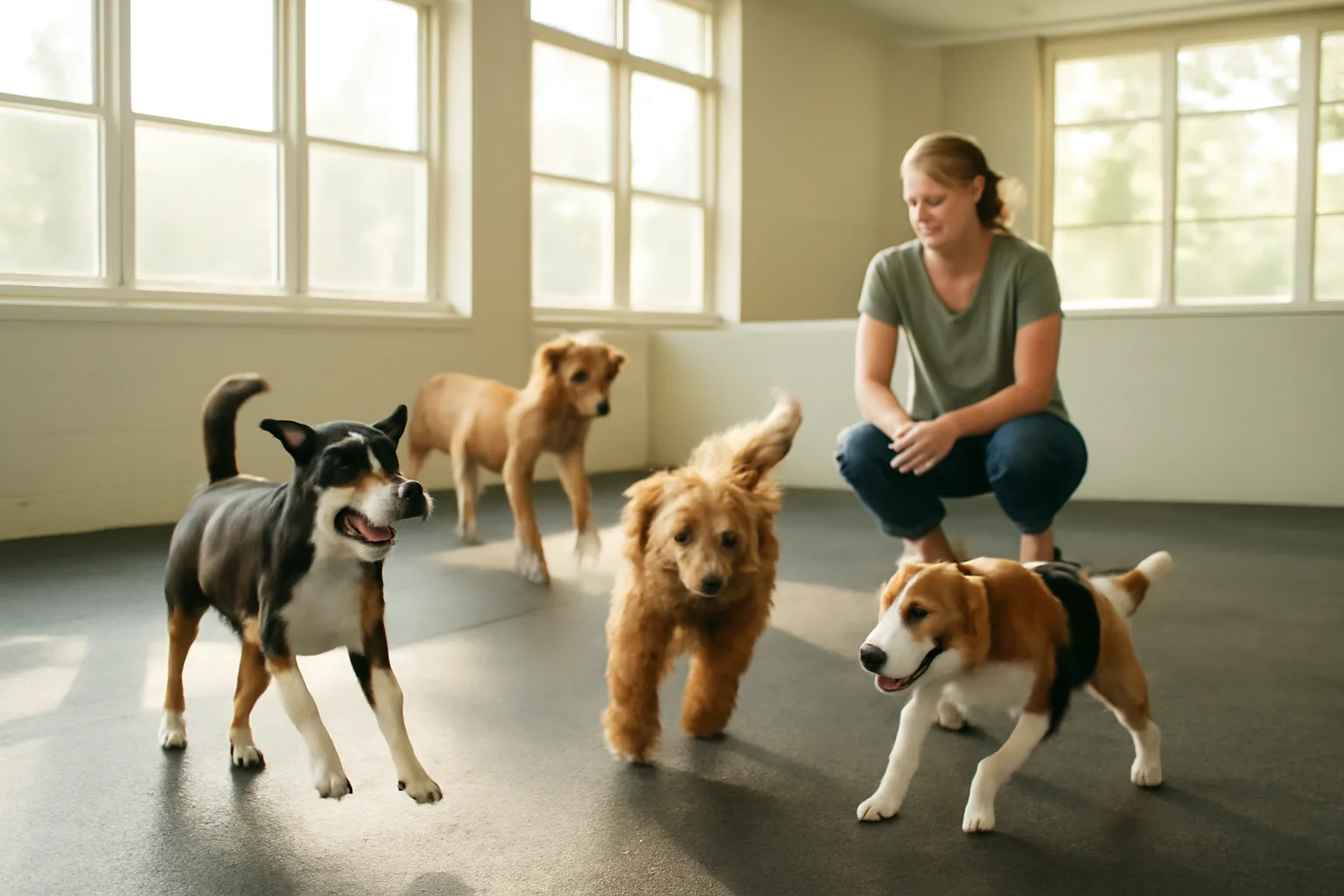
Dogtopia is a national franchise chain built around open-play daycare, boarding, and spa services for dogs, with locations across the US including one in Rock Hill, South Carolina (York County). Like other Dogtopia locations, it operates as a franchised business under the parent brand's operating standards, not a company-owned location, which is how most of the chain's roughly 250+ US locations run. For a reader researching "Dogtopia Rock Hill" specifically, you're probably in one of two camps: you want to book boarding or daycare for your own dog, or you're an operator sizing up the competition because you're thinking about opening a boarding/daycare business in York County or nearby. This article covers both, but leans toward the second group, since that's where the real research gap is. Actual current pricing at any single Dogtopia location changes often and is best confirmed directly with that location; national averages and state licensing rules are the more durable, checkable numbers, so that's what we focus on here. If you're comparing options nearby, it helps to look at the broader category first. See our guides on dog boarding and dog hotels near me for how pricing and services typically break down across independent kennels versus franchise daycare chains like Dogtopia.
How much does dog boarding cost?
Dog boarding in the US generally runs $25 to $85 per night depending on region, dog size, and whether the facility is a franchise daycare-boarding hybrid (like Dogtopia), a traditional kennel, or an in-home boarding service. Franchise daycare-boarding locations in suburban and mid-size metro markets, which is the category Dogtopia Rock Hill falls into, tend to sit in the $40-$65/night range for a standard dog, with add-ons for medication administration, extra playtime, or grooming. A few things move the price a lot: - Dog size: many facilities charge more per night for dogs over 50-75 lbs because of larger suite/kennel space and staff supervision ratios.
- Season: boarding rates near major holidays (Thanksgiving, Christmas, July 4th) commonly carry a surcharge of $5-$20/night at franchise locations, because demand spikes and staff have to be paid holiday rates.
- Location cost of living: boarding in a high cost-of-living metro (Charlotte, NC is about 25 minutes from Rock Hill) tends to run higher than rural boarding kennels.
- Included daycare: chains like Dogtopia often bundle daycare play into the boarding stay rather than charging separately, which is part of why their nightly rate reads higher than a bare-bones kennel that just offers a run and a walk. There's no federal price-tracking body for pet boarding, so there isn't a single authoritative government number here; the ranges above come from aggregating publicly posted rates across franchise and independent facilities in comparable markets. If you want the specific current rate at Dogtopia Rock Hill, call the location directly, since franchise pricing pages change without much notice. For operators: if you're modeling your own facility's pricing, look at our pet boarding and dog kennels guides for a breakdown of how nightly rate ties to square footage, staff ratio, and insurance cost.
How much is dog boarding at a daycare-style facility versus a traditional kennel?
| Basic boarding kennel | $20-$45 | Run/kennel, 2 walks/day, basic feeding | |
|---|---|---|---|
| Daycare-boarding hybrid (e.g. Dogtopia-style) | $40-$65 | Open-play daycare, suite lodging, sometimes webcam | |
| Luxury pet hotel/suite | $60-$120+ | Private suite, TV, premium bedding, 1:1 attention | |
| In-home boarding (sitter's house) | $30-$55 | Home environment, fewer dogs per sitter | These are market-observed ranges, not government-set prices; no state agency regulates boarding fees. What states and counties do regulate is the facility itself (sanitation, staffing, square footage per dog, zoning), which is covered in the sections below. |
This is a slightly different question than the one above, because the business models charge differently. A traditional boarding kennel (a run, twice-daily walks, minimal group play) usually prices lower, often $20-$45/night, because labor cost per dog is lower. A daycare-boarding hybrid like Dogtopia bundles in supervised open-play, webcam access in many locations, and sometimes suite upgrades, and that raises both the price and the labor cost per dog (supervision ratios in open play are typically much lower than kennel-run ratios). | Facility type | Typical nightly rate | What's usually included |
What licenses does South Carolina require to open a boarding or daycare facility?
South Carolina doesn't have a single statewide "boarding kennel license" administered by one central office the way some states do; regulation is split between local business licensing, county/city zoning, and, if the facility also breeds or sells dogs commercially, state and federal animal dealer rules. At the state level, the South Carolina Department of Agriculture doesn't operate a general pet boarding license program comparable to, say, a restaurant permit. What you will run into at the state level is South Carolina's law on rabies vaccination and animal control (Title 47 of the SC Code), which affects how a boarding facility handles vaccination records and bite incidents, and any county-level animal control ordinance in York County. So practically, a new Rock Hill-area operator's compliance checklist usually looks like: a York County or City of Rock Hill business license, compliance with local zoning for the property (commercial vs. residential, and specifically whether "kennel" or "animal boarding" use is allowed or requires a special exception), and if the facility will breed dogs commercially, potential US Department of Agriculture (USDA) licensing. Because county and city rules vary block by block, don't assume your property is zoned right just because a similar business operates nearby; zoning classifications and grandfathered uses differ parcel by parcel. Confirm directly with the York County Planning and Development office before signing a lease. See our [state-guides] coverage and the dog boarding hub article for how other states structure this differently, since some (like Ohio and Pennsylvania) do run a formal state kennel license program.
How does York County zoning treat kennels and dog daycare facilities?
York County, SC zoning ordinances classify uses by zoning district, and "kennel" or "animal boarding facility" uses are commonly restricted to commercial, general commercial, or industrial districts, sometimes requiring a special/conditional use permit even within a commercially zoned parcel. This is standard across most US counties, not unique to York County: kennels get treated more like a nuisance-adjacent use (noise, odor, waste) than a normal retail business, so zoning boards often require a public hearing, a site plan, and sometimes a noise or setback study. Before you sign a lease or make an offer on a property near Rock Hill, call the York County Planning and Development Department directly and ask three specific questions: (1) what zoning district is this exact parcel in, (2) is "kennel" or "animal daycare/boarding" a permitted use, a conditional use, or not allowed at all in that district, and (3) if it needs a conditional use permit, what's the current hearing timeline and fee. Zoning hearing timelines vary a lot by county workload; some counties turn around a conditional use application in 30-45 days, others take 90+ days if there's a public comment period or if the planning commission only meets monthly. Don't build a business timeline around an assumed approval date. If your local board requires notice to neighboring property owners, budget extra time for that mailing and comment window. This is also where a lot of first-time operators get tripped up: they assume that because Dogtopia (or any established boarding brand) operates in a certain commercial corridor, similar zoning will apply everywhere in the county. It doesn't. Each parcel's zoning history, prior use, and any variance on record matters. If you want a structured way to organize your zoning-hearing paperwork before you walk into that meeting, that's exactly the gap our $149 one-time Kennel License & Zoning Packet is built to fill: it's a self-serve document organizer, not legal representation, and it doesn't guarantee approval from any board.
How do you get a dog license (not a business license)?
A dog license, sometimes called a pet license or rabies tag registration, is a local requirement for individual pet owners, separate from any business kennel license. Most counties and cities require it annually, tied to proof of current rabies vaccination from a licensed veterinarian. In South Carolina, dog licensing isn't handled by one statewide agency; it's set at the county or municipal level, and some SC counties don't require an individual dog license at all, while others (or their cities) do. York County residents should check directly with York County Animal Care or the City of Rock Hill's code enforcement/animal control division for the current local requirement, since this changes and there's no single SC-wide answer. Generally, to get a dog license/tag you need: (1) proof of current rabies vaccination (a certificate from your vet, more than a receipt), (2) a completed registration form (paper or online, depending on the jurisdiction), and (3) a small annual fee, commonly in the $5-$25 range nationally, sometimes waived or reduced for spayed/neutered dogs or senior citizens. This is a different process entirely from getting your dog's breed "papers" (covered below) or from a facility's kennel/business license.
How do you register a dog, and is that the same as getting a license?
"Registering" a dog usually means one of three different things, and people conflate them constantly: (1) local government registration/licensing (the rabies-tag process above), (2) breed registry registration (AKC or another purebred registry, which has nothing to do with government), or (3) microchip registry registration, which links your contact info to a chip number in a database like the AKC Reunite or a chip manufacturer's registry. Local government registration is what your city or county animal control office handles, and it's what's legally required in jurisdictions that mandate it; skipping it can mean a citation if animal control picks up your dog. Breed registry registration is optional, has no legal force, and is purely about pedigree documentation and eligibility for conformation shows or breeding records. Microchip registration is also optional but strongly recommended by veterinary groups as the most reliable way to get a lost dog back to you, since collars and tags fall off. If someone asks "how do I register my dog," the honest answer is: figure out which of the three you actually need. Most pet owners really mean the city/county license process.
How do you get papers for a dog, and what does that actually mean?
"Papers" almost always refers to purebred registry documentation, most commonly from the American Kennel Club (AKC), proving a dog's lineage and breed. Getting papers is not a government process and has nothing to do with a license, a vaccination record, or a legal requirement; a dog with no papers at all is still 100% legal to own, board, or license. To register a litter with the AKC and get papers for individual puppies, the litter's parents (sire and dam) generally both need to already be AKC-registered, and the breeder submits an AKC Litter Application, after which individual puppy registrations ("papers") can be issued to each puppy, often transferred to the buyer at sale. If your dog's parents were never registered, you generally can't retroactively get "real" papers for that individual dog; some third-party or lesser-known registries will register dogs with no verified pedigree, but these carry far less credibility and no relationship to the AKC or any government body. If you bought a puppy and were told "papers are coming," that means the breeder is handling an AKC litter registration and individual puppy registration transfer, a paperwork process, not a legal or governmental one. If you already own an adult dog with no documented parentage, there generally isn't a legitimate path to after-the-fact purebred registration papers; that's simply not what registries are built to do, and no government agency issues "papers" of this kind at all.
How do you become a dog breeder, and when do federal rules kick in?
Becoming a hobby dog breeder legally requires no federal license at all in most cases, but crossing certain sales thresholds triggers US Department of Agriculture (APHIS) licensing requirements under the Animal Welfare Act, and separately, most states have their own commercial breeder or "kennel" licensing law once you exceed a certain number of breeding females or litters per year. At the federal level, APHIS requires a Class A (breeder) license if you sell more than a small number of dogs directly to the public sight-unseen (i.e., over the internet, by phone, or mail order, without the buyer seeing the animal or facility in person first) or if you sell wholesale to pet stores, brokers, or research facilities. The federal rule change, published in the Federal Register in 2013, narrowed the retail pet store exemption specifically to close the internet-sales loophole: breeders selling puppies sight-unseen no longer automatically qualify as an exempt "retail pet store" the way an in-person storefront does [1]. Since that 2013 rule took effect, most breeders who sell puppies sight-unseen over the internet and have more than four breeding females need a USDA license, regardless of sale volume, unless another exemption applies [1][2]. South Carolina layers its own rules on top of federal ones for anyone operating as a commercial breeder. Check with the South Carolina Department of Agriculture directly on current state-level thresholds and whether a state kennel or breeder permit applies to your specific operation, since state breeder licensing schemes vary widely (some states, like Pennsylvania, have a detailed statutory kennel license tier system; South Carolina's structure is different and worth confirming directly rather than assuming it mirrors another state). If you're already boarding or running daycare and thinking about adding a breeding program, treat it as a completely separate compliance track: your boarding zoning approval does not cover breeding use, and vice versa. For the boarding/daycare side specifically, our doggy day care article walks through staffing ratios and facility standards that regularly come up in county inspections.
What USDA thresholds actually matter for breeders?
The two numbers that matter most: four breeding females, and sight-unseen sales. APHIS's 2013 rule change means that if you have more than four female dogs used for breeding and you sell even one puppy sight-unseen (internet, phone, or mail order, without the buyer physically visiting before purchase), you generally need a USDA Class A breeder license, regardless of how few litters you produce [1][2]. If you sell every puppy face-to-face, in person, before the sale is final, and buyers can see the animal and the facility, you may qualify for the retail pet store exemption regardless of how many females you have. That's the practical distinction: it's not really about how many dogs you own, it's about how you sell them. There's also a Class B license category for brokers and dealers who buy and resell dogs (rather than breed and sell their own), which most small breeders never need, but which matters if you're considering wholesaling puppies to a pet store or another dealer. Getting the federal threshold wrong is a genuinely expensive mistake: operating as an unlicensed dealer when APHIS determines you should have been licensed can result in enforcement action under the Animal Welfare Act's civil penalty provisions [3]. If you're anywhere close to the four-female line and selling online or by phone, confirm your status directly with your regional APHIS office before you list a litter.
What facility standards do inspectors actually check?
Whether you're licensed at the state, county, or federal level, inspectors tend to check the same core categories: sanitation (waste removal frequency, cleaning protocols, disease control), space per animal (square footage requirements scale with dog size and number housed together), staffing and supervision ratios (especially for open-play daycare models), temperature control and ventilation, secure fencing/containment, and recordkeeping (vaccination records, incident logs, feeding schedules). For USDA-licensed breeders specifically, the Animal Welfare Act regulations (9 CFR Part 3) set out specific numeric standards, for example minimum enclosure size formulas tied to the dog's length, and required exercise for dogs housed in primary enclosures without regular exercise access [4]. As the regulation itself states, primary enclosures for dogs must provide "sufficient space to allow each dog to turn about freely, to stand, sit, and lie in a comfortable, normal position, and to walk in a normal manner" (9 CFR Part 3, Subpart A) [4]. State and county inspections for boarding/daycare-only facilities (no breeding) usually pull from more general public health and zoning-code standards, since most states don't have a dedicated "daycare facility standards" statute the way they have breeder kennel statutes. If you're preparing for a first inspection at any level, walk your own facility with a checklist before the inspector does: check that waste is removed multiple times daily, that group-play areas have clear sightlines for staff supervision, that every dog's vaccination record is current and on file, and that emergency contact and vet info is posted and accessible to every staff member on shift, more than the manager.
What does it cost to open a facility like this, realistically?
Franchise entry costs and independent build-out costs are two very different numbers, and people researching "Dogtopia Rock Hill" as a business model sometimes conflate them. A franchise location (Dogtopia or similar) requires a franchise fee plus build-out costs set by the franchisor's agreement, which is a private contract number, not something we'll estimate here since it varies by franchisor and changes over time; get that number directly from the franchisor's current Franchise Disclosure Document (FDD), which is a federally required document under FTC franchise rules. An independent boarding/daycare facility's startup cost depends heavily on whether you're building new, retrofitting an existing commercial building, or converting a residential property (which usually runs into the zoning issues discussed above). Costs that recur across almost every startup budget: county/city business license fee, a commercial lease or purchase, kennel flooring and drainage build-out (often the single biggest line item because of code requirements around washable, non-porous surfaces), fencing, HVAC sized for animal occupancy loads, liability insurance (bite and escape coverage specifically, which costs more than general small-business liability), and staff wages sized to your supervision ratio. Don't skip the zoning step to save money on architectural drawings before you have zoning confirmation; that's the most common expensive mistake, spending on build-out plans for a use the parcel isn't zoned for.
How do you handle multi-state or multi-county compliance if you're expanding?
If you're modeling a second location, the honest answer is that nothing about your first location's approval carries over. Zoning is parcel-specific and county-specific; a York County approval means nothing to Mecklenburg County, NC (Charlotte) zoning staff, even though the two counties are 20-30 minutes apart. Same logic applies across state lines: South Carolina's approach to kennel and breeder licensing (largely county-driven, with lighter state-level oversight) differs from neighboring North Carolina's, which also splits authority between counties but has its own state statute framework. For USDA APHIS purposes, the federal threshold rules (the four-female/sight-unseen test) apply the same nationwide, since that's federal law, not state law. So if you're a breeder expanding to a second state, your USDA compliance obligations don't reset, but your state and county obligations do, in full, for each new location. Our Kennel License & Zoning Packet ($149, one-time) is built around this exact problem: organizing the state-specific and county-specific document checklist so you're not starting from a blank page for each jurisdiction. It's a document organizer and research aid, not legal representation, and it doesn't file anything on your behalf or promise any board will approve your application.
Frequently asked questions
How much does dog boarding cost per night on average?
Nationally, dog boarding runs roughly $25-$85/night depending on facility type and region. Basic kennels tend to run $20-$45/night, while daycare-boarding hybrids like Dogtopia-style facilities run closer to $40-$65/night because they include supervised group play. There's no government price index for this; these are market-observed ranges, and holiday surcharges of $5-$20/night are common.
How much is dog boarding at Dogtopia specifically?
Dogtopia is a franchise, so exact pricing varies location to location and changes without much notice. As a franchise daycare-boarding hybrid, expect a rate in the general $40-$65/night range typical of that facility category, but call the specific Rock Hill location directly for the current published rate.
How do you register a dog with the local government?
Contact your city or county animal control/animal care office, provide proof of current rabies vaccination from a licensed vet, complete a registration form, and pay the annual fee (commonly $5-$25 nationally). This is separate from AKC breed registration and separate from microchip registry registration; check with York County Animal Care or Rock Hill code enforcement for the exact local requirement.
How do you get a dog license?
Dog licenses are issued locally, not by any state or federal agency, and usually require proof of current rabies vaccination plus a small annual fee. Requirements vary by county and city; some South Carolina jurisdictions require it, others don't. Check directly with your county or city animal control office, since there's no single statewide rule in SC.
How do you get papers for a dog?
"Papers" means purebred registry documentation, usually from the AKC. Getting papers requires the litter's parents to already be AKC-registered; the breeder files an AKC Litter Application and individual puppy registrations follow. There's no way to retroactively get legitimate papers for an adult dog with unregistered or unknown parentage; this is a private registry process, not a government one.
How can I get papers for my dog if I don't know the breeder?
If you can't identify the breeder or the parents were never registered, there generally isn't a legitimate path to AKC papers after the fact. Some non-AKC registries will register dogs with unverified pedigrees, but these carry no relationship to AKC and little credibility for breeding, showing, or resale purposes. Papers document known lineage; they can't be manufactured retroactively.
How do you become a dog breeder legally?
There's no federal license required for small-scale hobby breeding. You need a USDA APHIS Class A license once you have more than four breeding females and sell any puppies sight-unseen (internet, phone, mail order). Most states also have their own commercial breeder licensing rules on top of federal ones; check your state Department of Agriculture directly.
What USDA license do dog breeders need?
Breeders selling sight-unseen with more than four breeding females generally need a USDA APHIS Class A breeder license under the Animal Welfare Act. Breeders selling every puppy face-to-face before the sale, letting buyers see the animal in person, often qualify for the retail pet store exemption regardless of female count. Confirm your specific situation with your regional APHIS office.
Does South Carolina require a state kennel license for boarding facilities?
South Carolina doesn't run a single centralized state kennel license program the way some states do; boarding and daycare facilities mainly deal with county/city business licensing and zoning, plus state rabies-control law under SC Code Title 47. Confirm current requirements with the South Carolina Department of Agriculture and York County directly, since rules can change.
How does zoning affect opening a dog boarding business in York County?
York County zoning ordinances typically restrict "kennel" or animal boarding uses to commercial or industrial districts, sometimes requiring a conditional use permit even in a commercially zoned parcel. Approval timelines vary, sometimes 30-90+ days depending on hearing schedules. Always confirm the exact parcel's zoning classification with York County Planning and Development before signing a lease.
What's the difference between a dog license and breed registry papers?
A dog license is a local government requirement tied to rabies vaccination proof, often needed annually with a small fee. Breed registry papers (like AKC registration) are private, optional, and document pedigree with no legal force. You can legally own, board, and license a dog with zero breed papers; the two processes are unrelated.
How much does it cost to open a dog daycare or boarding facility?
Franchise entry costs come from the franchisor's current Franchise Disclosure Document and vary by brand. Independent facility costs depend heavily on build-out needs (drainage flooring, fencing, HVAC), lease terms, insurance for bite/escape liability, and staffing. Zoning approval should come before any build-out spending, since that's the most common expensive mistake operators make.
Sources
- Federal Register, "Retail Pet Stores and Licensing Requirements Under the Animal Welfare Act" (78 FR 57227, Sept. 18, 2013): USDA rule change narrowing the retail pet store exemption and requiring licensing for breeders with more than four breeding females who sell dogs sight-unseen
- USDA APHIS, "Do I Need a License?" guidance document (Animal Welfare Act): Breeders selling puppies sight-unseen with more than four breeding females generally need a USDA Class A license
- Animal Welfare Act, 7 U.S.C. § 2149 (civil and criminal penalties): Operating as an unlicensed dealer under the Animal Welfare Act can result in civil penalty enforcement action
- 9 CFR Part 3, Subpart A (Specifications for the Humane Handling, Care, Treatment, and Transportation of Dogs): Specific enclosure size and exercise standards for dogs under federal Animal Welfare Act regulations, including the requirement that enclosures allow a dog to turn about freely, stand, sit, and lie in a comfortable position
- South Carolina Code of Laws, Title 47, Chapter 5 (Regulation of Animals; Rabies Control): South Carolina state law governing rabies control and animal regulation relevant to boarding facilities
- USDA APHIS, Animal Welfare Act licensing overview (Class A and Class B license categories): USDA APHIS licensing structure distinguishes Class A breeder licenses from Class B dealer/broker licenses