Last updated 2026-07-23
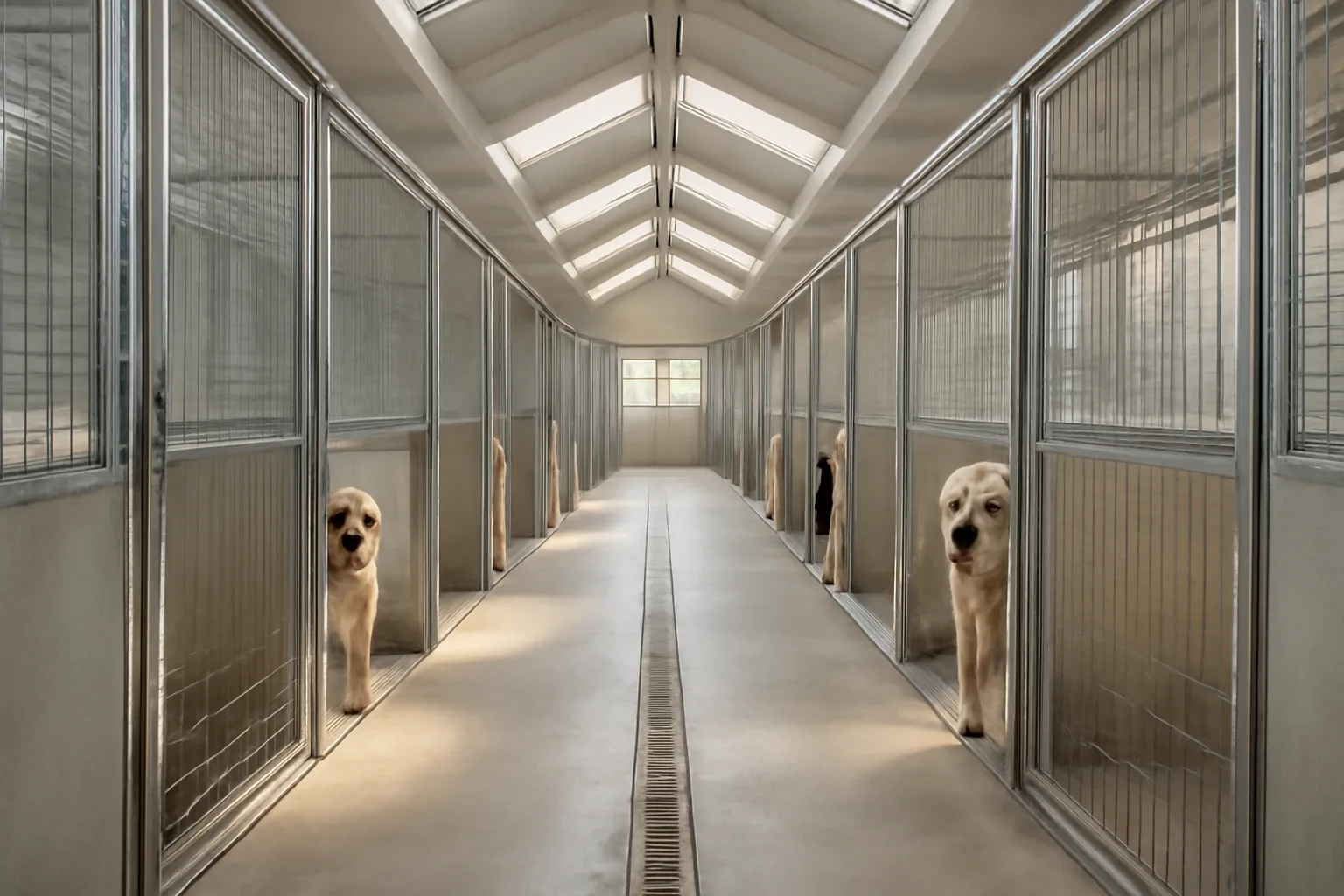
TL;DR
Kennels for dog boarding need a state or county kennel license, local zoning approval, and (if you sell or ship puppies across state lines) a USDA APHIS license. Boarding itself typically costs pet owners $25 to $95 per dog per night. Operators face separate one-time and annual costs for permits, inspections, and facility upgrades that often exceed $5,000 before opening day.
what exactly is a boarding kennel, legally speaking
Most states and counties define a "kennel" as any place housing dogs above a set number, usually somewhere between 3 and 10 adult dogs, for money or otherwise. Cross that line and you stop being a pet owner and become a regulated facility, even if you're just watching a few extra dogs in your house for cash on weekends. The exact number varies wildly. Some counties trigger kennel licensing at 4 dogs total (including your own pets). Others don't require a commercial kennel license until you're boarding 10 or more unrelated dogs at once. There's no federal definition of "kennel" for boarding purposes, which is why this is a state and county patchwork rather than one national rule. A daycare-only operation (dogs go home at night, no overnight stays) sometimes falls under a different, lighter permit category than a true boarding kennel. Don't assume; check your specific city or county code before you build out a business plan around one license type. Dog boarding and daycare are regulated differently often enough that it changes your build-out.
how much does dog boarding cost (for pet owners)
| Basic kennel (concrete run, twice-daily walks) | $20-$40 | |
|---|---|---|
| Mid-tier boarding with daycare access | $35-$60 | |
| Cage-free/suite-style "dog hotel" | $50-$95+ | |
| Boarding with grooming/training packages | $70-$150+ | These are national ranges pulled from typical market pricing, not a government-set rate; nobody publishes an authoritative federal price survey for pet boarding, so treat any number (including these) as a planning estimate, not a guarantee. If you're comparing options as a consumer, pet boarding and dog hotels near me searches will show local pricing that's more accurate than any national average. |
Dog boarding for pet owners typically runs $25 to $95 per dog per night, depending on region, facility type, and add-ons like grooming or extra playtime. Basic kennel-style boarding in a rural or lower cost-of-living area can run as low as $20 to $30 a night. Upscale "dog hotel" suites in major metros with webcams, private play sessions, and orthopedic bedding regularly hit $75 to $120 a night. Multi-dog discounts (siblings sharing a room), holiday surcharges, and vaccination or administrative fees are standard add-ons on top of the base nightly rate. Most facilities also charge extra for medication administration, usually $5 to $15 per dose, and some tack on a one-time new-client intake fee of $15 to $50. Here's a rough breakdown by facility tier: | Facility type | Typical nightly rate |
how much does it cost to open a boarding kennel (for operators)
Opening a small boarding kennel realistically costs $10,000 to $50,000+ before you take your first paying dog, and that's before you buy the building or sign a long lease. The spread is huge because it depends on whether you're retrofitting an existing structure, building new, or converting agricultural land. Expect these cost categories: - State or county kennel license: often $25 to $300 a year, though some states charge per-dog-capacity fees that scale up fast
- Local business license: usually $50 to $400 annually
- Zoning application/variance/conditional use permit: commonly $200 to $2,000+ depending on whether you need a public hearing
- Facility build-out (kenneling, drainage, fencing, ventilation): this is where most of your money goes, often $15,000 to $100,000+
- USDA APHIS license (only if it applies to you, see below): a few hundred dollars a year plus inspection compliance costs The zoning step is the one operators most often underestimate. A county can approve your kennel license application on paper and still require a separate conditional use permit or special exception through the zoning board, sometimes with a public hearing where neighbors get to object. Budget real time for this, more than money; hearings can add 60 to 120 days to your timeline in many counties.
do i need a state or county kennel license to board dogs
Almost certainly yes, if you're taking money to house other people's dogs overnight on a regular basis. The specific licensing authority differs by state: some states license kennels directly through the state department of agriculture, others push licensing entirely down to the county or city level, and some do both. Pennsylvania is a good example of a state-level system: the Pennsylvania Department of Agriculture requires a kennel license for anyone who keeps and sells, or boards, a set number of dogs, with license classes based on dog capacity under the state's Dog Law. Other states (much of the South and West) leave boarding kennel licensing almost entirely to county health departments or animal control, with no meaningful state-level kennel license at all. Because of this split system, your first call should be two calls: your state department of agriculture (search "[your state] department of agriculture animal health" on a .gov domain) and your county or city zoning/planning office. Don't rely on what a kennel two counties over is doing. Rules genuinely differ between adjacent jurisdictions in the same state. Most states also require kennel operators to keep rabies vaccination records on file for every boarded dog and to report bite incidents, separate from the kennel license itself.
what zoning approval do i need for a boarding kennel
You need to confirm your property is zoned for a "kennel" or "animal boarding" use, which in most municipal codes is a distinct category from "veterinary clinic" or "pet store," even though the public conflates all three. Many jurisdictions only allow commercial kennels in agricultural or specific commercial/industrial zones, not standard commercial retail zones, because of noise and odor concerns from neighbors. Zoning boards weigh setback distances from property lines and neighboring residences (commonly 50 to 200+ feet, but this varies enormously by county), noise ordinance compliance, parking requirements, and sometimes a cap on total dog capacity tied to lot size. If your property doesn't already carry the right zoning designation, you'll likely need a conditional use permit, special exception, or variance, which usually means a public hearing where neighbors can show up and object to barking noise. A few practical tips that come up in almost every zoning hearing: bring a sound mitigation plan (indoor housing, sound-dampening insulation, limited outdoor hours), bring a waste management plan, and bring letters of support from immediate neighbors if you can get them before the hearing, not after. Boards respond better to specifics than to good intentions. This is also where a packaged reference tool earns its keep: a $149 one-time Kennel License & Zoning Packet can help you organize the state license requirements and county zoning checklist side by side before you walk into a hearing, though it's a reference and organizing tool, not legal representation, and it doesn't replace an actual conversation with your county planning office.
when do i need a USDA license to board or breed dogs
You need a USDA APHIS license if you're a dog breeder selling puppies sight unseen (i.e., the buyer never physically sees the animal or the facility before purchase, common with online and broker sales) and you meet or exceed certain thresholds, not simply because you board dogs. Straight overnight boarding of pet dogs for their existing owners generally does NOT require a USDA license; APHIS licensing under the Animal Welfare Act is aimed at breeders, dealers, exhibitors, and certain transporters, not boarding kennels. Under USDA regulations, a person who has more than 4 breeding female dogs and sells any puppies sight unseen (via internet, phone, or mail order) generally needs a Class A (breeder) or Class B (dealer) license, unless a specific exemption applies. The regulatory definition of "retail pet store" and the sight-unseen sales trigger are laid out in the Animal Welfare Act regulations themselves, at 9 CFR Part 1 (definitions) and Part 2 (licensing). [1] There is a retail-pet-store style exemption for people who sell animals only face-to-face at the point of sale, but the moment you ship a puppy or sell through a website without the buyer meeting the dog and seeing the facility, that exemption generally disappears. So the boarding-vs-breeding distinction matters a lot here. A kennel that only boards other people's pets doesn't hit USDA thresholds no matter how many dogs it houses, because those dogs aren't being sold. A breeder operating out of a kennel-style facility, on the other hand, needs to watch the 4-female threshold and the sight-unseen sales rule closely, because crossing it without a license is a federal Animal Welfare Act violation with real penalties. The Animal Welfare Act itself, at 7 U.S.C. 2149, authorizes civil penalties of up to $10,000 per violation. [2] If you run a hybrid operation (boarding plus some breeding), keep the two functions administratively and physically separate in your recordkeeping, because inspectors and your state ag department will ask.
how to become a dog breeder legally
Becoming a legal dog breeder means clearing three separate hurdles: state-level breeder or kennel licensing (varies by state, some states like Ohio license "high volume" breeders specifically), local zoning approval for keeping breeding stock, and potentially the federal USDA APHIS license discussed above if you sell sight unseen and exceed the female-dog threshold. Start with your state department of agriculture's website and search for "dog breeder license" or "kennel license." States that regulate breeders heavily (Ohio, Pennsylvania, Missouri, and others with historical puppy-mill enforcement issues) tend to have detailed public guidance and specific breeder classes based on how many litters or adult dogs you keep. Ohio, for example, regulates "high volume breeders" (defined under state law as keeping a set number of intact female dogs and selling a set number of puppies annually) through its Department of Agriculture's Dog Wardens and licensing program. [3] States with lighter regulation may only require a general kennel license with no breeder-specific tier at all. Next, check zoning, exactly like a boarding kennel needs to. Many counties zone breeding kennels separately from boarding kennels, sometimes more restrictively, because of concerns about noise from intact males and heat cycles, plus veterinary care requirements around whelping. Finally, run the USDA threshold math honestly: count your adult breeding females, and be honest with yourself about whether any puppies will be sold sight unseen (this includes selling through a website with shipping, even if you video-call the buyer first). If yes and you're over 4 breeding females, plan for APHIS licensing and the facility standards that come with it (specific space requirements per dog, veterinary care plans, recordkeeping, and a compliance inspection) under 9 CFR Parts 1 through 3. [1]
how to get a dog license (for pet owners, not kennel owners)
A dog license, in the pet-owner sense, is a separate thing from a kennel license, and it's usually required by your city or county regardless of whether you board dogs commercially. Most municipalities require every dog owner to register their pet annually, typically for $10 to $25 with proof of current rabies vaccination, and the money usually funds animal control services. To get a dog license, contact your city or county clerk's office, animal control department, or (in many states) the county treasurer's office, which often handles dog licensing alongside property tax functions. You'll typically need proof of rabies vaccination from a licensed veterinarian and a small fee. Some counties offer discounts for spayed/neutered dogs and senior citizens. If you're a boarding kennel operator, you should require proof of current dog license and rabies vaccination as part of your own intake paperwork, both because most states require it of kennels specifically and because it protects you if a boarded dog bites someone or gets sick on your property.
how do you register a dog and get papers for a dog
"Registering a dog" and "getting papers" usually mean two different things, and people mix them up constantly. Dog registration (the license) is a local government requirement proving your dog has current rabies vaccination and is accounted for by animal control; it has nothing to do with breed pedigree. "Papers," in the breed sense, means registration with a breed organization like the American Kennel Club (AKC), which certifies pedigree and eligibility for conformation shows, not legal ownership or licensing. To get AKC papers for a puppy, the breeder registers the litter with the AKC, and then transfers individual puppy registration to each buyer, provided both parents were already AKC-registered. You genuinely cannot get AKC papers for a dog whose parents aren't registered; there's no retroactive process that manufactures pedigree, and any service offering to "add papers" after the fact to a mixed-breed or unverified dog isn't legitimate. So if a buyer asks "how do I get papers for my dog," the honest answer depends entirely on whether the breeder had the parents registered before breeding. If yes, ask the breeder for the AKC registration transfer paperwork at the time of purchase, this is standard and normal. If no, that dog can't retroactively get AKC papers, though some breed clubs offer alternate registries (like the American Canine Association or continental kennel clubs) with looser standards, worth knowing those carry far less market or show recognition than AKC. For kennel operators, this distinction matters for your intake forms: don't confuse a client's dog license number with a pedigree registration number in your records. They serve completely different legal purposes.
what facility standards do inspectors actually check
Inspectors (whether state agriculture department, county animal control, or USDA APHIS for licensed breeders) generally check the same core categories, though exact numeric standards vary by jurisdiction. Expect review of primary enclosure size and cleanliness, temperature control, ventilation, drainage and waste disposal, food and water access, separation of sick or aggressive animals, fire safety and emergency evacuation planning, and staff-to-dog ratios during active hours. For USDA-licensed breeding operations specifically, APHIS sets numeric minimums: primary enclosures must give each dog space to stand, sit, lie down, and turn around normally, with specific square-footage formulas tied to the dog's size, published in 9 CFR 3.6 of the Animal Welfare Act regulations. [4] Boarding-only kennels not licensed by USDA typically follow state or county facility codes instead, which are often less numerically specific but still enforceable, commonly requiring things like impervious flooring, adequate drainage, and separate isolation areas for sick animals. A smart move before your first inspection: request your state or county's written kennel inspection checklist in advance if one exists publicly (many state departments of agriculture post these as PDFs), and walk your own facility against it a week before the actual inspection. Fix the easy stuff (broken latches, missing rabies certificates, expired fire extinguishers) before an inspector ever sees them.
boarding kennel vs breeding kennel vs daycare, what's the licensing difference
| Overnight boarding | Housing non-owned dogs overnight for a fee, above local dog-count threshold | State ag dept and/or county | Generally none | |
|---|---|---|---|---|
| Daycare (no overnight) | Housing non-owned dogs during business hours only | County/city, sometimes lighter tier | Generally none | |
| Breeding + sight-unseen sales | Over 4 breeding females + sight-unseen puppy sales | State ag dept + federal APHIS | Yes, Class A/B license likely required | |
| Breeding, in-person sales only | State/county breeder license still often required regardless | State ag dept and/or county | Usually exempt (retail pet store exemption) | A facility that does all three (boards pets, runs daycare, and breeds a small number of litters) needs to satisfy the licensing requirements of each category separately, and inspectors will look at your recordkeeping to make sure boarded pets, daycare dogs, and breeding stock aren't commingled in ways that violate any one category's rules. If you're weighing which model to build toward, doggy day care operations, dog kennels for boarding, and full-service brands like Dogtopia each represent different licensing and build-out paths worth comparing before you commit to a floor plan. |
These three business models often get lumped together by new operators, but they're regulated differently enough that conflating them causes real licensing headaches down the line. | Model | Typical trigger for licensing | Common licensing authority | USDA involvement |
what does a realistic kennel licensing timeline look like
Plan for 3 to 9 months from "I want to open a kennel" to "I have a paying customer," and that's assuming no major zoning fight. The timeline usually breaks down roughly like this: 2 to 4 weeks to research state and county requirements and confirm your property's zoning designation, 4 to 12 weeks for a zoning application and public hearing if a conditional use permit is required, 2 to 8 weeks for facility build-out or retrofit depending on scope, and 2 to 6 weeks for the actual state or county kennel license application and initial inspection. These ranges aren't guaranteed by any government body; they're a practical planning estimate based on how these processes typically move, and any specific county can move faster or dramatically slower depending on hearing board schedules and inspector availability. Rural counties with light zoning caseloads sometimes turn around a conditional use permit in 30 days; dense suburban counties with active neighborhood associations can take 6 months and multiple hearing continuances. Build slack into your lease and any equipment purchase timeline. Signing a 5-year commercial lease before your zoning approval is confirmed is one of the most common expensive mistakes new operators make.
Frequently asked questions
How much does dog boarding cost per night?
Nationally, dog boarding runs roughly $25 to $95 per dog per night depending on region and facility tier. Basic kennel-style boarding in lower-cost areas can be $20 to $30 a night, while upscale cage-free "dog hotels" in major metros often charge $75 to $120 a night, plus add-ons for medication, grooming, or extra playtime sessions.
How do I register a dog with my city or county?
Contact your city or county clerk, animal control office, or county treasurer (many counties handle dog licensing through the treasurer's office). Bring proof of current rabies vaccination from a licensed vet and pay the annual fee, typically $10 to $25. Some counties discount fees for spayed/neutered dogs or senior owners.
How do you get a dog license?
Visit or call your local animal control department or county clerk's office, provide proof of current rabies vaccination, and pay the annual licensing fee (commonly $10-$25). Many counties now let you renew online once initially registered in person. Requirements and fees are set locally, so check your specific county government website.
How do you get papers for a dog?
If you mean AKC-style pedigree papers, they only exist if both parents were already AKC-registered before breeding; the breeder transfers registration to you at purchase. There's no legitimate way to add papers retroactively to a dog whose parentage wasn't registered. If you mean a dog license, that's a separate local government registration, not a pedigree document.
Can I get papers for my dog after I've already bought it?
Only if the breeder had already registered the litter with a breed registry like the AKC and simply hadn't transferred the individual paperwork to you yet; ask the breeder directly. If the parents were never registered, no organization can retroactively certify pedigree for a dog already born and sold.
How do I become a dog breeder legally?
Check your state department of agriculture for breeder or kennel licensing rules, confirm your property is zoned for breeding/kenneling with your county, and determine if you need a USDA APHIS license (generally required if you keep more than 4 breeding females and sell puppies sight unseen). All three checks matter; skipping any one creates real legal exposure.
Do I need a USDA license to run a boarding kennel?
Generally no. USDA APHIS licensing under the Animal Welfare Act targets breeders, dealers, and exhibitors, not facilities that simply board existing pet owners' dogs. If your kennel also breeds and sells puppies sight unseen above the 4-breeding-female threshold, that separate activity would need APHIS licensing regardless of your boarding business.
How much does it cost to open a boarding kennel business?
Realistically $10,000 to $50,000 or more before opening, covering state/county licensing ($25-$300+/year typically), zoning applications ($200-$2,000+), and facility build-out, which is usually the largest cost at $15,000-$100,000+ depending on whether you're retrofitting or building new.
What's the difference between a kennel license and a dog license?
A kennel license permits a business or property to house multiple non-owned dogs commercially, issued by a state agriculture department or county. A dog license is an individual pet owner's annual registration proving rabies vaccination, required by most cities/counties regardless of whether you run a kennel.
Does daycare-only (no overnight stays) require the same license as boarding?
Not always. Some counties license daycare-only operations under a lighter tier than overnight boarding kennels, since there's no overnight housing risk. But this varies significantly by jurisdiction, so confirm with your specific county zoning and licensing office rather than assuming daycare is automatically exempt.
How many breeding female dogs trigger USDA licensing?
More than 4 breeding female dogs combined with sight-unseen puppy sales (internet, phone, or mail order where the buyer never sees the dog or facility beforehand) generally triggers the need for a USDA APHIS Class A or B license under the Animal Welfare Act, unless a specific exemption applies.
What happens if I board dogs commercially without a kennel license?
Consequences vary by state and county but typically include fines, a cease-and-operate order, and potential denial or delay of future licensing applications. Some counties also pursue back-fees for the unlicensed period. Operating unlicensed also usually voids commercial insurance coverage if a dog is injured or escapes.
Can I board dogs in my house without a commercial kennel license?
Often yes, up to a certain dog-count threshold set by your county (commonly 3 to 10 dogs including your own pets), and sometimes under a separate "home boarding" or pet-sitting registration category rather than a full commercial kennel license. Check your specific county code; thresholds vary widely.
Sources
- eCFR, Title 9 CFR Part 1, Animal Welfare Act definitions (including retail pet store exemption) and Part 2, licensing: The Animal Welfare Act regulations define which breeders and dealers must be licensed, including the sight-unseen sales trigger and retail pet store exemption
- eCFR, Title 9 CFR Part 2, Animal Welfare Act licensing requirements: APHIS licensing requirements for breeders, dealers, and exhibitors are set out in 9 CFR Part 2
- eCFR, Title 9 CFR 3.6, space requirements for primary enclosures for dogs: Primary enclosure space requirements for dogs are set by numeric formula under 9 CFR 3.6
- Pennsylvania General Assembly, Dog Law, 3 Pa.C.S. Chapter 20 (kennel licensing by capacity): Pennsylvania requires kennel licenses with classes based on dog capacity for anyone keeping, selling, or boarding dogs above set thresholds
- Ohio Revised Code 956, Dog Breeding, high volume breeder licensing: Ohio licenses high volume dog breeders through state law defining specific thresholds for intact females and annual puppy sales
- USDA APHIS Animal Welfare Act Fact Sheet: Licensing and Registration under the Animal Welfare Act: APHIS Animal Care administers licensing for dog breeders and dealers under the Animal Welfare Act
- eCFR, Title 9 CFR 2.1, requirement for license: Any person operating as a dealer, exhibitor, or research facility as defined by the regulations must hold a valid license