Last updated 2026-07-25
TL;DR
Ohio doesn't have one single 'kennel license.' You need a county dog kennel license through your county auditor (fees vary by county and dog count), possibly a state High Volume Breeder license from the Ohio Department of Agriculture if you meet the threshold, and separate zoning approval from your township or city. USDA APHIS licensing kicks in for wholesale breeders regardless of state rules.
What kind of dog kennel license does Ohio require?
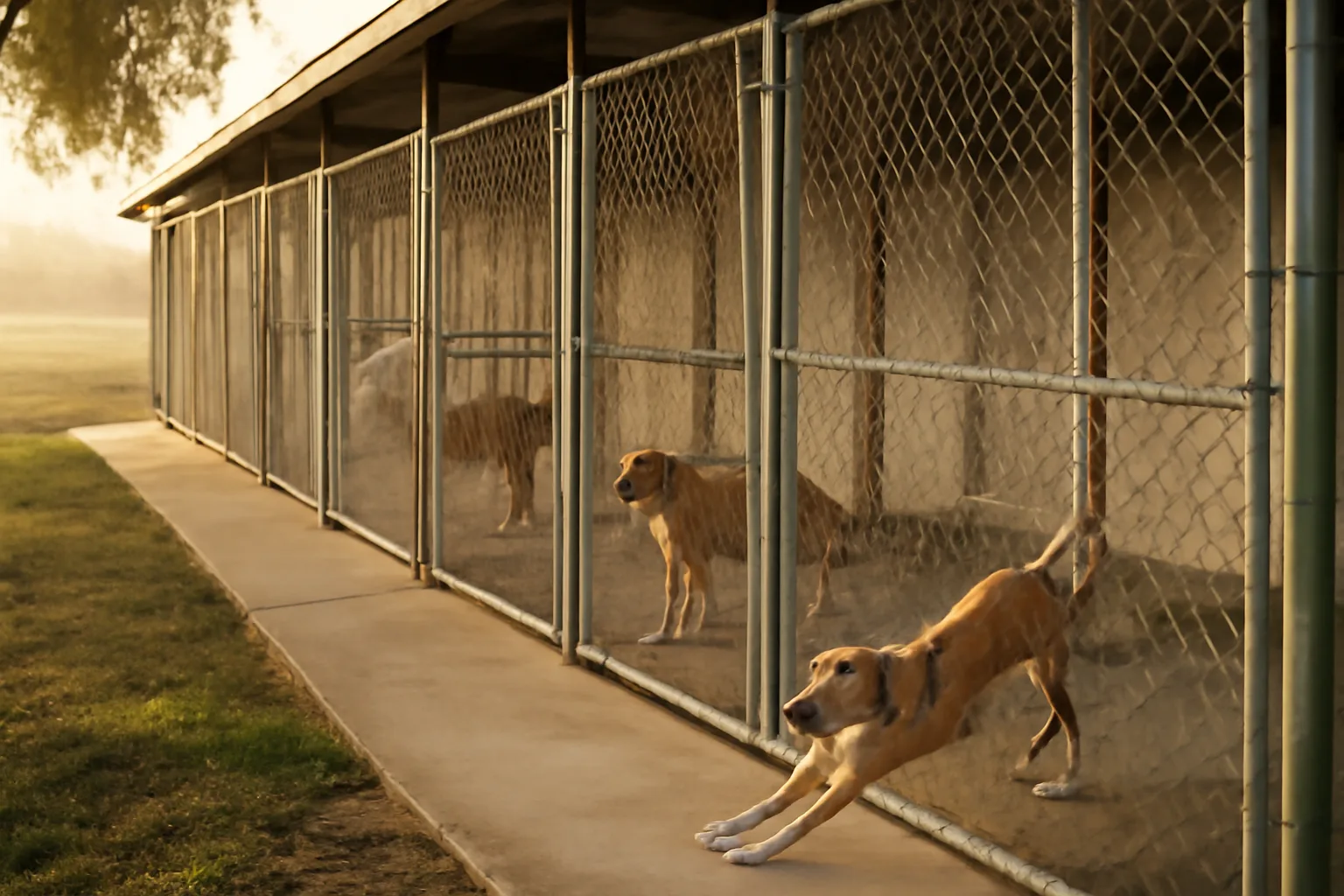
Ohio runs licensing at two levels that often surprise new operators: county and state. There's no single statewide "kennel license" that covers boarding, daycare, and breeding under one form. At the county level, Ohio Revised Code Chapter 955 requires dog owners to register dogs, and counties issue kennel licenses to facilities that house multiple dogs, through the county auditor's office, with enforcement handled by the county dog warden. The specific kennel license category and fee schedule is set by each county auditor under state law, so a kennel license in Franklin County looks different from one in Licking County in terms of paperwork and cost [1]. At the state level, if you breed and sell dogs commercially and meet certain thresholds (generally 9 or more breeding female dogs and selling 60 or more puppies a year), the Ohio Department of Agriculture requires a High Volume Breeder license under ORC 956, separate from any county kennel paperwork [2]. On top of both of those, your city or township zoning office decides whether a kennel, boarding facility, or daycare is even an allowed use on your parcel. That's a completely separate track from either license. Zoning trips up more first-time operators than the licensing paperwork itself. If you're building a facility from scratch, read up on dog kennels zoning basics before you sign a lease.
How do I register a dog in Ohio?
Every dog in Ohio over three months old needs an annual county dog license, per ORC 955.01. You register through your county auditor's office, in person, by mail, or often online through the auditor's dog license portal. Standard annual dog license fees run roughly $10 to $30 per dog depending on the county, though some counties offer permanent lifetime licenses for a higher one-time fee (commonly in the $80 to $130 range) [1]. You'll need proof of a current rabies vaccination in most counties, plus the dog's name, breed, and color. This individual dog license is different from a kennel license. If you're running a boarding or daycare facility, your own pets still need individual licenses, and any dogs you own for breeding need them too. A kennel license from the county is an additional, separate registration tied to operating a facility that houses multiple dogs, not a replacement for per-dog registration.
How do I get a kennel license for a boarding or daycare facility?
Start with your county auditor's office, since Ohio law (ORC 955.11 and related sections) gives counties authority to license kennels and set local kennel fee schedules. Call or check the auditor's website for the exact category, fee, and required paperwork for a commercial kennel versus a hobby kennel. Most counties want a facility inspection, proof of rabies vaccination for resident dogs, and a fee that scales with the number of dogs housed. Some counties, particularly ones with active dog warden programs, require the kennel to pass a facility check before the license issues, covering things like sanitation, ventilation, and secure fencing. Zoning approval usually comes before the kennel license, not after. Most townships and cities classify boarding kennels, dog daycares, and breeding operations under commercial or agricultural zoning, and many require a conditional use permit or variance if the parcel isn't already zoned for it. Expect a public hearing in front of a zoning board of appeals or planning commission in many jurisdictions. If you're prepping for that hearing, our dog boarding guide walks through what boards typically ask. Here's the realistic order of operations: 1. Confirm zoning allows a kennel/boarding use on your parcel (or apply for a conditional use permit) 2. Get your facility inspected and approved if your township or county requires it 3. Apply for the county kennel license through the auditor 4. Check whether you cross the ODA High Volume Breeder threshold or USDA dealer threshold if breeding is part of the business 5. Renew annually, since Ohio dog licenses and most kennel licenses run on a calendar or fiscal year basis, not indefinitely
How much does dog boarding cost to license and operate?
| County kennel license (annual) | $40 to $150+ (county-set) | |
|---|---|---|
| Individual dog licenses | $10 to $30/dog/year, or $80 to $130 lifetime | |
| Zoning application/variance fee | $150 to $1,500+ (municipality-set) | |
| Facility build-out (fencing, drainage, kennels) | $15,000 to $200,000+ depending on scale | |
| USDA APHIS license (if applicable) | $40 to $985 depending on business size | These are wide ranges on purpose. A backyard boarding operation with a fenced yard costs almost nothing to license beyond the kennel fee. A 50-run commercial daycare with commercial HVAC, drainage, and sound insulation is a real construction project. Check our pet boarding and doggy day care guides for facility-standard specifics before you budget. |
The license itself is the cheap part. County kennel license fees in Ohio commonly range from roughly $40 to $150 a year depending on the county and how many dogs the kennel houses, though you should confirm the exact number with your county auditor since ORC 955 lets counties set their own schedules [1]. The real cost of opening a boarding or daycare facility is in the build-out and zoning process, not the license fee. Budget for: | Cost category | Typical range |
How much is dog boarding for pet owners (and why it matters for your pricing)?
If you're setting rates, it helps to know what the market actually charges. Nationally, boarding a dog overnight commonly runs $30 to $85 a night depending on region, breed size, and whether the facility offers upgraded suites, though luxury or resort-style facilities in metro areas can run well above that. There's no single federal or Ohio state dataset tracking this precisely; pricing is set by the market, not regulated by ODA or any county. What is regulated is your capacity and how you're allowed to house dogs, which indirectly caps your revenue per square foot. Zoning conditions frequently specify maximum dog counts, noise mitigation requirements, and hours of operation, all of which affect how you price and staff. If you're comparing facility types, our dog hotels near me and dogtopia pages break down pricing tiers by facility model, from basic boarding to full daycare-and-training combos.
How do I become a licensed dog breeder in Ohio?
Ohio doesn't require a state license for someone breeding a small number of litters casually, but it does require a High Volume Breeder license once you cross specific thresholds. Under ORC 956.02, a "high volume breeder" is generally defined as someone who owns 9 or more female dogs capable of breeding and sells or transfers 60 or more puppies in a calendar year, whether directly or through a broker [2]. If you hit that threshold, the Ohio Department of Agriculture requires an annual license, a facility inspection covering space, sanitation, exercise, and veterinary care standards, and compliance with ORC 956's specific care requirements, things like minimum enclosure sizes and required veterinary exams. ODA publishes its High Volume Breeder rules and inspection standards, and licenses must be renewed annually with the state, separate from any county kennel license [2]. Below that threshold, you still need your county dog and kennel licenses if applicable, and you still need to comply with Ohio's general animal cruelty and care statutes, but you won't be on ODA's high volume breeder inspection cycle. Many small breeders stay under this threshold on purpose to avoid the added inspection burden, though that's a business decision, not a shortcut around basic animal welfare law. Zoning is still a separate question for breeders. Many rural townships treat breeding kennels as agricultural uses; some require conditional use permits even in ag-zoned areas if the operation is commercial. Confirm with your township or county zoning office before you build whelping facilities, since retrofitting a barn or accessory structure to meet both ODA standards and zoning setback rules after the fact gets expensive fast.
When do USDA APHIS rules apply to an Ohio breeder or boarding facility?
USDA APHIS licensing is a federal layer that sits on top of whatever Ohio requires, and it applies based on how you sell dogs, not where you're located. Under the Animal Welfare Act, if you're a breeder who sells dogs at wholesale (to pet stores, brokers, or research) or you sell dogs sight unseen (meaning the buyer never physically visits your facility, like most online or shipped sales), you generally need a USDA Class A or Class B license once you exceed a small number of breeding females. The federal regulation defining these terms, 9 CFR 1.1, describes a "retail pet store" exemption that applies only when buyers physically observe the animal on the premises before purchase [3]. If you ship puppies to buyers who never visit, or you sell through a broker or pet store chain, that exemption generally doesn't apply and a federal license is required regardless of your Ohio county or state status. USDA license fees are tiered by the gross annual sale amount of dogs. Under 9 CFR 2.6, annual license fees for Class A and Class B dealers range from $40 for the smallest operations up to $985 for the largest tier, with additional site inspection requirements [4]. This is a completely separate application, inspection, and renewal process from Ohio's ODA High Volume Breeder license. A breeder can be under ODA's threshold but still need a USDA license (or vice versa) depending on how many females you have and how you sell.
How do I get papers for a dog (AKC registration vs. a license)?
This trips up a lot of new breeders and buyers because "papers" and "license" are completely different things, issued by completely different organizations. A dog license (county) proves your dog is registered with local animal control and has a current rabies vaccination. "Papers" refers to breed registry documents, most commonly from the American Kennel Club (AKC), that establish a dog's pedigree and breed lineage. To get AKC papers for a litter, the breeder registers the litter with the AKC, which requires that both parents already have AKC registration (or are eligible for registration under AKC's rules), and pays a litter registration fee plus individual puppy registration fees. AKC is a private nonprofit registry, not a government agency, so this process has nothing to do with Ohio's county or state licensing system. There's no state or federal requirement to register a dog with any breed registry. If you bought a puppy and the breeder said it "comes with papers," that means AKC (or another registry like UKC) individual registration, transferred to your name, not a government dog license. You still need to get your county dog license separately regardless of whether your dog has breed registry papers.
How do I register a dog with a breed registry?
If you're the buyer and want to register your puppy with AKC after purchase, the breeder should give you an AKC registration application (paper or a code for online registration) at the time of sale. You fill in your information, pay the individual registration fee, and mail it in or submit online through AKC's own system. If you're a breeder trying to register a litter for the first time, you'll need to establish that the litter is eligible, meaning both parents are individually registered with AKC (or with a registry AKC recognizes for foundation stock), and then file a litter registration application listing the sire, dam, whelping date, and number of puppies. None of this substitutes for your county dog license or, if applicable, your ODA High Volume Breeder license or USDA APHIS license. Breed registry paperwork and government licensing run on completely separate tracks, and a dog can be fully AKC registered while its owner is out of compliance with county licensing, or vice versa.
What zoning issues come up most for Ohio kennels and daycares?
Zoning is where most Ohio kennel and daycare projects actually stall, not the licensing paperwork. Township and municipal zoning codes in Ohio vary enormously, since Ohio gives significant zoning authority to individual townships and municipalities rather than centralizing it at the county or state level. Common sticking points include noise (barking complaints are the number one reason neighbors show up to zoning hearings), minimum lot size or setback requirements for outdoor runs, parking requirements for a commercial daycare, and whether the use is even permitted by right or requires a conditional use permit with a public hearing. Rural township zoning tends to be more permissive for kennels classified as agricultural uses. Suburban and urban zoning almost always requires a conditional use permit or special exception, plus a hearing where neighbors can object. Before you sign a lease or buy land, call the township or city zoning office directly and ask, in writing if possible, whether "commercial dog boarding kennel" or "dog daycare" is a permitted use, conditional use, or not allowed at all on that specific parcel's zoning district. Getting this in writing early saves you from a build-out you can't legally operate. This is genuinely the step where a packet built for your specific hearing, like the $149 Kennel License & Zoning Packet at kennelpermit.com/license-packet-builder, earns its cost, since a denied conditional use application often means starting the whole process over months later.
What facility standards does an Ohio kennel need to meet?
Facility standards depend on which regulatory layer applies to you. If you're under ODA's High Volume Breeder threshold, ORC 956 and its administrative rules set specific requirements for cage and enclosure size (scaled to the dog's size), temperature control, sanitation and waste removal, exercise access, and required veterinary care intervals [2]. If you're subject to USDA APHIS licensing because you sell wholesale or sight-unseen, the federal Animal Welfare Act regulations at 9 CFR Part 3, Subpart A set a separate, and in some areas more detailed, facility standard covering primary enclosure dimensions, ventilation, lighting, drainage, and a written veterinary care program that APHIS inspectors check during site visits [5]. County kennel licenses typically don't specify detailed facility construction standards in the statute itself; that's usually left to the county dog warden's judgment during inspection, or to your township's zoning conditions. This is the part of Ohio's system that's genuinely confusing for new operators: you can be fully compliant with your county kennel license and still fail a zoning conditional use review, or meet zoning conditions and still fail a state or federal inspection, because each layer checks different things.
Frequently asked questions
How much does dog boarding cost to license in Ohio?
The county kennel license itself typically runs $40 to $150 a year, set individually by each county auditor under ORC 955. That's separate from build-out costs, zoning fees, and any state ODA or federal USDA licensing that applies if breeding is part of your business. Call your specific county auditor for the exact fee schedule.
How do I register a dog in Ohio if I just adopted one?
Register through your county auditor's office within 30 days of acquiring a dog over three months old, per ORC 955.01. You'll need proof of current rabies vaccination and pay the annual fee, typically $10 to $30, or a higher one-time lifetime license fee in some counties.
How much is dog boarding for a customer, roughly?
Nationally, overnight boarding commonly runs $30 to $85 a night depending on region and facility type, with resort-style suites priced higher. Ohio doesn't regulate boarding prices; this is market-set, so your local competitors and your facility's amenities determine realistic pricing, not any state agency.
How do you get a dog papers after buying a puppy?
"Papers" means breed registry documents like AKC registration, not a government license. The breeder should provide an AKC registration application or online code at time of sale; you submit it with the registration fee to transfer the puppy into your name. This has nothing to do with your county dog license, which you still need separately.
How do you register a dog with AKC as a breeder?
Both parents need existing AKC registration or eligibility, then you file a litter registration listing the sire, dam, whelping date, and puppy count, paying AKC's litter and individual registration fees. This is a private registry process, unrelated to Ohio's county kennel license or the ODA High Volume Breeder license.
How do I become a dog breeder in Ohio legally?
Comply with your county dog and kennel license requirements, confirm your zoning allows a breeding kennel, and check whether you hit ODA's High Volume Breeder threshold (9+ breeding females and 60+ puppies sold annually under ORC 956) or USDA APHIS's wholesale/sight-unseen thresholds. Below those thresholds, general animal care law still applies.
How do I get a dog license in Ohio if I live in an unincorporated area?
The county auditor's office handles dog licensing regardless of whether you're in an incorporated city or unincorporated township, since it's a county-level requirement under ORC 955. Contact your specific county auditor's dog license division for their application and rabies vaccination proof requirements.
How do I get papers for my dog if the breeder never gave me any?
If the breeder promised registry papers and never delivered them, contact the breeder first; AKC can sometimes trace registration through the litter if the breeder registered the litter but not the individual puppy. Without breeder cooperation, a dog can't retroactively get AKC papers; you'd need documentation of parentage the registry accepts.
What's the difference between a kennel license and a breeder license in Ohio?
A county kennel license (via your county auditor, ORC 955) covers operating a facility housing multiple dogs, including boarding and daycare. A state High Volume Breeder license (ODA, ORC 956) is separate and only required if you breed commercially above specific thresholds. You may need one, both, or neither depending on your business.
Does Ohio require a state kennel license for boarding facilities?
No. Ohio's kennel licensing for boarding and daycare facilities happens at the county level through the county auditor, not through a statewide license. The Ohio Department of Agriculture's state-level license (High Volume Breeder) applies specifically to commercial breeders above certain thresholds, not to boarding or daycare operators.
When does USDA licensing apply to an Ohio dog breeder?
USDA APHIS licensing applies if you sell dogs wholesale (to brokers, pet stores, or research) or sell sight-unseen to buyers who never visit your facility, generally once you exceed a small threshold of breeding females. It's a federal requirement independent of Ohio's county or ODA licensing, with its own inspection and fee schedule ($40 to $985 annually) under 9 CFR 2.6.
Do I need zoning approval before applying for an Ohio kennel license?
Practically, yes. Most county auditors and dog wardens won't finalize a kennel license without confirming the use is zoned properly, and townships or cities often require a conditional use permit and public hearing first. Confirm zoning status with your local zoning office before applying for the county kennel license.
Sources
- Ohio Revised Code Chapter 955 (Dogs): County-level dog registration and kennel licensing requirements, fees set by county auditors
- Ohio Revised Code Chapter 956 (High Volume Breeders): State High Volume Breeder license threshold (9+ breeding females, 60+ puppies/year) and ODA facility standards
- 9 CFR 1.1, Definitions (Animal Welfare Act regulations): Retail pet store exemption definition requiring buyers to physically observe animals before purchase
- 9 CFR 2.6, License fees: Tiered USDA license fee schedule ranging from $40 to $985 depending on annual dog sales
- 9 CFR Part 3, Subpart A (Specifications for humane handling, care, treatment of dogs): Federal facility standards for enclosure size, ventilation, lighting, drainage, and veterinary care for dog dealers