Last updated 2026-07-24
TL;DR
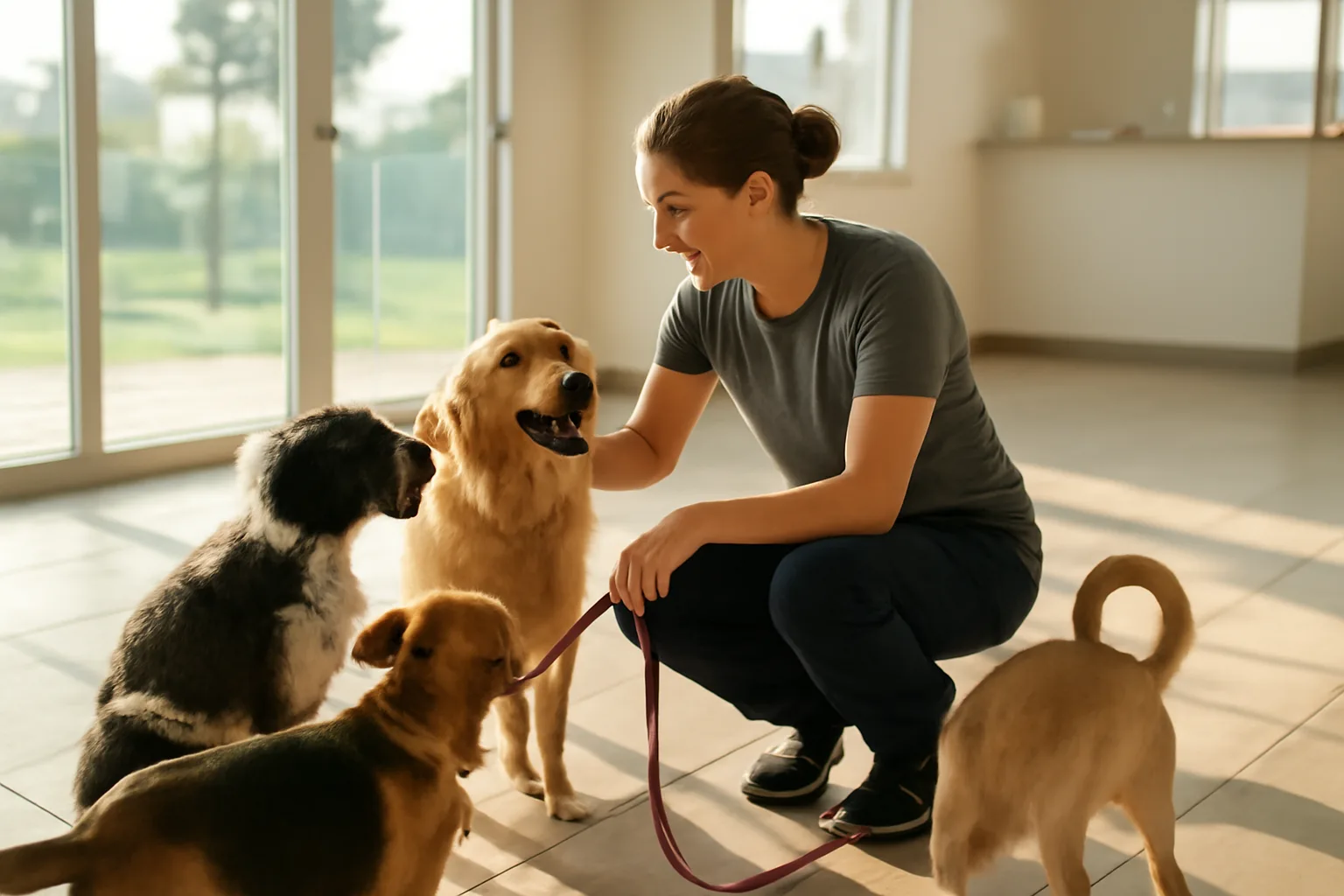
A pet day-care center is a licensed animal facility that supervises dogs (sometimes cats) during business hours without overnight boarding. Costs run $25 to $65 a day per dog for care; opening a facility means state or local kennel/commercial animal establishment licensing, county zoning approval, and (if you breed and sell) possible USDA APHIS registration once you cross the retail-sale threshold.
What is a pet day-care center, exactly?
A pet day-care center is a facility that takes dogs (and sometimes cats) for supervised care during the day, typically dropped off in the morning and picked up in the evening, with no overnight stay. That's the main line separating it from boarding or a kennel: day-care is hours, boarding is nights. Most states don't have a separate legal category called "day-care." They regulate it under broader terms like "animal establishment," "commercial kennel," or "pet care facility," and the same license often covers day-care, boarding, and grooming under one roof. New York, for example, licenses "pet dealers" and related animal facilities under Article 26-A of the Agriculture and Markets Law, and the specific paperwork depends on what services you offer [1]. The practical upshot: before you name your business, find out what your state calls this activity. Some jurisdictions license day-care separately from boarding kennels with different fee tiers and inspection frequency; others lump everything together. This affects your fee, your inspection checklist, and sometimes your insurance requirements. If you're also boarding overnight, read the difference in requirements over on dog boarding and pet boarding, since combined facilities usually need to meet the stricter of the two rule sets.
How much does dog boarding and day-care cost?
| Day-care (single day) | $25-$65 | Higher in major metros |
|---|---|---|
| Overnight boarding | $35-$85/night | Varies by suite type, region |
| Add-on grooming | $20-$60 | Priced separately at most facilities |
| Multi-dog/package discounts | 5-15% off | Common but not universal |
Day-care in the US generally runs $25 to $45 a day in mid-size markets, and $50 to $65+ a day in cities like New York, San Francisco, or Los Angeles. Overnight boarding costs more, typically $35 to $85 a night depending on region, dog size, and whether the facility offers private suites versus shared kennel runs. There's no single federal price survey for pet care, so these ranges come from aggregated marketplace data rather than a government source. Rover, one of the largest booking platforms, publishes rate guidance suggesting boarding sitters commonly charge in the $25 to $75 per night range depending on city and dog size, with day-care often priced lower per visit than overnight stays [2]. Franchise operators like Dogtopia set day-care pricing per location, often in the $35 to $50 range for a full day, though exact pricing is set locally, not nationally, so check specific locations rather than assuming a flat number. See our breakdown at dogtopia for how franchise pricing compares to independent shops. For operators, the pricing question isn't just what to charge; it's what it costs you to run a day of care. Staffing ratios (commonly one handler per 10 to 15 dogs, though this varies by state and by facility policy), square footage per dog, and liability insurance premiums all eat into that day-care fee before you see profit. Budget conservatively. Many new operators underestimate labor cost in the first year. | Service | Typical range | Notes |
What licenses do you need to open a pet day-care center?
You'll typically need three layers of approval: a state or local commercial kennel/animal establishment license, a county or city business license, and zoning clearance for the specific address. None of these are optional, and skipping any one of them is the most common reason new operators get shut down mid-buildout. State-level licensing varies enormously. Some states (Pennsylvania is a well-known example) require a kennel license for any facility housing a certain number of dogs, administered through the state's Bureau of Dog Law Enforcement, with license categories based on dog capacity [3]. Other states have no state-level kennel license at all and push licensing entirely to the county or municipality. There is no substitute for checking your specific state department of agriculture page. County and city rules add a second, often stricter, layer. Zoning determines whether "kennel" or "animal care facility" is even an allowed use in your commercial or industrial zone, and many counties require a conditional use permit with a public hearing before they'll approve a day-care operation, especially one with outdoor runs or overnight capability. This is where most delays happen: hearings can take 60 to 120 days depending on the jurisdiction's public notice requirements. A one-time packet approach, like our $149 Kennel License & Zoning Packet at /license-packet-builder, can help you organize the state license application, the zoning submission, and the facility standards checklist into one file before you walk into a county office, but it doesn't replace reading your specific state statute or talking to your zoning office directly. We aren't a law firm and don't represent anyone before a zoning board; treat any packet as an organizing tool, not legal advice.
How do you register a dog with the state or county?
Registering a dog usually means two separate things: rabies vaccination registration (sometimes called dog licensing) with your county or city, and, if relevant, breed registry paperwork with an organization like the AKC. For a day-care center, what matters operationally is the first one, because most facilities require proof of current rabies vaccination and often a county dog license or tag before they'll accept a dog. County dog licensing requirements are set locally, not federally. A typical process: the owner brings proof of rabies vaccination (from a licensed veterinarian) to the county clerk or animal control office, pays a fee (commonly $10 to $25 for altered dogs, sometimes higher for unaltered dogs), and receives a tag and a license valid for one to three years depending on the county. Some counties tie license length directly to the rabies vaccine's duration (1-year or 3-year vaccine). As a day-care operator, you're not the one registering the dog, but you should require it as an intake condition. Ask for the county tag number or a copy of the rabies certificate at drop-off, and keep it on file. This protects you legally if a bite incident happens and matters for your liability insurance underwriting too. If you're asking "how do I register a dog" as a pet owner rather than an operator, contact your county clerk's office or local animal control; the process is a five-minute paperwork errand once you have the rabies certificate in hand, not something that requires a lawyer or an agency.
How do you get papers for a dog, and what does that mean?
"Getting papers" for a dog usually means one of two very different things: AKC (or another breed registry) registration proving pedigree, or basic ownership/vaccination documentation. People conflate these, so it helps to separate them clearly. AKC registration papers apply only to purebred dogs from a litter where at least one parent is already AKC-registered, or where the breeder has registered the litter. If you bought a puppy from a breeder, the breeder should provide an AKC Dog Registration Application (commonly called a "blue slip") at the time of purchase; you then complete and submit it to the AKC, along with the registration fee, to get the dog's individual papers in your name. If your breeder didn't give you this form, contact them directly first; the AKC cannot manufacture pedigree history that wasn't recorded at the litter level. If you're asking about "papers" in the sense of basic legal ownership or health documentation (not breed pedigree), that means your rabies certificate, county license, and a vet health record, not an AKC form. There's no pedigree paperwork required to own, board, or day-care a mixed-breed dog. Day-care centers generally only ask for vaccination records and behavioral/temperament information, never breed registry papers. If your dog's parents weren't registered and you want "papers" purely for a sense of legitimacy, know that AKC and other registries only track lineage; they don't add pedigree retroactively. Mixed-breed dogs can still get a Purebred Alternative Listing or Canine Partners enrollment from AKC for event participation, which is a different, non-pedigree path.
How do you become a dog breeder, legally?
Becoming a legal dog breeder means clearing three layers: state breeder licensing (if your state requires one), local zoning/kennel rules, and, if you sell enough dogs directly to the public without a face-to-face transaction, USDA APHIS registration. State rules vary sharply. Some states license "commercial breeders" once you exceed a set number of breeding females or litters per year, often with an inspection and a fee. Others have almost no state-level breeder-specific law and rely entirely on general kennel or animal welfare statutes. There is genuinely no universal number here; you must check your specific state department of agriculture page before assuming a threshold. The federal layer is more concrete. Under the Animal Welfare Act, breeders who sell dogs sight unseen (online, by phone, or through a third party, where the buyer never physically inspects the animal or the breeding facility before purchase) and who have more than four breeding females may need to register with USDA APHIS as a dealer, unless they qualify for a retail pet store exemption. The Animal Welfare Act regulations define this dealer category and its exemptions at 9 CFR Part 1, Section 1.1 [4]. Zoning is often the part new breeders underestimate. Many residential zones cap the number of dogs allowed per household or explicitly prohibit "kennel" uses, which can include a breeding operation once you exceed a certain dog count, regardless of whether you sell puppies commercially. Check your county zoning office before you commit to a breeding program at a residential address; a conditional use permit or a rezoning may be required, and public hearing notice requirements can add months to your timeline.
What is the USDA APHIS threshold for dog breeders and sellers?
The federal Animal Welfare Act threshold that matters most for breeders is this: if you have more than four breeding females and sell dogs sight unseen (without the buyer or their agent seeing the animal in person before purchase), you generally must register with USDA APHIS as a dealer [4]. The regulation's retail pet store exemption, defined at 9 CFR 1.1, only covers face-to-face sales; anyone selling animals over the internet, by phone, or by mail without an in-person transaction falls outside that exemption once they exceed the breeding female threshold [4]. This is why breeders who sell only locally, in person, at their own home or a local pickup, often stay outside USDA jurisdiction even at higher volume, while breeders shipping puppies to out-of-state buyers cross into federal registration territory much faster. APHIS licensing has two tiers: a Class A license (breeders who sell animals they've bred and raised) and a Class B license (dealers, brokers, and those who buy and resell animals bred by others), as set out in 9 CFR 2.1 governing requirements for a license . Fees are set by federal rulemaking and tied to the number of animals and dollar volume of the business; the fee structure itself is codified at 9 CFR 2.6 . Once you're APHIS-licensed, expect unannounced inspections, recordkeeping requirements (health certificates, acquisition and disposition records), and facility standards for space, ventilation, and temperature control that are more specific than most state kennel codes. This is a real compliance lift, not a rubber stamp; budget both money and calendar time for it.
How much does it cost to get a dog license (for pet owners)?
A basic county dog license, separate from any breeder or kennel license, typically costs $10 to $25 a year for an altered (spayed/neutered) dog and $20 to $50 or more for an unaltered dog in many counties, though exact numbers are set locally and some counties charge flat fees regardless of alteration status. Some jurisdictions offer multi-year licenses tied to a 3-year rabies vaccine, which can lower the effective annual cost. This is a completely different fee from a commercial kennel or day-care facility license, which is what an operator pays, often ranging from roughly $50 to several hundred dollars a year depending on the state and the number of dogs housed. Pennsylvania's kennel license fee schedule, for instance, is tiered by the number of dogs a kennel is licensed to house, with higher tiers costing more per year [3]. Don't confuse a $15 individual dog license with the several-hundred-dollar commercial kennel license. They solve different problems and go to different agencies. If you're a pet owner just trying to license your own dog, skip the state agriculture department entirely and go straight to your county clerk, county treasurer, or local animal control office; that's almost always where individual dog licensing is handled, not at the state level.
Do you need zoning approval to open a pet day-care center?
Yes, almost always. Zoning determines whether a "kennel," "animal care facility," or "day-care for animals" use is permitted, conditionally permitted, or outright prohibited in the zoning district covering your chosen address, and this approval is separate from, and usually required before, your state or county business license will be issued. Many municipalities classify pet day-care under commercial or light-industrial zoning and require a conditional use permit (sometimes called a special use permit) rather than allowing it outright, which typically means a public hearing where neighbors can comment on noise, traffic, and odor concerns. Barking complaints are the single most common reason zoning hearings for day-care and boarding facilities get contested, so operators who show up with a real noise mitigation plan (sound-dampening construction, outdoor run scheduling, staggered play groups) tend to fare better at hearings than those who don't address it at all. Timing matters here more than most new operators expect. Between application submission, public notice periods (often 15 to 30 days minimum before a hearing), and the hearing itself, a conditional use process can take two to four months from start to finish, sometimes longer if the board requests revisions or a continuance. Build this into your lease negotiation and your opening timeline; signing a lease assuming a 30-day zoning turnaround is a common and expensive mistake. Our license-packet-builder is built around organizing the documents a zoning hearing typically asks for (site plan, noise mitigation summary, state license application status, facility standards checklist) into one packet, but it can't predict how a specific board will vote and it's not a substitute for attending the hearing yourself or hiring local counsel if the project is contested.
What facility standards do inspectors check at a day-care center?
Inspectors generally check five things: cleanliness and sanitation, ventilation and temperature control, enclosure size and construction, staff-to-dog supervision ratios, and recordkeeping (vaccination proof, incident logs). The exact checklist depends on whether you're inspected under state kennel law, a county health/animal control code, or (if applicable) USDA APHIS standards. USDA's Animal Welfare Act regulations, which apply if you're APHIS-licensed, set specific numeric standards: primary enclosures must provide enough space for the dog to turn around freely, stand, sit, and lie in a normal position, and indoor housing facilities must be maintained at an ambient temperature not lower than 50°F for dogs not acclimated to lower temperatures, per 9 CFR Part 3 [5]. Most state kennel codes borrow similar language even when they're not federally regulated, so treating the federal standard as your baseline is a reasonable practice even if you're not APHIS-licensed. Sanitation inspection typically covers daily waste removal, disinfection schedules for hard surfaces, and adequate drainage; standing water or ammonia smell during an inspection is close to an automatic red flag. Fire and life-safety inspectors (a separate visit from your animal welfare inspector in most jurisdictions) will also check exits, sprinkler coverage if required by occupancy classification, and emergency evacuation plans specific to housing live animals, which is a detail many first-time operators forget to plan for. For more on how supervision ratios and enclosure sizing translate into actual facility layout, see dog kennels and doggy day care.
How is a day-care center different from a boarding kennel or dog hotel?
The core difference is overnight stay: day-care means dogs go home each evening, boarding and "dog hotels" mean dogs stay overnight, sometimes for multiple nights or weeks. This distinction matters for licensing because many states and counties apply different (often stricter) facility standards to overnight boarding, since overnight care implies unattended hours, fire safety concerns during closed hours, and different staffing coverage requirements. A growing number of facilities market themselves as "dog hotels" to signal a more upscale, suite-based overnight experience, but legally they're still boarding kennels subject to the same state and local licensing as a traditional kennel. If you're comparing the two models for your own business plan, dog hotels near me covers how consumer expectations and pricing differ from standard boarding, and pet boarding covers the licensing side in more depth. Operationally, many businesses run both models under one roof: day-care during the week, boarding on weekends and holidays. If that's your plan, get licensed for the stricter standard from day one. Retrofitting a day-care-only facility to add overnight boarding later often means a second zoning review and a new fire inspection, which costs more in delay than building to the higher standard up front.
What's the realistic timeline to open a pet day-care center?
Plan for four to nine months from lease signing to opening day, depending on whether your zoning approval requires a public hearing and how quickly your state or county processes the kennel/animal establishment license application. Facilities that need a conditional use permit run toward the longer end; those in already-zoned commercial spaces with straightforward state licensing can move faster. A rough sequence: zoning research and site selection (2-6 weeks), lease negotiation with zoning contingency (2-4 weeks), zoning application and hearing (60-120 days depending on jurisdiction), state/county license application (often runs in parallel with zoning, 2-8 weeks processing time), buildout and fire/life-safety inspection (4-12 weeks depending on construction scope), and final animal welfare inspection before opening (1-4 weeks after buildout completion). The single biggest schedule risk is signing a lease before confirming zoning will approve your specific use at that address. Get written confirmation from the zoning office, even an informal pre-application letter, before you sign anything with a landlord.
Frequently asked questions
How much does dog boarding cost per night?
Overnight dog boarding typically costs $35 to $85 per night depending on region, dog size, and suite type, with major metro areas at the high end. Day-care (no overnight stay) usually runs $25 to $65 per day. These are marketplace-derived ranges, not a fixed government rate; check local providers for exact current pricing.
How do I register a dog with the county?
Bring proof of current rabies vaccination from a licensed veterinarian to your county clerk, treasurer, or animal control office, pay the license fee (commonly $10 to $25 for altered dogs), and receive a tag valid for one to three years. This is separate from AKC breed registration and is handled locally, not federally.
How do I get papers for my dog if the breeder didn't give me any?
Contact the breeder first; only they (or the AKC, using litter records the breeder filed) can issue an official registration application. If the litter was never registered, there is no way to retroactively create pedigree papers. Mixed-breed or unregistered dogs can still enroll in AKC Canine Partners for event participation, which doesn't require pedigree papers.
How do you become a licensed dog breeder?
Check your state department of agriculture for breeder licensing rules (thresholds vary by state), confirm your property is zoned for a kennel or breeding operation with your county zoning office, and register with USDA APHIS if you sell dogs sight unseen and keep more than four breeding females. All three layers can apply at once.
What is the USDA APHIS four-female threshold?
Under Animal Welfare Act regulations, breeders with more than four breeding females who sell dogs sight unseen (online, by phone, without in-person buyer inspection) generally must register with USDA APHIS as a dealer, since they fall outside the retail pet store exemption defined at 9 CFR 1.1. Breeders selling only face-to-face often remain exempt regardless of volume.
Do I need a business license to run a pet day-care out of my home?
Almost certainly yes, plus zoning clearance. Residential zoning often prohibits or caps commercial animal care use, even in-home. Check your county zoning office before accepting paying clients; running an unlicensed home day-care is one of the most common code enforcement complaints in residential neighborhoods.
How long does zoning approval take for a pet day-care center?
Plan for 60 to 120 days if a conditional use permit and public hearing are required, less if your site is already zoned for commercial kennel use outright. Public notice periods alone often run 15 to 30 days before a hearing can even happen. Get zoning confirmation before signing a lease.
What's the difference between a dog license and AKC registration papers?
A dog license is a local government tag proving rabies vaccination and ownership, costing roughly $10 to $25 a year through your county. AKC papers are pedigree registration proving purebred lineage, issued only for dogs from AKC-registered litters. They serve completely different purposes and come from different issuers.
How much does a commercial kennel or day-care license cost?
Commercial kennel/animal establishment licenses vary by state, often ranging from roughly $50 to several hundred dollars annually, frequently tiered by the number of dogs housed. Pennsylvania, for example, tiers its kennel license fee by capacity. Always check your specific state department of agriculture fee schedule; there's no single national rate.
What temperature and space standards apply to day-care facilities?
Under federal Animal Welfare Act regulations (9 CFR Part 3), enclosures must let a dog turn around, stand, sit, and lie down normally, and indoor facilities must stay at least 50°F for non-acclimated dogs. These are the federal baseline for APHIS-licensed facilities; many state kennel codes use similar language even without federal jurisdiction.
Can I board and day-care dogs in the same facility?
Yes, many operators run both, but you should license and build to the stricter overnight-boarding standard from the start. Adding overnight boarding later to a day-care-only facility often triggers a second zoning review and a new fire/life-safety inspection, which usually costs more in delay than building to the higher standard up front.
Do I need USDA approval to run a pet day-care center (not a breeding operation)?
No. USDA APHIS licensing applies to breeders and dealers under the Animal Welfare Act, not to day-care or boarding facilities that don't breed or sell animals. Day-care centers are regulated by state and local kennel/animal establishment law and zoning, not federal APHIS registration.
Sources
- New York State Senate, Agriculture and Markets Law Article 26-A: New York licenses pet dealers and related animal facilities under Article 26-A
- Rover, How Much to Charge for Dog Boarding: Boarding rate ranges commonly cited by a major booking marketplace
- Pennsylvania Department of Agriculture, Dog Law Kennel Fee Schedule (Title 3, Pa.C.S. Chapter 34): Pennsylvania kennel license fees are tiered by number of dogs housed
- eCFR, Title 9 CFR 1.1, Definitions (retail pet store exemption and dealer): Animal Welfare Act licensing requirements for breeders and dealers, including the four-breeding-female and sight-unseen sale criteria
- eCFR, Title 9 CFR Part 3, Subpart A - Specifications for Humane Handling, Care, Treatment of Dogs: Federal enclosure size and temperature standards for licensed dog facilities
- eCFR, Title 9 CFR 2.1, Requirements and Application for a License: APHIS distinguishes Class A breeder licenses from Class B dealer/broker licenses
- eCFR, Title 9 CFR 2.6, Licensing Fees: APHIS license fees are tiered by license class and set by federal schedule