Last updated 2026-07-26
TL;DR
A dog boarding license isn't one national permit; it's a stack of local, county, and sometimes state approvals for the building where you board dogs commercially. Costs typically range from about $25 for a basic county permit to several hundred dollars once you add zoning, fire, and state kennel licensing. Facilities that also sell dogs across state lines may trigger separate USDA APHIS licensing.
What is a boarding license for dogs, exactly?
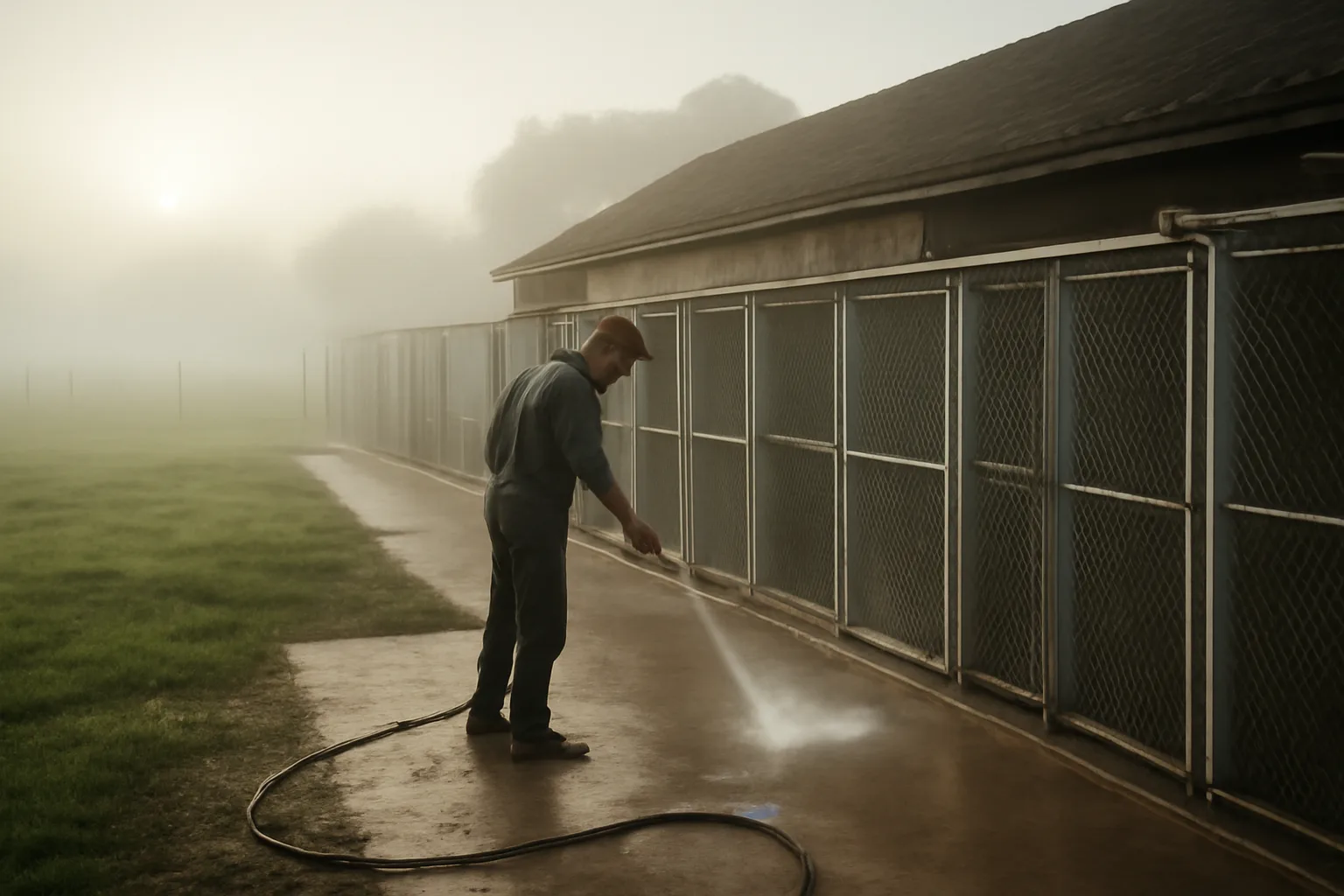
A "boarding license for dogs" almost always means the local or state permit that lets you legally operate a commercial dog boarding, daycare, or kennel facility, not a license for an individual pet. That's a different thing (more on pet licensing below). The boarding license usually bundles a few approvals: a business license from your city or county, a zoning approval or conditional use permit confirming the property can host a kennel-type business, a health or fire inspection, and, in many states, a state-level kennel or commercial pet care license through the department of agriculture or a similar agency. There's no single federal boarding license for dogs that stay overnight and go home with the same owner. The U.S. Department of Agriculture (USDA) does license commercial breeders and certain dealers under the Animal Welfare Act, but pure boarding and daycare for pet owners generally sits outside USDA's licensing scope unless the facility is also breeding or selling animals across state lines. The Animal Welfare Act regulations define who needs a license, and boarding kennels caring for owned pets are not on that list [1]. That distinction trips up a lot of new operators who assume "USDA license" and "boarding license" are the same thing. They're not. What you actually need depends entirely on where the building sits. Some states require a kennel or commercial pet care license issued by the state, county, or a state-chartered dog control law; others leave nearly all of it to the county or city, with no separate state kennel license at all. New York, for example, regulates dog licensing and kennel definitions under Agriculture and Markets Law Article 7 [2]. That's why the first call you make should be to your county zoning office, not a search engine.
How much does dog boarding cost (to run a business, more than board a dog)?
| Local business license | $25 to $150/year | City or county clerk | |
|---|---|---|---|
| Zoning/conditional use permit | $100 to $1,000+ (one-time) | County/city planning department | |
| State kennel license | $25 to $300/year, often scaled by number of dogs | State department of agriculture | |
| Building/fire inspection | $50 to $300 | Local fire marshal or building dept | |
| USDA license (if breeding/selling triggers it) | $40 to $985/year, tiered by gross sales | USDA APHIS | For a concrete federal example, USDA APHIS's own fee schedule for Animal Welfare Act licensees tiers the annual license fee by total gross sales and number of animals, running from $40 at the low end up to $985 for the largest operations [3]. New York requires kennels and pet dealers, as defined under state agriculture law, to be licensed with fees set by statute and by county clerk schedules [2]. Add it up and a realistic all-in licensing cost for a small-to-mid boarding facility runs somewhere between $200 and $2,000 before you spend a dime on renovations, fencing, or fire suppression upgrades that zoning or building codes might require. Rural counties with light zoning tend to sit at the low end. Urban and suburban jurisdictions with conditional use hearings sit at the high end, sometimes well above $2,000 once legal and hearing prep costs are included. |
If you're asking how much dog boarding costs as a service to pet owners, national estimates put average overnight boarding somewhere between $30 and $85 per night depending on region, with luxury "dog hotel" suites running higher. That's the consumer-facing price and it varies wildly by market; a home-based kennel in a rural county charges nowhere near what a boutique facility in a major metro charges. But if you're asking what it costs to get licensed and open a boarding business, the numbers look different and are far more knowable because they come from government fee schedules. Here's a rough range based on real published fee structures: | Fee type | Typical range | Who charges it |
How do I get a boarding license for my facility, step by step?
Start with zoning, not the license application. Most operators do this backwards, they fill out a state kennel license form first and then discover their property isn't zoned for a commercial kennel at all. 1. Call your county or city zoning office and ask directly: "Is a commercial dog boarding or daycare facility a permitted use, a conditional use, or prohibited on this parcel?" Get the answer in writing if you can. 2. If it needs a conditional use permit (very common for kennels), you'll likely go through a public hearing. Neighbors get notified. Bring a site plan, noise mitigation details, and a waste management plan. 3. Apply for your state kennel/commercial pet care license if your state requires one. Check with your state department of agriculture; some states fold this into a general business license, others have a dedicated kennel license unit. 4. Schedule your fire and building inspections. Kennels often trigger extra requirements: fire suppression, ventilation for animal areas, fenced outdoor runs with specific setback distances from property lines. 5. Get your local business license/EIN and any sales tax registration if you're selling retail goods alongside boarding. 6. If you also breed and sell dogs (more than board them), check whether you cross the USDA threshold covered below. A useful shortcut here: the dog boarding overview covers state-by-state licensing patterns if you want to compare requirements before you commit to a location. If you're specifically doing daycare rather than overnight boarding, some jurisdictions treat that as a distinct use category with its own rules; see doggy day care for how that plays out.
Do I need a USDA license to board or breed dogs?
Usually not for boarding alone. The Animal Welfare Act and its regulations (9 CFR Chapter I) license "dealers," "exhibitors," and certain breeders, not standard pet boarding or daycare operators who care for owned pets temporarily [1]. USDA APHIS's licensing scope covers those who breed and sell dogs, particularly wholesale, to pet stores, brokers, or research, not kennels that board people's existing pets. Where it gets relevant to boarding operators: if your facility also breeds dogs and sells puppies, especially sight unseen or across state lines, you may need a USDA license once you exceed certain thresholds. As of the 2013 rule change to the definition of "retail pet store," breeders who sell more than 4 breeding female dogs and sell puppies sight unseen (the buyer never physically inspects the animal or the facility before purchase) generally need a USDA license, unless they qualify for a specific exemption [1]. Retail pet stores selling only in person are typically exempt. 9 CFR 1.1 defines a "retail pet store" for purposes of this exemption and spells out that a person selling animals sight unseen, without the buyer personally observing the animal before purchase or taking custody, does not qualify for the retail pet store exemption once they exceed the breeding female threshold [1]. That sight-unseen sales trigger, combined with the four-female threshold, is the single most important number in this entire topic for anyone straddling boarding and breeding. If you're building a kennel business that includes a breeding program, don't treat USDA licensing as an afterthought. Inspections are unannounced. Recordkeeping requirements are specific: individual animal records, veterinary care documentation, facility standards under 9 CFR Part 3. Penalties for operating unlicensed when required can include civil penalties under the Animal Welfare Act's enforcement provisions, 7 U.S.C. 2149, which authorizes fines up to $10,000 per violation [1]. For readers building a breeding-adjacent facility, our dog kennels guide covers facility standards that overlap between boarding and breeding operations.
How is a business boarding license different from registering or licensing a pet dog?
This confusion comes up constantly, so it's worth separating clearly. A pet dog license (sometimes called dog registration) is a small annual tag program run by counties or cities, usually $10 to $25 a year, required for any dog owner regardless of whether they run a business. It funds animal control and rabies tracking. A commercial boarding license is a business permit that lets you operate a facility caring for other people's dogs for money. They are unrelated paperwork tracks, though a boarding facility owner still needs to license their own personal dogs under the same local rules as anyone else. Many county websites use the word "license" for both, which is exactly why people search "how to get a dog license" and "boarding license for dogs" and land on completely different pages. If you're trying to register your own pet, that's a rabies vaccination certificate plus a trip to your county clerk or animal control office, typically renewed annually or every three years depending on local rabies vaccine protocols. If you're trying to open a business that boards other people's dogs, that's the zoning-plus-state-kennel-license process described above. A fast way to tell which one you need: are you paying to register your own pet as a resident dog owner, or are you asking permission to run a facility? The first is pet licensing. The second is commercial kennel/boarding licensing, and that's the one with zoning hearings, fire inspections, and, potentially, USDA overlap.
How do I get papers for a dog, and does that relate to boarding licenses?
"Papers" for a dog usually means one of three separate things, and none of them is the same as a boarding license. First, AKC (or another breed registry) registration papers, which document a dog's pedigree and breed and are issued by the registry, not any government agency; you get these from the breeder at purchase or by registering a litter directly with the AKC if you bred the dog yourself. Second, a rabies vaccination certificate from a licensed veterinarian, which many counties require before they'll issue a pet dog license. Third, health certificates required for interstate transport or sale, which a vet issues based on state animal health requirements. If you're a breeder trying to "get papers" for puppies you're selling, that means registering the litter with the relevant breed registry (AKC, UKC, etc.) and providing buyers with the registration application, not a government license. That process is entirely separate from your state kennel license or any USDA license you might need. A dog can be perfectly legal to sell without being "papered" at all; registry papers are a pedigree/marketing credential, not a legal requirement to sell a dog. Where this connects to boarding licenses: if you're a breeder who also boards dogs on the same property, you'll be juggling three different paperwork tracks at once: state kennel license for the boarding operation, USDA license if you cross the sight-unseen/four-female threshold for breeding, and litter registration paperwork for buyers who want papered puppies. Keep those three files separate. Inspectors, whether state or USDA, will ask about them independently.
How do I become a dog breeder, and does it require the same license as boarding?
Becoming a dog breeder legally starts with the same zoning question as boarding: check whether your property allows a kennel or breeding operation before you buy breeding stock. Many residential zones cap the number of adult dogs you can keep without a kennel permit, often somewhere between 3 and 5 dogs, though the exact number is set locally and varies enormously. From there, the path splits based on scale and sales method. A small hobby breeder selling a litter or two a year, in person, to local buyers, often needs nothing beyond local pet limit compliance and possibly a state kennel license if the state defines "kennel" broadly enough to include small breeding operations. Check your state's definition; some set the threshold at 3+ adult dogs, others at 5+, others don't regulate hobby breeders at all. A commercial breeder selling wholesale or sight unseen and exceeding four breeding females needs a USDA license as covered above [1]. Some states layer their own commercial breeder license on top of USDA requirements; check your state department of agriculture's breeder licensing page directly, since state and federal thresholds don't always match. If breeding is part of a larger facility that also boards dogs, you're not choosing one license over the other, you likely need both tracks running in parallel: the local/state boarding kennel license for the boarding side, and USDA plus possibly state breeder licensing for the breeding side. That's more paperwork than most new operators expect, and it's the single biggest reason mixed-use facilities (boarding plus breeding) get flagged in inspections: one license is current, the other lapsed.
What does a zoning hearing for a boarding kennel actually involve?
If your property needs a conditional use permit (very common for commercial kennels in residential-adjacent zones), expect a public hearing before the county or city planning commission or board of zoning appeals. This is the step that trips up more applicants than the license paperwork itself. Typical hearing prep includes a site plan showing dog run locations and setbacks from property lines, a noise mitigation plan (sound barriers, hours of outdoor access), a waste management plan, and sometimes a traffic study if you expect significant daily drop-off/pickup volume. Neighbors are usually notified by mail and can speak at the hearing, and noise complaints are the number one reason boarding kennel applications get denied or conditioned heavily. Some counties impose specific setback distances (commonly 50 to 200 feet from neighboring residences, though this varies by jurisdiction) for outdoor dog runs. Check your county zoning office's website directly for the specific conditional use process, required setback distances, and hearing fee before you sign a lease or purchase a property. Zoning denial after you've already committed to a location is the most expensive mistake in this entire business, full stop. If you want a structured way to organize the zoning packet, hearing materials, and state license paperwork together instead of chasing them separately across agencies, a $149 one-time Kennel License & Zoning Packet walks through the document set most counties ask for.
What facility standards do inspectors check for a boarding license?
Inspectors, whether from the state department of agriculture, county animal control, or USDA APHIS (if applicable), generally check similar core items even though the specific standards differ by agency. Expect review of enclosure size and construction (solid, non-porous, easily sanitized surfaces), temperature control, ventilation, fire suppression and exits, waste disposal and sanitation schedule, separate isolation space for sick animals, and recordkeeping (vaccination records, feeding logs, incident reports). USDA's facility rules are the most detailed publicly available standard even if you're not USDA-licensed, because many state and county inspectors reference or mirror them. 9 CFR 3.2 sets the temperature requirement directly: housing facilities must not be allowed to fall below 50 degrees Fahrenheit for dogs not acclimated to lower temperatures, and indoor temperature can't exceed 85 degrees Fahrenheit for more than 4 consecutive hours [4]. 9 CFR Part 3, Subpart A also sets minimum space requirements calculated by a formula based on the dog's length [4]. It's worth reading even if you'll never be USDA-licensed, because it's the closest thing to a national baseline and gives you a defensible standard to build to. For a full walkthrough of space, sanitation, and staffing ratios, see pet boarding and dog hotels near me for how upscale facilities structure their standards above the regulatory floor.
Franchise vs. independent: does the license process differ?
Not really, and this surprises people. Whether you're opening an independent kennel or a franchise location of a brand like Dogtopia, the zoning, state kennel license, and local business license requirements attach to the physical location and the operating entity, not the brand name. Franchise agreements sometimes include support staff who've been through the licensing process before and can flag common local pitfalls faster, which has real value, but they don't exempt you from any government step. The one place franchising changes the math: national brands often target commercial or light-industrial zoned buildings from the start, specifically because those zones usually allow kennel use as a permitted or administrative use rather than requiring a conditional use hearing. Independent operators converting a house or rural property into a kennel are far more likely to need the full conditional use process described above. If you're comparing paths, that zoning classification difference is worth more than any brand-name advantage.
Frequently asked questions
How much does dog boarding cost per night for pet owners?
National averages typically run $30 to $85 per night depending on region and facility type, with luxury suites in major metros charging more. Rural and home-based kennels often charge less. There's no federal price standard; check 3 to 5 local competitors directly for realistic pricing in your specific market.
How much does it cost to get a boarding license to open a kennel business?
Realistically $200 to $2,000+ all in: a local business license ($25 to $150), zoning/conditional use permit ($100 to $1,000+), state kennel license if required ($25 to $300), and inspection fees. USDA license fees, if triggered by breeding/sales, range from $40 to $985 annually based on APHIS's tiered fee schedule.
How do I register a dog with my county?
Contact your county clerk or animal control office, bring a current rabies vaccination certificate from a licensed vet, and pay the annual registration fee, typically $10 to $25. This is separate from a commercial boarding license and applies to any dog owner, business or not.
How do I get a dog license for my own pet?
Visit or contact your county or city animal control office with proof of rabies vaccination. Most jurisdictions charge $10 to $25 annually, sometimes discounted for spayed/neutered dogs. Renewal timing usually matches your rabies vaccine schedule, either annual or three-year.
How do you get papers for a dog?
Breed registry papers (AKC, UKC) come from the breeder at sale or from registering a litter directly with the registry if you bred the dog. These are pedigree documents from a private registry, not a government license, and aren't required to legally own or sell a dog.
How can I get papers for my dog if I don't know the breeder?
If the dog was previously registered, you may be able to transfer ownership papers through the registry (AKC has an ownership transfer process) if you can identify the original registration. If no registration exists, you generally cannot retroactively "paper" a dog; registries require documented parentage.
How do I become a dog breeder legally?
Check local zoning for pet limits and kennel definitions first, then determine if you'll exceed USDA's threshold (more than 4 breeding females and sight-unseen sales), which requires an APHIS license. Check your state department of agriculture too, since some states license breeders separately from USDA.
Do I need a USDA license just to board dogs?
No. USDA APHIS licensing under the Animal Welfare Act targets breeders and dealers selling animals, not standard boarding or daycare operators caring for owners' existing pets. Boarding-only facilities are typically regulated at the state and county level instead.
What's the difference between a kennel license and a boarding license?
In most states these terms overlap and refer to the same state-issued commercial license for facilities that house dogs for pay, whether boarding, breeding, or grooming with overnight stays. Check your specific state department of agriculture's terminology, since it varies.
Can I board dogs at home without a commercial license?
It depends entirely on your local zoning code and how many dogs you board at once; many jurisdictions allow limited home-based pet sitting under a certain dog count without a commercial kennel permit, but exceeding that count usually triggers zoning and licensing requirements. Check with your county zoning office before advertising.
How long does it take to get a boarding license approved?
If no zoning hearing is needed, often 4 to 8 weeks for state license and inspection scheduling. If a conditional use permit hearing is required, add 2 to 4 months for notice periods, hearing dates, and possible appeals. Rural counties tend to move faster than urban ones.
Does USDA inspect boarding-only facilities?
Generally no, unless the facility also breeds or sells animals in a way that triggers licensing, or unless it's an exhibitor or research facility covered separately under the Animal Welfare Act. Pure boarding/daycare for owned pets typically falls under state and county authority instead.
Sources
- eCFR, Title 9, Part 1.1, Definitions (Animal Welfare Act regulations): USDA licenses dealers, exhibitors, and certain breeders under the Animal Welfare Act; the retail pet store exemption and sight-unseen sales trigger are defined here, and standard boarding is generally outside this scope
- USDA APHIS, Animal Welfare Act enforcement, 7 U.S.C. 2149 civil penalties: Civil penalties for violating Animal Welfare Act licensing requirements can reach up to $10,000 per violation
- New York Agriculture and Markets Law, Article 7: New York regulates dog kennels and pet dealers under state statute with licensing requirements
- USDA APHIS, Animal Care license and registration fee schedule (9 CFR 2.6): USDA license fees for regulated breeders/dealers are tiered based on number of animals and gross sales, ranging roughly $40 to $985 annually
- eCFR, Title 9 CFR 3.2, Indoor housing facilities (temperature and space requirements): USDA facility standards specify dog enclosure temperature limits (not below 50°F, not above 85°F for more than 4 hours) and space requirements based on dog size