Last updated 2026-07-25
TL;DR
Dog boarding typically costs $25 to $85 per night and day care runs $20 to $45 per day, depending on region and amenities. Finding a facility near you is the easy part; understanding licensing, dog registration, and breeder rules (state or USDA) is where operators and pet owners actually get stuck. This guide covers both sides.
How much does dog boarding cost?
| Standard overnight boarding | $25-$85/night |
|---|---|
| Luxury suite/pet hotel | $75-$150+/night |
| Day care (single day) | $20-$45/day |
| Grooming add-on | $30-$90 |
| Medication administration | $5-$20/visit |
Dog boarding generally costs $25 to $85 per night for a standard kennel or suite, with luxury "pet hotel" stays running $75 to $150+ in major metro areas. Day care (drop-off, no overnight stay) usually runs $20 to $45 per day. These are national ballpark ranges pulled from typical market rate surveys and franchise pricing pages; actual pricing depends heavily on your city, the facility's overhead, and what's included. A few things move the price a lot. Private suites with cameras and orthopedic bedding cost more than a standard run. Add-ons like grooming, extra playtime, or administering medication usually get billed separately, often $5 to $20 per service. Multi-dog discounts (10-20% off for a second dog in the same household) are common at larger chains. If you're a pet owner comparing options, ask what's actually included in the nightly rate versus what's an upsell. If you're an operator setting prices, look at what dog boarding and dog hotels near me facilities in your specific metro charge, not a national average, since local labor and rent costs swing the real number by 30% or more. | Service type | Typical price range |
How do I find good dog day care and boarding near me?
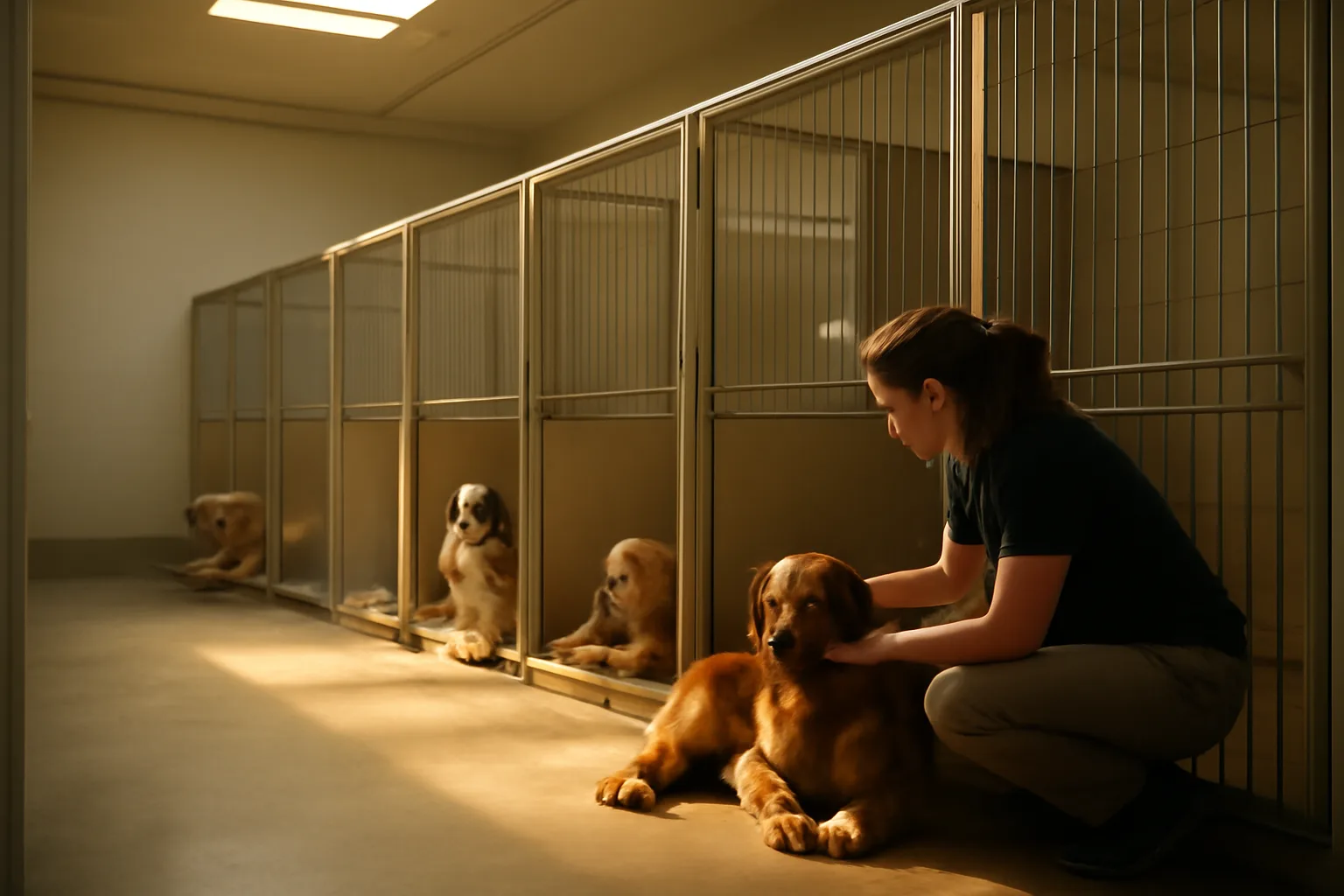
Start with in-person visits, more than star ratings. A facility with a 4.8 rating and no visible flooring drainage, weak odor control, or staff who can't explain their vaccination requirements is a red flag no review will catch. Check three things directly: current state or local kennel license posted or available on request, vaccination requirements (rabies, DHPP, and often bordetella and canine influenza), and staff-to-dog supervision ratios during group play. Many states don't mandate a specific ratio by law, so a facility that voluntarily caps group size (commonly 10-15 dogs per handler) is telling you something about how seriously they take safety. Ask what happens in an emergency. A facility should have a written protocol for illness or injury, a relationship with a nearby emergency vet, and staff on-site (more than checking in) during business hours. If they can't answer that in under 30 seconds, keep looking. For comparison shopping, pet boarding and doggy day care options vary a lot chain-to-chain; dogtopia is one of the larger national franchises and a useful benchmark for what a mid-tier day care experience looks like, though independent local operators often compete well on price and personal attention.
How do you register a dog?
Registering a dog usually means two separate things: getting a local dog license (a city or county requirement, tied to rabies vaccination) and, separately, registering a purebred dog with a breed registry like the American Kennel Club (AKC) for pedigree documentation. People often mean one or the other when they ask "how do you register a dog," so it helps to separate them. For a dog license, you typically need proof of current rabies vaccination, a completed application from your city or county clerk or animal control office, and a fee, often $10 to $25 annually for a spayed/neutered dog and somewhat more for an intact dog in jurisdictions that price it that way. Some counties also require a microchip. Requirements are set locally. Check your specific city or county animal control page rather than assuming a state-level rule applies everywhere. For breed registration (getting a dog "papers"), that's a private registry process, not a government one. See the section below on getting papers for a dog for the mechanics.
How to get a dog license
Getting a dog license is a local (usually county or city) process, not a federal one, and requirements differ by jurisdiction. The general steps: get your dog vaccinated against rabies by a licensed veterinarian, bring the rabies certificate to your local animal control office or county clerk, fill out the license application, and pay the fee. Most counties require renewal annually or every three years, timed to match your rabies vaccination schedule. Fees commonly range from $10 to $25 for altered (spayed/neutered) dogs and can run higher, sometimes $50-$75, for unaltered dogs in counties that use licensing fees to encourage spay/neuter. Some cities also require a current photo, proof of microchip, or proof of residency. Failing to license a dog can result in a fine in many jurisdictions; some counties actively check via mailers tied to veterinary rabies reporting. Because every county sets its own fee schedule and renewal cycle, the only reliable way to get the current number is your county's animal control or county clerk page. Don't rely on a number you saw online for a different state.
How do you get a dog papers?
"Papers" for a dog means registration with a breed registry, most commonly the American Kennel Club (AKC), that documents pedigree and confirms both parents are registered members of a recognized breed. Getting papers is a private registration process handled through the registry, not a government agency, and it has nothing to do with dog licensing. The standard path: if a puppy's parents are both AKC-registered, the breeder completes an AKC litter registration and the new owner submits an individual Dog Registration application, along with the registration fee, to formally register that puppy. AKC's published registration materials describe individual registration as following litter registration by the breeder. If you bought a puppy without papers and the breeder is unreachable or the parents aren't registered, there generally isn't a way to retroactively get full AKC papers. DNA parentage testing can sometimes support registration in specific cases, but a mixed-breed or unregistered-parentage dog cannot be papered after the fact just because you want documentation. Some owners confuse "papers" with a rabies certificate or dog license. Those are different documents entirely. A rabies certificate proves vaccination; a dog license is a local registration tied to that vaccination; AKC papers are a private pedigree record.
How do you get papers for my dog if the breeder never gave them to me?
If you bought a puppy and were told "papers to follow" but never got them, first contact the breeder directly and ask for the litter registration number, since without that, the registry usually can't process an individual registration. Reputable breeders register litters with the AKC (or another registry) close to the time puppies are born or sold. If the breeder is unresponsive or the litter was never registered, you're mostly out of luck for full papers on that specific dog. Some registries offer a limited-registration or alternative listing path for dogs that appear purebred but lack documented parentage, though these typically don't confer full breeding or show eligibility. Check the specific registry's current policy directly since these programs change. DNA testing can sometimes establish parentage after the fact if you can test the sire and dam directly, but that requires the breeder's cooperation. Absent that, no registry will manufacture papers based on appearance alone.
How to become a dog breeder
Becoming a dog breeder legally means clearing three separate layers: local zoning (does your property allow it, and how many dogs), state licensing (many states license commercial breeders above a certain litter or dog count), and federal USDA oversight if you sell wholesale or meet specific direct-to-public thresholds. Zoning comes first. Most residential zones cap the number of dogs you can keep before you're classified as a "kennel" requiring a conditional use permit or rezoning. That threshold is set locally, commonly somewhere between 3 and 6 adult dogs, though it varies widely by county, so check your specific zoning ordinance before you plan a breeding operation. State licensing kicks in next. Many states require a commercial breeder license once you exceed a set number of breeding females or litters per year (often somewhere in the 3-10 female range, depending on the state), with annual inspections and record-keeping requirements. Check your state department of agriculture's breeder licensing page directly, since thresholds and fees are state-specific and change periodically. Federal USDA licensing is the layer people miss most. Under the Animal Welfare Act, USDA APHIS requires a license for anyone who sells dogs at wholesale or who sells dogs sight-unseen directly to buyers who haven't personally observed the animal, home, or facility before purchase, unless a narrow retail exemption applies. The regulatory definition of "retail pet store" and the related breeder exemption is set out at 9 CFR 1.1, which excludes from Animal Welfare Act licensing certain retail sellers who sell animals only at retail with the buyer physically present [1]. If any part of your sales happen without the buyer physically present to inspect the animal before purchase, you very likely need a USDA Class A (breeder) license. For a broader look at kennel and breeder rules by state, see dog kennels.
What does the USDA require for dog breeders and how do I know if I'm covered?
USDA APHIS regulates commercial dog breeders under the Animal Welfare Act (AWA), and licensing hinges mostly on how you sell, more than how many dogs you have. The core rule: if you sell dogs at wholesale (to pet stores, brokers, or resellers) or you sell dogs directly to the public sight-unseen (online, by mail, shipped without the buyer meeting the dog and inspecting the premises first), you generally need a USDA license, regardless of how small your operation is. There's a narrow retail exemption for very small hobby breeders. Under the AWA's regulatory definitions at 9 CFR 1.1, a "retail pet store" that sells animals to the public in face-to-face transactions, with the buyer physically present to view the animal before purchase, generally falls outside licensing requirements for that specific sales channel [1]. Cross into wholesale sales, or sell sight-unseen even once, and the exemption doesn't cover that transaction. Licensed breeders (called "Class A" dealers) are subject to APHIS inspections covering housing, veterinary care, record-keeping, and sanitation, under the standards in 9 CFR Part 3 [2]. Inspections are typically unannounced and happen at least annually, more often if past violations were found. APHIS itself describes licensees as subject to compliance inspections to verify they meet the animal care standards, and repeat inspection failures can lead to enforcement action ranging from fines to license revocation [3]. "Dealer means any person who, in commerce, for compensation or profit, delivers for transportation, or transports... any animal," per the AWA's statutory definition at 7 U.S.C. § 2132(f), and breeders who sell wholesale or sight-unseen generally fall under that definition [4]. That's the legal hook that pulls a breeder into USDA licensing even without a physical storefront. If you're expanding from a hobby litter or two into a real commercial operation, plan for all three layers at once: local zoning approval, state breeder license (if your state has one, and most do above a small threshold), and USDA registration if your sales model crosses the wholesale or sight-unseen line. Trying to retrofit compliance after inspectors show up is far more expensive and stressful than building the paperwork stack up front.
What licenses does a dog boarding or day care business need?
A dog boarding or day care facility typically needs a local business license, a kennel or animal facility permit from the county (sometimes state-issued instead, depending on the state), a zoning approval or conditional use permit confirming the property is allowed to operate as a kennel, and often a health or fire inspection sign-off before opening. The zoning step trips up more new operators than any other. Boarding and day care facilities are frequently classified as "kennels" in local zoning code, which many residential and even some commercial zones don't allow outright. You'll often need a conditional use permit, which means a public hearing where neighbors can object to noise, traffic, or odor concerns. Budget real time for this. Sometimes 60-120 days from application to hearing date, depending on your county's hearing calendar. County kennel permits usually require a facility inspection covering things like drainage, ventilation, fencing, and separation of sick animals, plus proof of liability insurance in many jurisdictions. Fees and specific requirements are set at the county level almost everywhere, so there's no single national number to quote; check your county's animal control or planning department page directly. If you're pulling together the zoning packet, business license application, and facility standards checklist for the first time, a structured packet (like the $149 one-time Kennel License & Zoning Packet at kennel license packet builder) can save you from missing a document the county will bounce back, though it doesn't replace actually reading your specific county's ordinance or attending the hearing yourself.
How long does it take to get a kennel or boarding facility licensed?
Realistically, plan for 2 to 6 months from application to opening day, and longer if a zoning hearing or public comment period is required. Simple jurisdictions with by-right kennel zoning and a straightforward permit application can move in a few weeks. Counties requiring a conditional use permit and public hearing routinely take 60-120 days just for that step, on top of the facility inspection and business license processing. The biggest variable is whether your property is already zoned for a kennel use or needs a variance/conditional use approval. If a neighbor objects at the hearing, expect delays while the board requests additional information or a continuance to a future meeting. Order of operations matters. Confirm zoning eligibility before signing a lease or buying property; nothing wastes more money than committing to a location and then learning the county won't approve kennel use there. Then run facility permits, business licensing, and state registration (if applicable) in parallel where the county allows it, since they often don't depend on each other.
How do zoning rules affect where I can open a boarding or day care facility?
Zoning rules determine whether your property can legally operate as a kennel at all, and they vary enormously by county and even by neighborhood within the same city. Most jurisdictions classify boarding/day care as a "kennel" or "animal care facility" use, which is often restricted to commercial, industrial, or agricultural zones and excluded from residential and sometimes even general retail zones. Common zoning conditions include minimum lot size, setback distances from residential property lines (sometimes 50-200 feet for outdoor runs, though this is set locally), noise mitigation requirements, and caps on total dog capacity. Some counties require a sound study or a noise ordinance compliance plan before approval, particularly if outdoor play areas are close to homes. Before you commit to a property, call the county zoning or planning department directly and ask two questions: is kennel/animal boarding a permitted or conditional use in this zone, and what's the current process and timeline for a conditional use permit if needed. Get the answer in writing if you can. Verbal assurances from a leasing agent are not a substitute for a zoning determination letter from the actual planning department.
Frequently asked questions
How much does dog boarding cost per night?
Standard dog boarding runs $25 to $85 per night depending on region and facility type, with luxury suites at pet hotels running $75 to $150 or more. Day care (no overnight stay) typically costs $20 to $45 per day. Always ask what's included; add-ons like grooming or medication administration are usually billed separately.
How much is dog boarding for a week?
A week of boarding at $25-$85/night runs roughly $175 to $595, though many facilities offer a modest multi-night discount (5-15% is common). Ask about weekly rates directly, since not every facility advertises them, and confirm whether food, medication, or extra playtime are included or extra.
How do I register a dog with my city?
Contact your city or county animal control office, bring a current rabies vaccination certificate from a licensed vet, fill out the license application, and pay the fee (commonly $10-$25 for altered dogs). Requirements and fees are set locally, so check your specific county's animal control page rather than assuming a national standard applies.
How do I get papers for my dog?
Dog "papers" come from a breed registry like the AKC, not a government office. If both parents are AKC-registered, the breeder registers the litter and you complete individual registration with the registry and a fee. If the breeder never registered the litter, you generally can't get full papers retroactively without breeder cooperation and possibly DNA parentage testing.
How do you get papers for a dog if you don't know the breeder?
Without breeder cooperation or a known litter registration number, getting full breed registry papers is usually not possible. Some registries offer limited alternative listings for dogs that appear purebred but lack documented parentage; these don't grant full registration status. DNA testing can sometimes help if you can access and test the actual parent dogs.
How to become a dog breeder legally?
Check local zoning first (most areas cap dogs before requiring a kennel permit), then check your state department of agriculture for commercial breeder licensing thresholds, and finally determine if USDA APHIS licensing applies based on your sales method. Selling wholesale or sight-unseen typically triggers federal licensing regardless of how few dogs you have.
Do I need a USDA license to sell puppies?
Only if you sell wholesale (to stores or brokers) or sell sight-unseen directly to buyers who never see the animal or premises before purchase. The Animal Welfare Act's retail pet store exemption under 9 CFR 1.1 generally covers only face-to-face sales with the buyer physically present. Selling face-to-face from your home, buyer present, usually stays outside USDA licensing.
How much does a dog kennel or boarding facility license cost?
There's no single national fee; county and state kennel permit costs vary widely, often ranging from under $100 to several hundred dollars annually depending on facility size and jurisdiction. Check your specific county animal control or state department of agriculture fee schedule, since costs differ by dog capacity and location.
How long does a dog zoning hearing take to schedule?
Plan for 60 to 120 days from application to an actual hearing date in jurisdictions that require a conditional use permit for kennel zoning, though simple by-right zoning situations can move much faster. Contact your county planning department directly for their current hearing calendar and application deadlines.
What's the difference between a dog license and dog papers?
A dog license is a local government registration tied to rabies vaccination, required in most counties for any dog. Dog "papers" are a private pedigree registration through a breed registry like the AKC, unrelated to any government requirement, and only apply to purebred dogs with documented parentage.
Can I board my own dogs at home without a license?
Almost never, if you're doing it commercially for pay. Most counties require a kennel license or home occupation permit even for small in-home boarding businesses, and zoning codes often cap how many non-owned dogs can be on a residential property at once. Check your county's specific rules before accepting paying clients.
How many dogs can I have before I need a kennel license?
This threshold is set locally and varies widely, often somewhere between 3 and 6 adult dogs in residential zones before you're classified as a kennel requiring a permit. Some counties count by household, others by property; check your specific county zoning ordinance for the exact number.
Sources
- Electronic Code of Federal Regulations, 9 CFR 1.1 (Animal Welfare Act definitions, retail pet store): The Animal Welfare Act's regulatory definitions set out the retail pet store exemption tied to face-to-face sales with the buyer physically present
- USDA APHIS, 9 CFR Part 3 Animal Welfare Standards: Licensed commercial dog breeders must meet federal standards covering housing, veterinary care, and sanitation under 9 CFR Part 3
- Animal Welfare Act, 7 U.S.C. § 2132(f): The statutory definition of "dealer" under the Animal Welfare Act covers persons who deliver, transport, or sell animals in commerce for compensation, which pulls wholesale or sight-unseen breeders into federal licensing
- USDA APHIS, Animal Care Aid (licensing and inspection overview): APHIS licensees are subject to compliance inspections verifying they meet Animal Welfare Act standards, with enforcement ranging from fines to license revocation for repeat violations
- USDA APHIS, Animal Welfare Act Licensing and Registration (7 U.S.C. Chapter 54 overview): The Animal Welfare Act chapter establishes the licensing and registration structure that USDA APHIS enforces for commercial animal dealers and breeders