Last updated 2026-07-25
TL;DR
Dog boarding in New York City typically costs $40 to $95 per night depending on the borough and level of service, with daycare running $35 to $60 per day. Facilities need a NYC DOHMH kennel license, must comply with Health Code Article 161, and often need a zoning sign-off before that license gets approved.
How much does dog boarding cost in New York City?
Expect to pay somewhere between $40 and $95 a night for dog boarding in NYC, with Manhattan facilities usually sitting at the top of that range and outer-borough kennels running cheaper. Daycare (no overnight stay) is generally $35 to $60 a day. Luxury "pet hotels" with private suites, webcams, and extra playtime can push past $100 a night, especially around holidays when demand spikes and many places add surcharges. These aren't regulated prices, so there's no city fee schedule to point to. What you're seeing is the market: Manhattan commercial rent is brutal, and that gets baked into every service price. A facility in the Bronx or Staten Island with lower square-footage costs can charge less and still make margin. For operators, this matters because your pricing has to cover a real cost base: NYC commercial rent, staff (NYC's minimum wage is $16.50/hour as of January 1, 2025 for most employers under the state's schedule), insurance, and licensing overhead. If you're modeling a new location, run the numbers against actual comparable listings in your zip code, not city-wide averages, because the spread between neighborhoods is wide enough to break a budget built on the wrong number. If you're scoping out dog boarding or pet boarding options in other markets for comparison, pricing patterns tend to track local commercial rent more than anything else.
What license does a dog boarding or daycare facility need in NYC?
Any place that boards, grooms, or trains dogs and cats for money in New York City needs a license from the NYC Department of Health and Mental Hygiene (DOHMH) under Health Code Article 161, which governs "Pet Shops, Pet Boarding and Dog Runs" [1]. This isn't optional and it isn't a state-level thing first: DOHMH is the primary licensing authority for animal-related businesses inside the five boroughs. Article 161 covers pet shops, boarding kennels, and dog daycare-type operations together, and lays out sanitation, ventilation, caging, and recordkeeping requirements. The Health Code text itself states the rules exist to ensure animals in these facilities are "maintained in a sanitary condition and are not a public health nuisance" (NYC Health Code Article 161) [1]. That framing matters: NYC's enforcement lens is public health first, animal welfare second, though in practice the two overlap heavily. You'll also need a NYC Department of Consumer and Worker Protection (DCWP) business license if your operation falls under their general business licensing categories, plus a Certificate of Occupancy that actually permits the use you're running. A lot of first-time operators get tripped up here: they get the DOHMH kennel permit sorted but never check whether their Certificate of Occupancy allows "kennel" or "animal boarding" use at that address. That gap is one of the most common reasons a facility that looks fully licensed on paper still gets shut down or fined.
How does zoning affect where you can open a boarding facility in NYC?
Zoning in NYC runs through the Department of City Planning's Zoning Resolution, and where you can legally operate a kennel or boarding facility depends on the underlying zoning district (residential, commercial, or manufacturing) and the specific use group your activity falls under [2]. Boarding kennels commonly fall under commercial use groups that are permitted as-of-right in certain C and M districts, but restricted or requiring special permits in others. The practical problem: NYC's zoning map is granular down to the block, sometimes down to the lot. Two storefronts across the street from each other can be in different districts with different rules. Before you sign a lease, pull the zoning designation for that exact address through the city's Zoning and Land Use Map (ZoLa) and confirm the use group allowance, more than the general district letter. If your intended location isn't as-of-right for kennel use, you're looking at a variance or special permit process through the NYC Board of Standards and Appeals (BSA), which is a public hearing process with community notice, a real timeline (often several months to over a year), and no guarantee of a favorable outcome. This is where a lot of new operators underestimate cost and time. If you're building out your application packet, our license-packet-builder tool organizes the zoning and licensing documents you'll typically need to bring to that process, though it doesn't replace an actual zoning attorney or represent you before the BSA.
How to register a dog in New York City
Registering a dog in NYC means getting it licensed with the city, which is a separate requirement from anything a boarding facility needs. Under New York City Health Code Article 161, all dogs four months or older living in the city must be licensed, and the license must be renewed annually [1]. You apply through DOHMH, and the license requires proof of rabies vaccination. The license itself is cheap: spayed/neutered dogs run a lower annual fee than intact dogs, with senior citizen discounts available, and the whole thing is handled online through the city's pet licensing portal. This is different from breed registration (like AKC papers, covered below) and different from a kennel business license. A lot of confusion online comes from people mixing up "register my dog with the city" (a legal residency requirement, cheap, annual) with "get my dog papers" (a pedigree/breed registration thing, no legal requirement attached). If you operate a boarding facility, you'll want every dog in your care to have current city licensing and rabies proof on file anyway, both because it's required for the animal's owner and because it's the kind of documentation a health inspector will ask about during a facility visit.
How to get a dog license (and how it's different from a kennel license)
A dog license (for the pet itself) and a kennel license (for a boarding business) are two completely different things, and this is one of the most common search mix-ups in this space. The dog license is what an individual owner gets for their pet, required in NYC and in many counties nationwide, usually tied to rabies vaccination proof and renewed yearly or every few years depending on the jurisdiction. In NYC specifically, dog license applications go through DOHMH and require: proof of rabies vaccination, spay/neuter status (affects the fee), and basic owner contact information [1]. Outside NYC, county clerk or county health department offices typically handle dog licensing, and the fee and renewal period vary by county, so check your specific county clerk's page rather than assuming NYC's rules apply. A kennel license, on the other hand, is a commercial license for a business that boards, breeds, sells, or grooms multiple animals. That's the DOHMH Article 161 permit discussed above, plus zoning sign-off, plus (for breeders above a certain threshold) a USDA license, covered next. If you searched "how to get a dog license" hoping to open a boarding business, you actually want the kennel/business licensing path, not the individual pet license.
How to become a dog breeder in New York (and when USDA licensing kicks in)
New York regulates dog breeders at two levels: state and federal. At the state level, New York's Agriculture and Markets Law Article 26-A requires "dog breeders" that meet certain thresholds (generally, breeders who sell more than a set number of dogs per year directly to the public, or who breed a certain number of litters) to obtain a license from the NY Department of Agriculture and Markets [3]. The exact numeric thresholds and fee schedule are set out in the Department's licensing regulations, so check the current version before you plan around a specific number, since these figures get amended. At the federal level, the U.S. Department of Agriculture's Animal and Plant Health Inspection Service (APHIS) requires a license under the Animal Welfare Act for breeders who sell dogs at wholesale, meaning sales to a pet store, broker, or research facility, or sales made sight unseen (the buyer never physically meets the dog or visits the facility before purchase) [4]. Under the federal rule defining "retail pet store" for Animal Welfare Act purposes, a breeder who maintains more than four breeding female dogs, cats, or small exotic or wild mammals and sells any of their offspring sight unseen generally falls outside the retail exemption and needs a Class A or Class B license [4]. If you sell only retail, meaning every buyer meets the puppy in person before buying, you're generally exempt from the federal license requirement, even with many breeding females, though your state and county rules still apply on top. This retail/wholesale distinction is the single most misunderstood piece of USDA breeder regulation. It's not about how many dogs you have. It's about how you sell them. Becoming a licensed breeder, practically, means: check your state's breeder threshold (NY Ag & Markets Article 26-A) [3], check whether your sales model crosses the USDA wholesale/sight-unseen line [4], get your local zoning cleared for a breeding kennel use (same municipal zoning process as boarding facilities), and build your facility to meet both state kennel standards and, if applicable, the federal Animal Welfare Act facility standards under 9 CFR Part 3 [5].
How do you get a dog papers, and how is that different from registering a dog?
"Getting papers" for a dog means registering it with a breed registry, most commonly the American Kennel Club (AKC), so it has documented pedigree and is eligible for conformation shows, some performance events, and breed-specific record-keeping. This has nothing to do with city or state dog licensing, and it's not a legal requirement anywhere in the US. To get AKC papers for a puppy, the litter's breeder typically registers the litter with the AKC first (this requires both parents already be AKC-registered, or in some cases meet other AKC eligibility paths for dogs of unknown registration history) . The breeder then transfers individual puppy registration to the buyer at time of sale, usually included in the purchase price or handled through an AKC registration application the buyer completes after taking the puppy home. If you're an owner asking "how do I get papers for my dog" after the fact, and the dog wasn't registered as a puppy, your options are limited: AKC's Purebred Alternative Listing (PAL) program allows dogs that appear purebred but lack registration papers to get a listing number that makes them eligible for many non-conformation events like agility and obedience, but it does not create a full pedigree record and does not mean the dog can be shown in conformation . There's no way to retroactively create pedigree documentation that doesn't exist; a breed registry can't verify parentage it never had records for. For breeders reading this: if you're planning to sell puppies as "papered" or registrable, that's a business decision with real compliance weight. AKC registration eligibility, plus your state breeder license, plus your local zoning, plus potentially your USDA status if you sell wholesale or sight-unseen, all stack together. Get one wrong and you can end up unable to legally register the litter or unable to legally operate the kennel in the first place.
What health and facility standards apply to NYC boarding kennels?
| Dog license (individual pet) | Every dog owner in NYC, dog 4+ months old | NYC DOHMH | Rabies proof, owner ID, annual renewal [1] | |
|---|---|---|---|---|
| Kennel/boarding business license | Any commercial boarding, daycare, grooming, or pet shop operation | NYC DOHMH (Article 161) | Sanitation, caging, ventilation, recordkeeping [1] | |
| Zoning approval / Certificate of Occupancy | Any commercial facility, before opening | NYC Dept. of City Planning / Dept. of Buildings | Confirms the address's use group allows kennel use [2] | |
| State breeder license | NY breeders above sales/litter threshold | NY Dept. of Agriculture and Markets | Facility standards, recordkeeping for breeding ops [3] | |
| USDA Class A/B license | Breeders selling wholesale or sight-unseen | USDA APHIS | Animal Welfare Act facility standards, 9 CFR Part 3 [4] [5] | If you're weighing a franchise-style daycare model versus an independent boarding kennel, it's worth comparing operational standards across brands like Dogtopia or researching doggy day care setups generally, since facility layout requirements often overlap heavily with what DOHMH inspectors look for regardless of brand. |
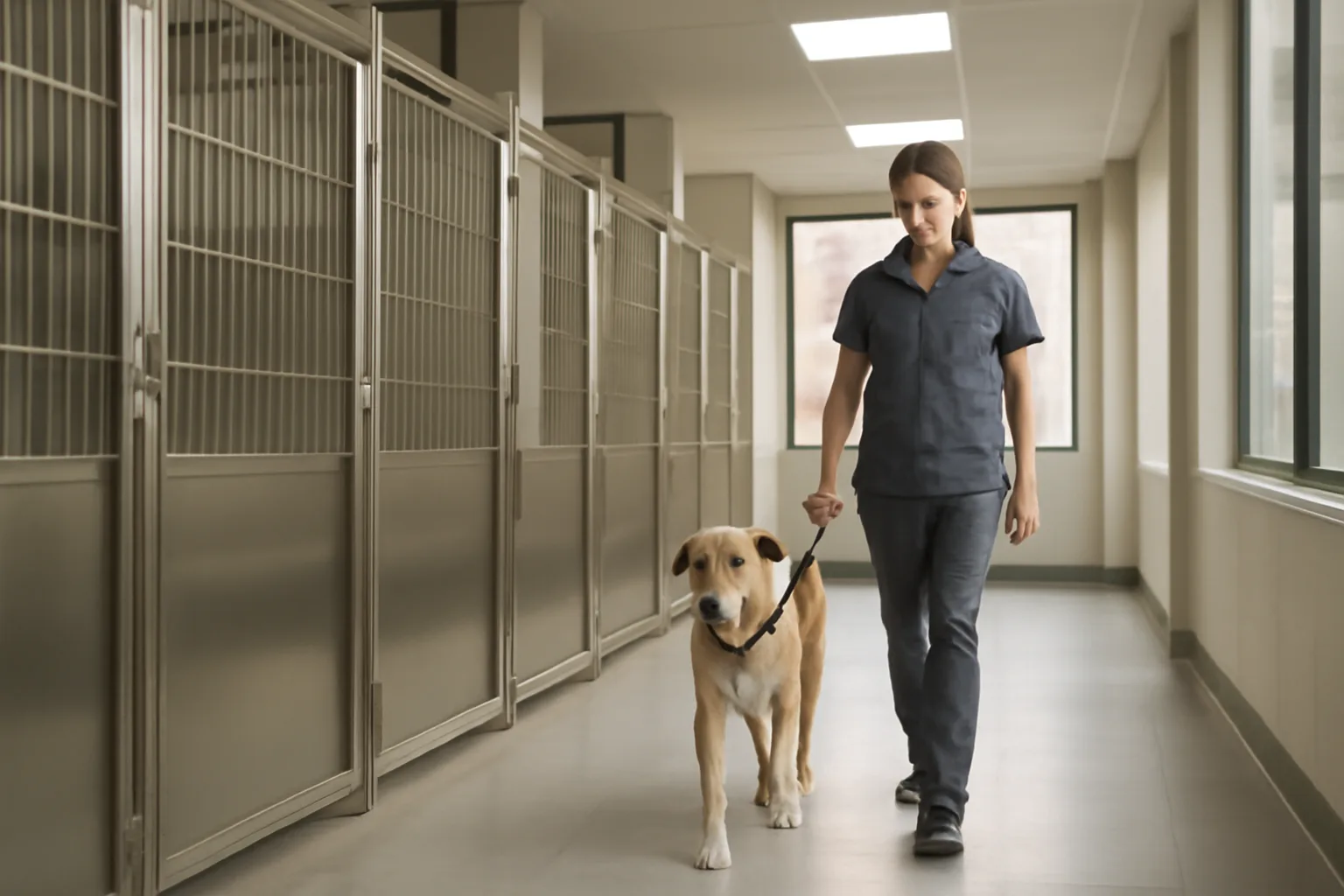
NYC Health Code Article 161 sets sanitation, ventilation, and animal-handling standards for any facility boarding dogs or cats commercially, and DOHMH inspectors enforce these standards through routine and complaint-driven inspections [1]. Expect requirements around cage/kennel size relative to the animal, cleaning and disinfection schedules, separate isolation space for sick animals, and proper food storage and pest control. If your facility is also USDA-licensed (relevant mainly for breeding operations or if you handle animals for sale across state lines), you're additionally subject to the federal Animal Welfare Act facility standards in 9 CFR Part 3, which cover housing facilities, structural strength, shelter from weather, space requirements by animal size, and sanitation on a federal inspection schedule [5]. Most pure boarding/daycare businesses (no breeding, no interstate wholesale) won't trigger USDA licensing, but it's worth confirming that assumption rather than guessing, since misclassifying your business model is a common and expensive mistake. Here's a comparison of the different licensing tiers a boarding or breeding operator in NYC might encounter: | Requirement | Who needs it | Issuing authority | What it covers |
What does the zoning-hearing process actually look like if your address isn't as-of-right?
If your chosen NYC location isn't zoned as-of-right for kennel or animal boarding use, you'll likely need to go before the Board of Standards and Appeals (BSA) for a variance or special permit, and that process is public, procedural, and slow. Expect a formal application, a public hearing with community board notice, and a review period that commonly runs from several months to well over a year depending on caseload and any community opposition. Community boards in NYC are advisory but influential: a vocal group of neighbors opposing a kennel on noise or odor grounds can slow your application even though the community board's vote isn't legally binding on the BSA. Building your packet well before the hearing, sound attenuation plans, waste handling protocols, hours-of-operation limits you're willing to commit to, matters more than most operators expect going in. This is the part of opening a facility that most first-time operators most badly underestimate. Getting the DOHMH kennel permit application right is comparatively mechanical: you're filling out forms and meeting physical standards. The zoning hearing is a persuasion exercise in front of people who may not want a kennel next door regardless of how clean your facility is. If you're organizing the documentation for that hearing, a packet that lays out your facility standards, projected noise/odor mitigation, and licensing compliance in one place tends to go over better than showing up with a folder of loose paperwork. Our $149 license-packet-builder is built for exactly that organizing step; it doesn't file anything on your behalf or represent you before the BSA, and you should still expect to work with a local land use attorney for anything contested.
How much does it actually cost to open a boarding facility in NYC, all in?
Beyond the per-night pricing customers pay, opening a boarding or daycare business in NYC involves licensing fees, buildout costs, and ongoing compliance costs that vary too much by location and scale to give a single number honestly. DOHMH kennel license application fees, DCWP business license fees, and any BSA variance filing fees are all set by their respective agencies and change periodically, so check the current fee schedules on each agency's site before budgeting rather than relying on a number from an old article (including this one). What you can budget for with more confidence: NYC commercial buildout costs for a kennel-type space (concrete or sealed flooring, drainage, ventilation upgrades, sound dampening) commonly run into six figures for anything beyond a bare-bones storefront conversion, and that's before rent. Insurance (general liability plus care, custody, and control coverage for the animals) is a recurring cost that scales with your capacity and claims history, not a one-time fee. The honest answer for a first-time operator: get real quotes from a contractor familiar with commercial animal facilities, get an insurance quote before you sign a lease (not after), and treat every government fee number you find online as a placeholder to be confirmed against the current agency page, because these get updated and old blog posts don't.
What's the difference between dog boarding, daycare, and a kennel license, and does it matter which one you call your business?
Yes, it matters, because NYC and most states classify these differently for licensing purposes even though customers use the words interchangeably. "Boarding" generally means overnight stays. "Daycare" means dogs are dropped off and picked up same-day, no overnight care. A "kennel" in regulatory language is often the umbrella term covering any facility that houses multiple dogs commercially, whether overnight or not. Why this matters practically: your DOHMH Article 161 license application and your zoning use-group determination both hinge on what you actually do at the address, not what you call it on your sign. A daycare-only operation might fit under a less restrictive use group than a full overnight boarding kennel in some zoning districts, though this varies by district and you need to confirm it for your specific address rather than assume it. If you later add overnight boarding to a daycare-licensed business, you may need to amend your license and re-check zoning, more than update your website. If you're researching what facility type fits your business model and location, browsing options for dog kennels or looking at how dog hotels near me style operations are set up can help you see how facilities distinguish boarding-only, daycare-only, and combined models in their licensing and marketing.
Frequently asked questions
How much does dog boarding cost in New York City?
Typically $40 to $95 per night depending on borough and service level, with Manhattan facilities at the higher end. Daycare (no overnight) runs about $35 to $60 per day. Luxury pet hotels can exceed $100 a night, especially around holidays. There's no city-set price, so these are market ranges, not regulated fees.
How much is dog boarding compared to daycare?
Boarding (overnight care) generally costs more than daycare because it includes overnight staffing and lodging. NYC boarding runs roughly $40-$95/night while daycare-only runs about $35-$60/day. The gap narrows at budget kennels and widens at luxury pet hotels offering private suites and webcam access.
How do I register a dog in New York City?
Apply for a DOHMH dog license online, providing proof of rabies vaccination and spay/neuter status; dogs 4 months and older must be licensed and the license renewed annually under NYC Health Code Article 161. This is separate from AKC "papers" and separate from a business kennel license.
How do you get a dog license if you're a first-time NYC owner?
Go through NYC DOHMH's pet licensing system, submit proof of current rabies vaccination, note whether the dog is spayed/neutered (it affects the fee), and pay the annual license fee. Outside NYC, contact your county clerk or county health department instead, since requirements and fees vary by county.
How do you get papers for a dog after the fact if it wasn't registered as a puppy?
If a dog wasn't AKC-registered at birth, full pedigree papers generally can't be created retroactively since registries need parentage records. The AKC's PAL program lets dogs that appear purebred get a listing number for many non-conformation events, but this isn't the same as a full pedigree registration.
How to become a dog breeder legally in New York State?
Check New York's Agriculture and Markets Law Article 26-A for state breeder licensing thresholds, confirm local zoning allows a breeding kennel use at your address, and determine whether your sales model (wholesale or sight-unseen) triggers a federal USDA APHIS Class A or B license under the Animal Welfare Act.
How to get a dog license versus a kennel license, what's the difference?
A dog license covers one pet owned by an individual and is required annually in NYC through DOHMH. A kennel license is a commercial permit for a business that boards, breeds, or sells multiple dogs, requiring DOHMH Article 161 compliance plus zoning approval. They're entirely separate applications with separate purposes.
Does a small home-based dog boarding business in NYC need a kennel license?
Generally yes, if you're charging money to board dogs commercially, even from a home, NYC Health Code Article 161 licensing requirements can apply, and your residential zoning may not permit a commercial kennel use at all. Check zoning first since many residential districts prohibit this outright regardless of licensing.
When does a dog breeder need a USDA license?
USDA APHIS generally requires a Class A or B license when a breeder has more than four breeding female dogs and sells any puppies wholesale or sight-unseen (buyer never meets the dog in person before purchase). Retail-only sellers where every buyer inspects the puppy in person are typically exempt from federal licensing.
What is the AKC PAL/ILP program and how does it relate to getting papers for my dog?
AKC's Purebred Alternative Listing (PAL), formerly ILP, lets dogs that appear purebred but lack registration documentation get a listing number, making them eligible for many AKC events like agility and obedience. It does not create a pedigree or allow entry into conformation shows, and it's not the same as full AKC registration.
How long does the NYC zoning approval process take for a new kennel or boarding facility?
If your address is zoned as-of-right for kennel use, zoning sign-off can be relatively fast alongside your Certificate of Occupancy check. If you need a Board of Standards and Appeals variance or special permit, expect a public hearing process that commonly takes several months to over a year, with no guarantee of a favorable outcome.
Do I need both a state breeder license and a USDA license in New York?
Possibly both. New York's Agriculture and Markets Law Article 26-A sets state-level breeder licensing thresholds independent of federal rules. USDA APHIS licensing applies separately if you sell wholesale or sight-unseen with more than four breeding females. Meeting one requirement doesn't exempt you from the other; check both.
Sources
- NYC Health Code, Article 161 (Pet Shops, Pet Boarding, and Dog Runs): DOHMH licensing requirements, dog licensing rules, and sanitation standards for boarding/pet shop facilities
- NYC Zoning Resolution, Article II Chapter 1 (Use Groups): Use group and district classifications govern where kennel/boarding uses are allowed
- New York Agriculture and Markets Law, Article 26-A: New York State dog breeder licensing requirements and thresholds
- 9 CFR 1.1, definition of "retail pet store" under the Animal Welfare Act: USDA license required for breeders with more than four breeding females who sell wholesale or sight-unseen
- Code of Federal Regulations, 9 CFR Part 3 (Animal Welfare Act standards): Federal facility standards for housing, sanitation, and space requirements at licensed animal facilities