Last updated 2026-07-25
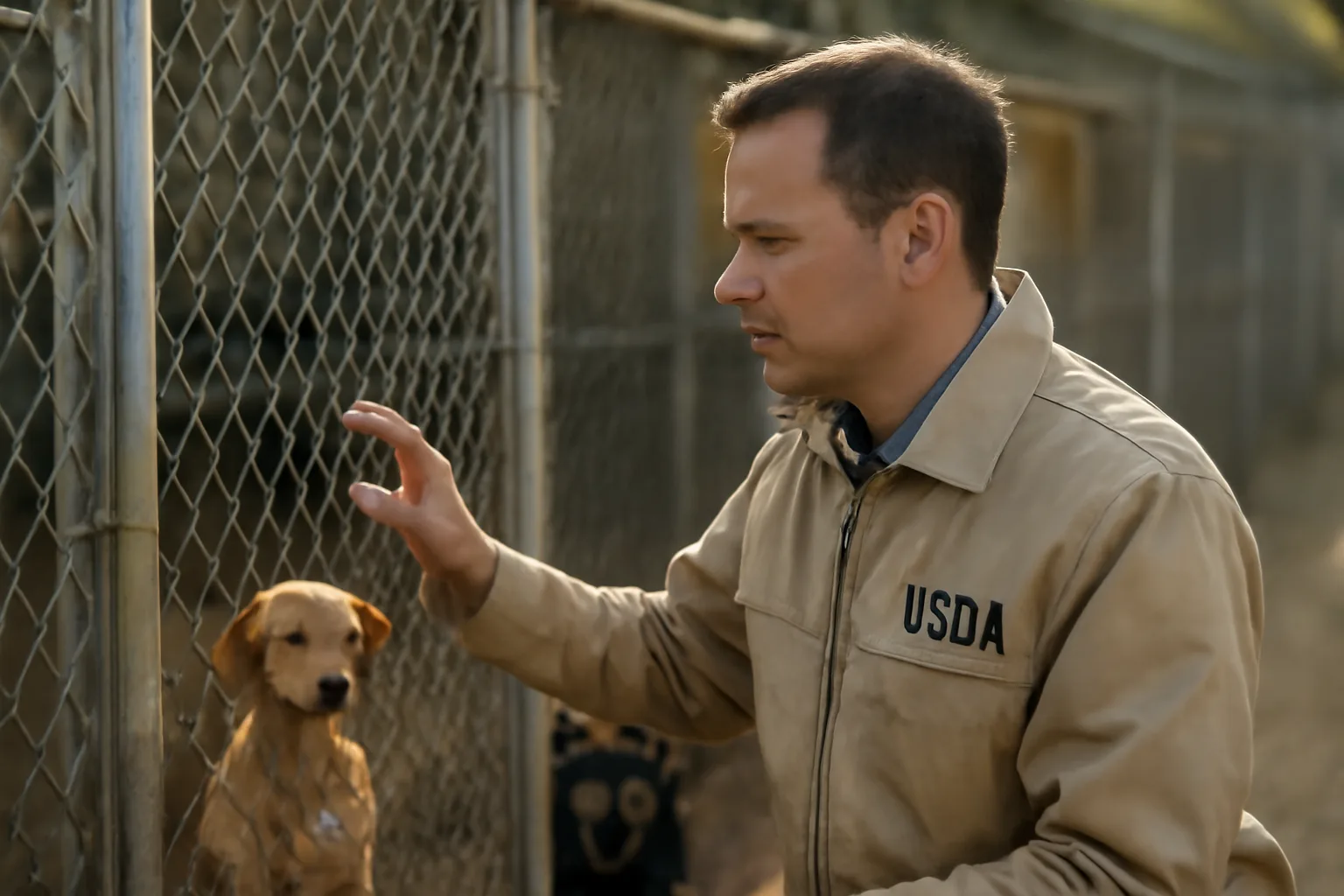
TL;DR
A USDA license under the Animal Welfare Act is required if you breed, sell, or exhibit certain warm-blooded animals (including many exotics) for commercial purposes, wholesale, or across state lines. Retail pet-only sales are often exempt. Dog breeders selling wholesale or over the internet without face-to-face sales need one too, per 9 CFR 2.1.
What is a USDA license for exotic animals, exactly?
It's a federal license issued by USDA's Animal and Plant Health Inspection Service (APHIS) under the Animal Welfare Act (AWA), 7 U.S.C. 2131-2159, and its regulations at 9 CFR Parts 1-4. The license doesn't just cover exotics like big cats, primates, or reptiles. It covers anyone who breeds, buys, sells, transports, or exhibits regulated animals commercially, and that includes plenty of dog breeders who never touch an exotic animal. APHIS defines "animal" broadly under 9 CFR 1.1: any warm-blooded animal used for exhibition, research, teaching, testing, breeding for sale, or as a pet, with some carve-outs (birds bred for use in research, farm animals raised for food or fiber, cold-blooded animals, horses not used for research, and a few others are excluded from AWA coverage). So a python breeder is mostly outside AWA licensing (reptiles aren't warm-blooded and aren't covered animals), but a wolfdog breeder, a big cat sanctuary that charges admission, or a monkey breeder selling to pet owners is squarely inside it. The practical trigger isn't "is this animal exotic." It's "are you doing this as a business, and are you selling wholesale or exhibiting to the public." That's the line APHIS actually draws in its licensing regulations at 9 CFR Part 2 [1]. If you're building out a facility that also does conventional dog boarding or daycare alongside exotic animal exhibition or breeding, know that USDA licensing and your state/county kennel permitting are two completely separate systems that run in parallel. You'll likely need both. See our overview on dog kennels for how the state/county side usually works.
Who actually needs a USDA license (Class A, B, and C explained)
APHIS issues three main license types plus a registration category, and which one applies depends on what you do with the animals, not what species they are. Class A (Breeder): you breed animals and sell them wholesale, meaning not directly retail face-to-face to the end buyer. A dog breeder who sells puppies sight-unseen over the internet to buyers in other states, or who sells to pet stores or brokers, needs a Class A license if they meet the threshold (more than four breeding females and selling to someone other than in person). This is the category that snags a lot of breeders who think "USDA is for zoos, not me." Class B (Dealer/Broker): you buy and resell animals you didn't breed yourself, broker sales between breeders and buyers, or operate a boarding/handling business for animals moving through commercial channels. Class B also covers some exhibitors who deal in animals. Class C (Exhibitor): you show animals to the public for compensation or education, whether that's a roadside zoo, a traveling reptile show, a photo-op business with tiger cubs, or a nonprofit sanctuary that charges admission or does school visits. Size doesn't matter; one licensed animal used in one paid exhibit event can trigger this. Registration (not a license): research facilities, and some exhibitors/breeders below the license threshold, may only need to register rather than get a full license. Registration has no fee but still means inspections and recordkeeping apply. The licensing regulation at 9 CFR 2.1 lays out the core requirement this way: no person subject to the AWA's licensing requirements may operate as a dealer, exhibitor, or operator of an auction sale without holding a valid license, and that requirement is what separates Class A, B, and C activity from exempt hobbyist activity [2].
Does a dog breeder need a USDA license?
Sometimes, yes, and this is the part most hobby breeders miss. If you sell puppies only face-to-face (buyer physically visits and inspects the puppy and the premises before taking it home), you're exempt under the "retail pet store" exemption regardless of volume, per 9 CFR 2.1(a)(3)(iii). The moment you sell sight-unseen, meaning the buyer never meets the puppy or visits your facility before purchase, whether by shipping, meeting at a parking lot, or selling entirely online, that sale doesn't count as retail anymore. The threshold that actually forces a license: more than four female dogs (or cats, or small exotic mammals) used for breeding, kept on the premises, AND selling any offspring wholesale or sight-unseen. Breeders with four or fewer breeding females who sell only direct-to-buyer retail are generally exempt, no matter how many litters. This rule traces to the 2013 AWA regulatory change that redefined "retail pet store" to close a loophole where large internet-based breeders claimed retail exemption despite never meeting their buyers, published in the Federal Register as the final rule amending the definitions in 9 CFR Part 1 [3]. If you're planning to expand past four breeding females and sell online or ship puppies, budget for the license now, not after an APHIS inspector shows up. For state-level rules alongside the federal ones, see how this interacts with commercial breeder statutes on our dog kennels page.
How much does a USDA license cost, and how long does it take?
License fees are annual and tiered by the gross value of animals you sell or exhibit in the prior year, set out in 9 CFR 2.6. As of the current fee table, Class A and B license fees range roughly from $40/year at the lowest tier up to about $1,335/year at the highest tier, plus a one-time application fee around $10-$40 depending on class and tier [4]. Class C exhibitor fees follow a similar tiered structure based on the number of animals and type of exhibition. Processing time varies a lot by region and season. APHIS doesn't publish a single guaranteed number, but applicants commonly report 60 to 120 days from a complete application to first inspection and license issuance, longer if your facility needs corrections after the initial inspection. Budget for at least one pre-license inspection where an APHIS animal care inspector visits your site to check housing, sanitation, veterinary care records, and enclosure specs against 9 CFR Part 3 standards before they'll approve anything. There's no fast-track paid option to skip inspection. If your facility fails the first inspection, you fix the issues and get re-inspected, which adds weeks or months, not days.
How does this differ from a state or county kennel license?
This trips people up constantly: USDA/APHIS licensing and your state or county kennel license are not substitutes for each other. They exist for different reasons. USDA/APHIS licensing exists because of federal commerce, specifically the Animal Welfare Act's authority over animals moving in interstate commerce, wholesale trade, and public exhibition. It sets minimum federal welfare standards nationwide. State and county kennel/breeder licensing exists because of local police power over land use, public health, and animal control. A state department of agriculture might require a commercial breeder permit at a lower threshold than USDA (some states require a license at 3+ litters/year regardless of sales method), and your county zoning office separately controls where a kennel or exotic animal facility can even be located, how many animals per acre, setback distances from property lines, and whether you need a conditional use permit or public hearing. Having a USDA license doesn't waive your state ag department paperwork, and having state paperwork doesn't waive USDA. You often need all three: federal, state, and county. If you're just getting oriented on the boarding/daycare side of a mixed facility, our guides on dog boarding and pet boarding walk through that state/county layer in more depth.
What animals count as "exotic" under USDA rules?
APHIS doesn't actually use the word "exotic" as a legal category. The AWA regulates "covered species," and coverage depends on warm-bloodedness and use, not how unusual the animal is to a layperson. Covered (needs a license if used commercially): primates, big cats, bears, wolves and wolf-hybrids, many exotic birds used in exhibition, marine mammals in some contexts, and mammalian species bred or sold for pets or research. Not covered by AWA licensing: reptiles, amphibians, fish, and invertebrates (cold-blooded, excluded by definition in 9 CFR 1.1), birds bred for research use specifically, rats and mice of the genus Rattus and Mus bred for research, farm animals raised for food/fiber/work purposes, and horses not used in research. So a person selling ball pythons wholesale across state lines generally doesn't need an AWA license (though they may face other federal rules like the Lacey Act for certain species, and state wildlife permits almost always apply). A person breeding fennec foxes or servals for the pet trade almost certainly does. Species-specific state wildlife or "dangerous animal" permits are a completely separate track from USDA licensing, run through your state fish and wildlife or ag department, and often stricter.
How do you get papers for a dog? Registration vs. AKC vs. USDA
This question comes up constantly and it's really three different things people mean by "papers," so let's untangle it. "Papers" as in AKC/breed registry papers: this has nothing to do with USDA. Getting a dog registered with the American Kennel Club or another breed registry means the breeder registers the litter with that private organization, and buyers get individual registration papers showing pedigree. This is a private business transaction with AKC, not a government license. AKC requires breeders to register litters and can require inspections for high-volume breeders, but this is separate from any government agency [5]. "Papers" as in local dog license/registration: this is the municipal or county requirement that every owned dog get a rabies vaccination and a dog license/tag, usually annual, from your county clerk, animal control office, or city treasurer. Fees are typically low, often in the $10-$25/year range for a spayed/neutered dog and somewhat more for an intact dog, though this varies heavily by county. To register a dog, you generally bring proof of current rabies vaccination to your county's animal control or clerk's office and pay the fee; some counties now allow online registration. "Papers" as in USDA breeder license: if you're the breeder and asking how to get papers for your dog before selling it, and you sell wholesale or sight-unseen with more than four breeding females, that's the federal APHIS Class A license process described above, not a registry and not a dog tag.
How to become a dog breeder, step by step
There's no single national license that makes someone "a licensed dog breeder." It's a stack of separate registrations depending on your scale and sales method. 1. Check your state's commercial breeder law first. Many states (Ohio, Pennsylvania, Missouri, Virginia, and others) have their own commercial breeder license triggered by litter count or number of adult dogs, often at a lower threshold than USDA's four-female rule. Contact your state department of agriculture for the specific number. 2. Check your county zoning and kennel ordinance. Most counties cap the number of adult dogs allowed on residential-zoned property before you're classified as a commercial kennel requiring a conditional use permit, additional setbacks, or a public hearing. 3. Determine if you cross the USDA threshold (more than four breeding females plus wholesale/sight-unseen sales, per 9 CFR 2.1). If yes, apply for a Class A license through APHIS. 4. Get a local dog license/rabies registration for every adult dog on the property, per your county's requirement. 5. If you want to register litters with a breed registry (AKC, UKC, etc.), do that separately once the litter is born; it doesn't replace any of the above steps. Skipping step 1 or 2 is the most common expensive mistake. People assume USDA licensing is the only hurdle, get that squared away, then get shut down by a county zoning complaint because nobody checked whether their property was even zoned for a commercial kennel. Our dog kennels guide covers the zoning side of this in detail, and if you want a structured way to pull together the state and county paperwork simultaneously, KennelPermit's $149 Kennel License & Zoning Packet is built to organize exactly this stack (it's a document/checklist tool, not legal representation, and it doesn't file anything on your behalf or guarantee approval).
How much does dog boarding cost, and does a boarding kennel need a USDA license?
Straight answer on cost first: dog boarding in the US typically runs $25 to $85 per night for standard kennel or home-boarding, with upscale "dog hotel" facilities charging $50 to $120+ per night depending on region and amenities. Daycare add-ons, grooming, and medication administration usually cost extra, often $10-$25 per service. These are market rates, not government-set fees, so they vary heavily by city and facility tier; check listings like dog hotels near me for local comparisons. On the licensing question: a standard dog boarding or daycare facility, where you're temporarily housing other people's already-owned pets and returning them to the same owner, is generally NOT covered by AWA/USDA licensing at all. USDA/APHIS licensing is about breeding, dealing, and exhibiting animals you have some ownership or commercial sale interest in, not about boarding someone else's pet for a fee. A pure boarding/daycare operation typically only needs state and county-level kennel/boarding permits, plus in some states a separate "animal facility" or "pet care facility" license from the state department of agriculture, not a federal APHIS license. Where it gets mixed: if your boarding facility also breeds dogs on-site and sells them wholesale, or if you board exotic animals and also exhibit them to the public, then the breeding/exhibition side needs USDA licensing while the boarding side stays under state/county rules. Two different regulatory tracks running through one building. For a broader look at general boarding compliance, see doggy day care and dogtopia style franchise-model facilities, which usually navigate this same split.
What happens during a USDA facility inspection?
APHIS animal care inspectors conduct unannounced inspections, at least annually for licensed facilities, checking compliance against the specific housing, sanitation, veterinary care, handling, and recordkeeping standards in 9 CFR Part 3 (which has separate subparts for dogs/cats, guinea pigs/hamsters, rabbits, nonhuman primates, marine mammals, and other warm-blooded animals). Inspectors check: enclosure size relative to animal size and number, temperature control, drainage and waste removal, availability of a licensed or attending veterinarian and written veterinary care program, employee records, acquisition/disposition records for every animal, and public exhibition safety barriers if you're Class C. New facilities get a compliance inspection before the license is issued; you don't get licensed sight-unseen. APHIS publishes inspection reports publicly through its Animal Care Information System search tool, so a facility's compliance history (including any noncompliant items cited) is a matter of public record searchable by facility name or license number [6]. If you're evaluating a facility to buy into or partner with, checking that record first is free due diligence.
How to get a dog license (the local kind, not USDA)
To get a dog license, you typically need current proof of rabies vaccination from a licensed veterinarian, the dog's basic info (breed, age, sex, spay/neuter status), and the license fee, submitted to your county clerk, county treasurer, or local animal control office depending on your state's structure. Some states require this at the county level (common in the Midwest and Northeast), others don't require dog licensing at all and leave it to individual municipalities. Fees usually differ for spayed/neutered vs. intact dogs, with intact dogs sometimes costing two to three times more to license as a way of nudging owners toward spay/neuter. Many counties now offer online registration renewal once you're in the system, though the first-time application often still requires an in-person visit or mailed proof of vaccination. This is completely separate from any commercial breeder or kennel license. A pet owner with one or two dogs at home only needs this basic local registration, never a USDA license and rarely a state ag department permit, unless local ordinance caps the number of dogs per household and you're over that limit.
What are the penalties for operating without a USDA license?
AWA violations carry real teeth. Civil penalties under 7 U.S.C. 2149 can run up to $10,000+ per violation per day (the exact cap adjusts periodically for inflation under federal penalty inflation rules), and APHIS can seek license suspension, revocation, and referral for criminal prosecution in serious or repeat cases. Operating without a required license while conducting licensable activity (unlicensed dealing, breeding, or exhibiting) is itself a separate violation from any animal welfare deficiencies found. APHIS's enforcement approach usually starts with an official warning or a pre-license inspection refusal, but repeat noncompliance, especially involving animal welfare (more than paperwork), escalates quickly to formal complaints and fines. State and county penalties for operating an unlicensed kennel or zoning violation stack on top of this separately, often as misdemeanor citations, daily fines, or forced closure orders from the zoning board.
Frequently asked questions
How much does dog boarding cost per night?
Typical US dog boarding runs $25-$85 per night at standard kennels, with upscale dog hotels charging $50-$120+ depending on city and amenities. Daycare, grooming, and medication add-ons usually cost $10-$25 extra per service. These are market prices set by individual businesses, not government fees, so check local listings for your area's actual rates.
How do I register a dog with my county?
Bring proof of current rabies vaccination and basic dog info (breed, age, spay/neuter status) to your county clerk, treasurer, or animal control office, then pay the license fee. Many counties now allow online renewal after the first registration. Requirements and fees vary by state and county, so confirm specifics with your local animal control or clerk's office.
How do you get papers for a dog?
Depends what you mean. Breed registry papers (AKC, UKC) come from the breeder registering the litter with that private organization, unrelated to government licensing. A local dog license/tag comes from your county with proof of rabies vaccination. A USDA breeder license is a separate federal requirement only for commercial wholesale or sight-unseen sellers over the four-breeding-female threshold.
How do I get papers for my dog if I bought it without any?
If the breeder didn't register the litter with a breed registry, you generally can't retroactively get full pedigree papers unless the registry has a DNA-based or limited registration path (AKC has a Purebred Alternative Listing/PAL program for unregistered purebreds, for example). You can still get a local dog license/tag from your county regardless of pedigree status.
Does every dog breeder need a USDA license?
No. Breeders with four or fewer breeding females, or anyone selling only face-to-face retail (buyer meets the puppy and inspects the premises before purchase), are exempt under 9 CFR 2.1(a)(3)(iii). The license is required once you exceed four breeding females AND sell wholesale or sight-unseen, such as shipping puppies or selling entirely online without an in-person meeting.
What's the difference between USDA Class A, B, and C licenses?
Class A covers breeders selling wholesale (not direct retail). Class B covers dealers, brokers, and those buying/reselling animals bred by others. Class C covers exhibitors who show animals to the public for compensation or education, including zoos, traveling shows, and paid sanctuary visits. The category depends on your activity, not the species of animal involved.
How much does a USDA license cost?
Annual license fees for Class A and B run roughly $40 to $1,335 per year depending on your gross animal sales tier, per the fee schedule in 9 CFR 2.6, plus a smaller one-time application fee. Class C exhibitor fees follow a similar tiered structure based on animal numbers and exhibition scope. Confirm current tiers directly with APHIS since fee schedules are periodically updated.
Do reptile or exotic pet breeders need a USDA license?
Usually not for AWA purposes, since reptiles, amphibians, and fish are cold-blooded and excluded from AWA's "animal" definition under 9 CFR 1.1. But state wildlife agencies often require separate permits for venomous species, native wildlife, or certain "dangerous exotic" mammals regardless of USDA status, so check your state fish and wildlife department too.
How long does it take to get a USDA license?
There's no published guaranteed timeline, but applicants commonly report 60 to 120 days from a complete application to a passed pre-license inspection and license issuance. Facilities that fail their first inspection need corrections and a re-inspection, which can add weeks or months. Applying well before you plan to start selling or exhibiting is the safe approach.
Can I operate a boarding kennel without a USDA license?
Yes, in almost all cases. Standard dog boarding and daycare, where you temporarily house pets already owned by their guardians and return them to the same owner, isn't AWA-licensable activity. You'll still need state and county kennel or pet care facility permits, but not a federal APHIS license, unless you're also breeding or exhibiting animals on the same site.
What animals are exempt from AWA/USDA licensing?
Cold-blooded animals (reptiles, amphibians, fish), birds bred specifically for research, laboratory rats and mice of the genus Rattus and Mus, horses not used in research, and farm animals raised for food, fiber, or work are all excluded from AWA's covered-animal definition under 9 CFR 1.1, so they generally don't require an APHIS Animal Welfare Act license.
What happens if you operate without a required USDA license?
APHIS can issue civil penalties, historically up to roughly $10,000+ per violation per day under 7 U.S.C. 2149 (adjusted periodically for inflation), plus refuse or revoke licensing and refer serious cases for criminal prosecution. State and county authorities can add separate fines or shutdown orders for operating an unlicensed kennel or violating zoning, on top of any federal penalty.
Sources
- eCFR, Title 9 Part 2 - Licensing (regulatory framework): AWA licensing framework covering breeders, dealers, and exhibitors under 9 CFR Part 2
- eCFR, Title 9 Part 2, Subpart A - Licensing requirements (2.1): who must be licensed: breeders selling wholesale, dealers, and exhibitors
- eCFR, Title 9 Chapter I Subchapter A, Part 1 - Definitions: definition of covered 'animal' and exclusions (cold-blooded species, research rats/mice, farm animals, horses)
- eCFR, Title 9 Part 2 - License fees (2.6): tiered annual license fee schedule for Class A/B licensees
- American Kennel Club, AKC Marketplace and litter registration policy overview: private breed registry litter registration process separate from government licensing
- USDA APHIS, Animal Care Information System (search inspection reports): public searchable inspection reports and compliance history for licensed facilities
- eCFR, Title 9 Part 3 - Standards (housing, sanitation, veterinary care): inspection standards covering housing, sanitation, veterinary care recordkeeping for licensed facilities